
Snow Load Concerns
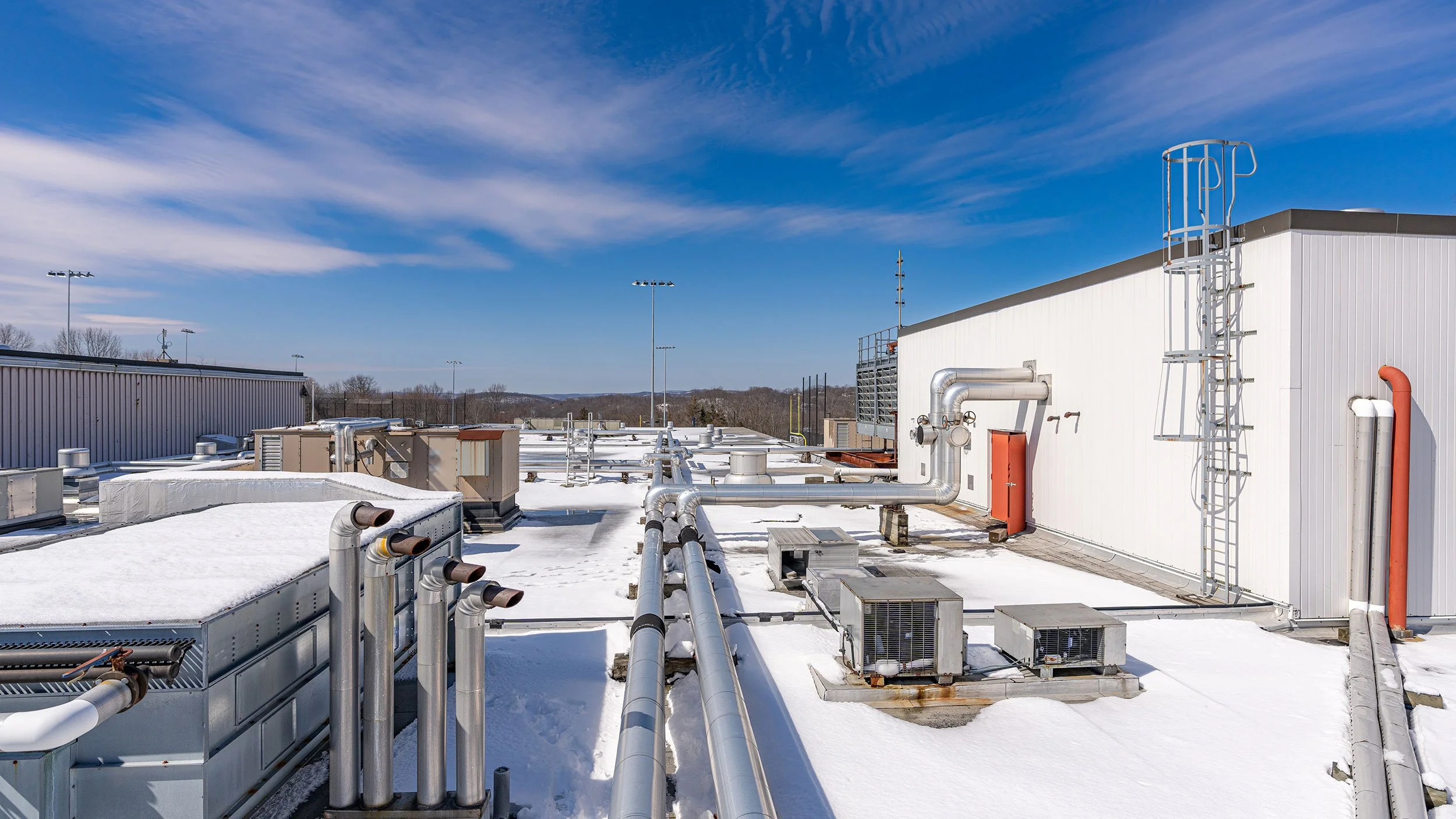
Heavy snow events, together with the melt that will follow when temperatures rise, can produce concentrated snow, ice and water buildup that create roof loads well above the code specified uniform-snow and design capacities. Because of this, we want to provide timely guidance and recommended actions to help protect your buildings, students, and staff.
Unlike fixed dead loads, snow load is highly variable and is influenced by factors such as location, elevation, roof shape/slope, and local weather patterns. Concentrated loads around parapets, rooftop mechanical equipment, solar collectors, and other obstructions are a concern. These concentrated loads are hazardous on their own, but when combined with concentrated, water-laden snow and with ice dams, these concentrated loads can dangerously increase roof loads to the point of failure. The NYSED Office of Facilities Planning has highlighted these hazards and the importance of checking drains, looking for ice under snow, and ensuring fire exits remain clear.
NYSED Office of Facilities Planning Newsletter, Issue #112, Nov. 2013
Roof snow-load capacity varies significantly and depends on many factors including the building’s year of construction, any subsequent renovations or reconstructions, specific roof conditions, and the building code that applied at the time of construction or renovation. Contact us and we can assist in evaluating the snow-load capacities for your roofs and provide detailed information tailored to each structure.
Converting a roof’s load capacity into an equivalent safe depth of snow is complex and imprecise because snow density and conditions vary. As a general guideline, roof snow loads can range from about 10–15 pounds per square foot (psf) for light, freshly fallen snow to more than 40 psf for wet, compacted snow. Exact values for a given roof require an on-site assessment or a review of design documents.
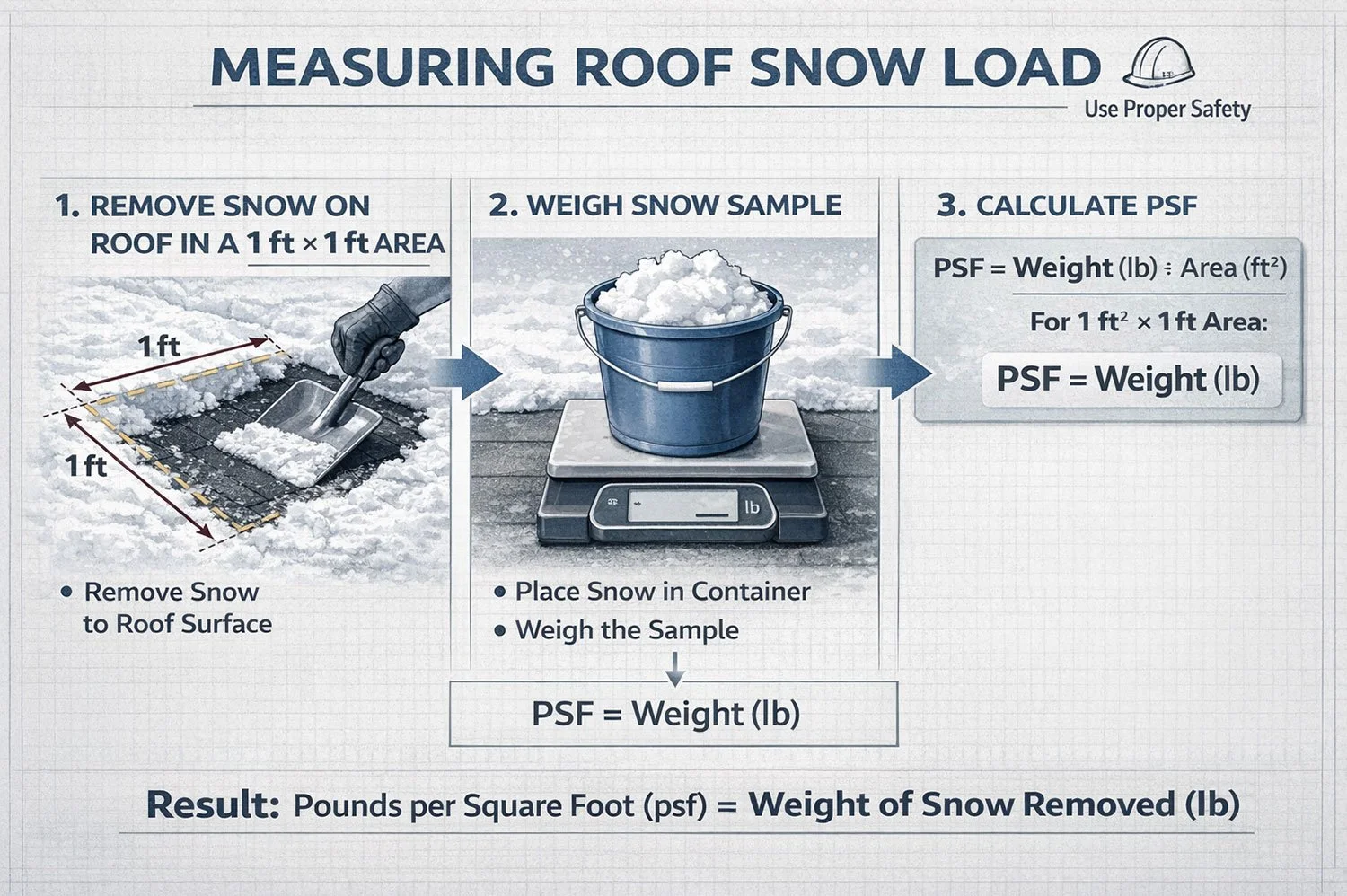
The only reliable field method to determine the snow load on a roof is to remove a measured sample and weigh it.1.Remove a 1‑ft by 1‑ft area down to the roof surface (including the full depth of snow and ice.) 2.Weigh that sample. 3.Calculate by dividing the measured weight (pounds) by the actual area of snow removed in square feet to give you pounds per square feet. If you removed a 1ft by 1 ft area of snow the weight measured would be the actual psf on the roof.
The measured psf can then be compared to the roof’s design capacity.
As your design professional we strongly recommend you take the following immediate actions:
-
Deep or uneven drifts and ice dams.
Check and clear the fresh air grills/intakes – especially from UV’s due to snow blockage.
Signs of sagging, deflection, or water infiltration.
Check roof drainage:
Clear roof drains, scuppers, and gutters of snow and ice blockage where safely accessible.
Inspect likely drift locations:
Lower roofs immediately adjacent to higher roofs, parapets, rooftop mechanical equipment, solar collectors, roof curbs, and other obstructions.
Verify egress:
Ensure all exterior emergency egress windows, fire exits, stairways, and egress paths are free of snow banks and drifts.
Make sure all egress doors are working properly as high snow loads can cause local areas to sag which may make doors inoperable.
-
Where excessive snow or ice accumulation is observed, arrange for safe removal by qualified personnel or contractors as soon as practicable. Prioritize areas with concentrated drifts, visible roof deflection, blocked drains, or obstructed egress.
-
If you observe visible structural distress (pronounced sagging, audible cracking noises, rapidly increasing deflection, or active water infiltration), immediately restrict occupancy beneath the affected area and contact us such that we can assist in evaluating the situation.
Tetra Tech is a leading provider of consulting and engineering services. The Company supports clients by providing innovative solutions focused on infrastructure, resource management, water, environment, and energy.
Supporting your facility and design needs
Tetra Tech Architects & Engineers is dedicated to developing the best possible learning environments for students, faculty and staff by focusing on the positive impacts facilities have on education. This team integrates thoughtful designs with high-performance and sustainable design principles that are in alignment with your district’s goals.
Tetra Tech Architects & Engineers is a full-service architecture and engineering firm with over 100 staff working from four New York offices. The architects, engineers, designers, planners and technical staff are an experienced team working together delivering thoughtfully designed projects.
This team delivers successful projects because they have dedicated their design and planning expertise to school districts. They maintain long-time relationships with the NYSED and provide their collective knowledge and experience working within the complex K-12 project process and that is a benefit to your projects.
Reasonable efforts have been made to assure that the information included within is accurate, the information is provided for convenience and reference and without warranty of any kind. This information is general in nature and may not be applicable in every situation. The delivery of this information does not constitute professional services, as Tetra Tech Engineers, Architects & Landscape Architects, P.C. d/b/a Tetra Tech Architects & Engineers. Providing the information is outside the legal bounds of any existing and/or current professional services contract with the District. Any Entity using the above information, assumes all associated risks and liabilities.

Nathan Clark, PE