Student Guided Design for STEM
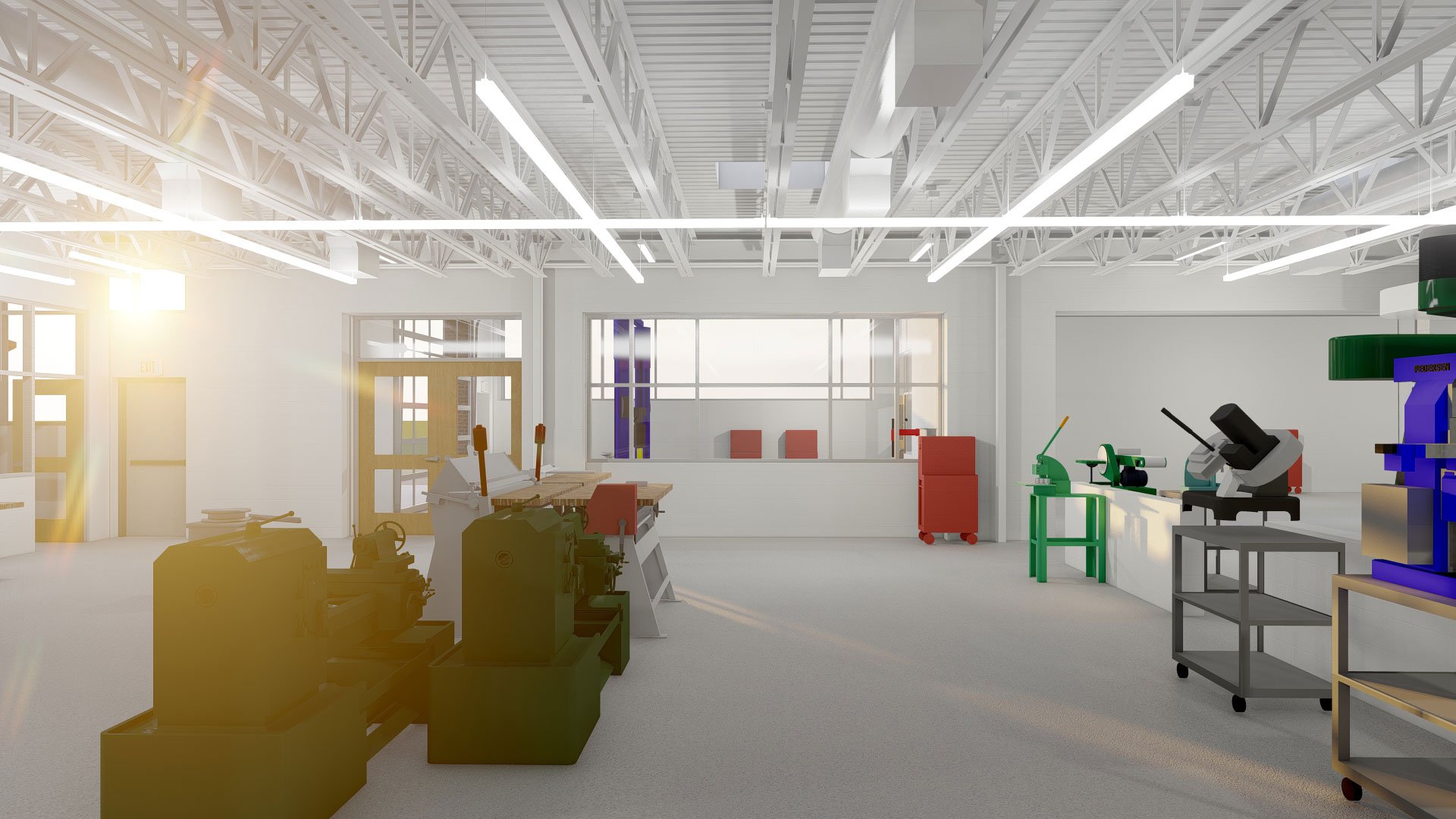
The Ithaca City School District STEM suite stands out not just for upgraded equipment and expanded space, but for how the students, educators and faculty shaped its design. From initial concepts through immersive virtual‑reality reviews, an iterative, user‑centered process included instructors, students and other user groups participating in the design process. They contributed to the layout, provided program adjacency insight, and shared program priorities. The result is a facility precisely tailored to instructional needs—and a community of students and educators who can take genuine ownership of a space that they designed.
The District tasked the design team to deliver a STEM Suite that separated noisy and dusty fabrication from quiet digital design work, increased vertical clearances for automotive and robotics activities, improved ventilation for welding and other shop processes, and expanded program capacity to accommodate new curricular offerings.
From early conceptual charrettes through virtual-reality reviews, the project was driven by iterative feedback sessions that allowed the people who would use the spaces daily to inform layout, adjacencies and program priorities. That collaborative model yielded a facility tailored to instructional needs and infused with a sense of ownership among its users.
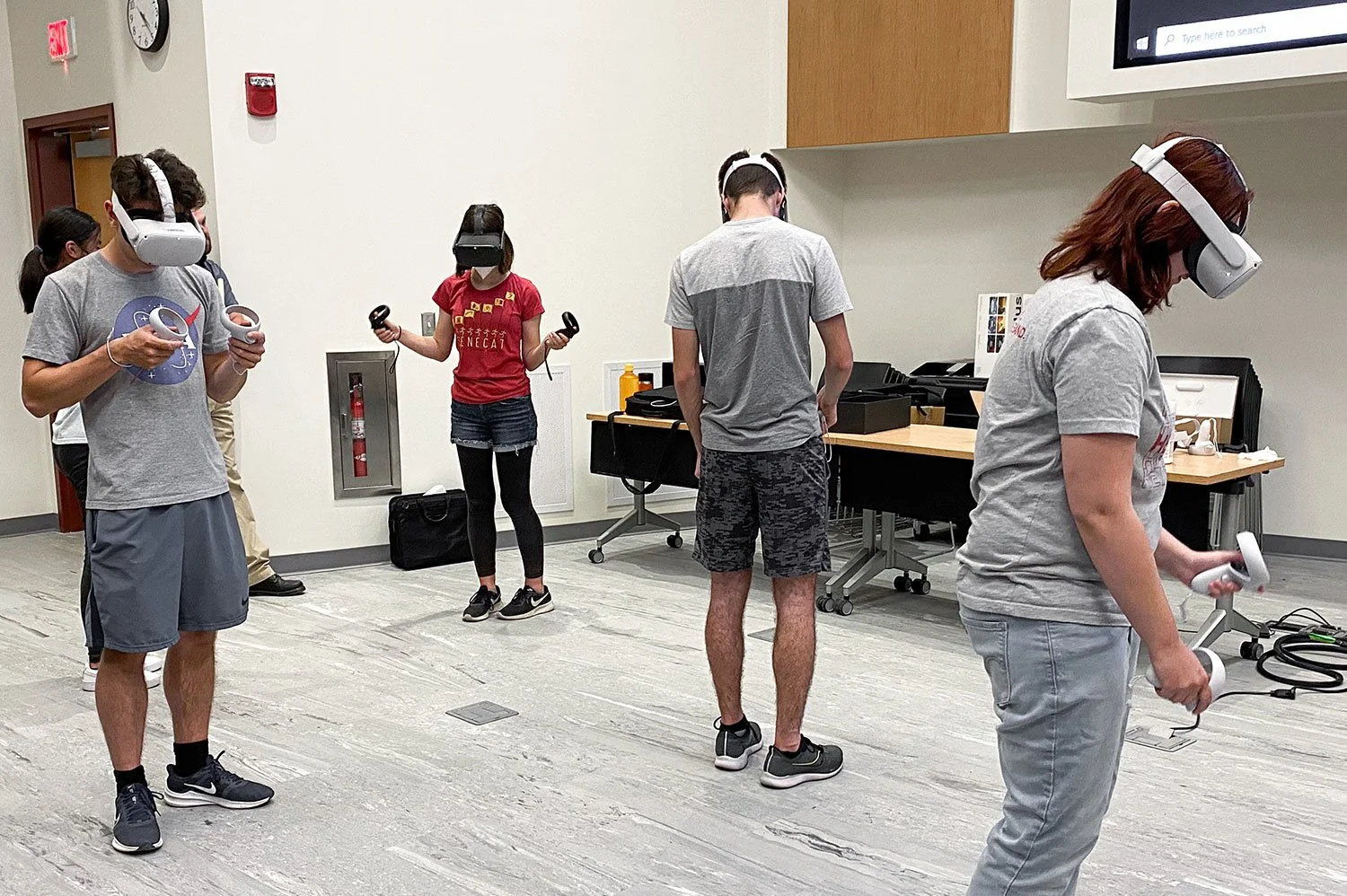
The Tetra Tech team established a participatory design process that layered professional analysis with direct user engagement. Faculty leaders acted as advocates for involving students and teachers in decision-making. Design reviews included 3D renderings, animated walkthroughs and immersive virtual-reality sessions; students experienced proposed layouts in VR and provided meaningful feedback on circulation, storage, supervision sight lines and equipment placement. The student comments were reported to district decision-makers and shaped crucial choices, such as the separation of design and manufacturing zones and the inclusion of switchable glass partitions.
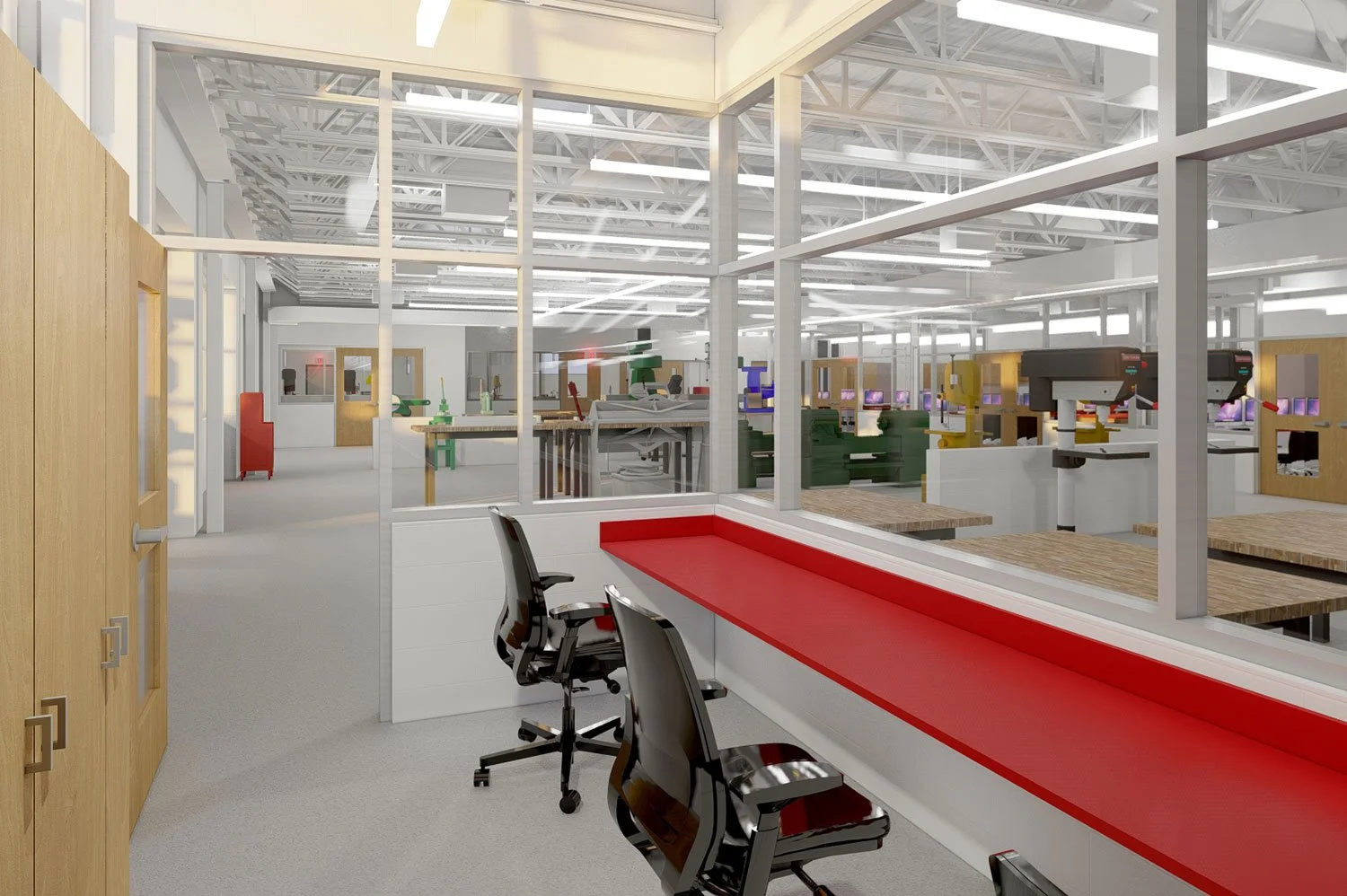
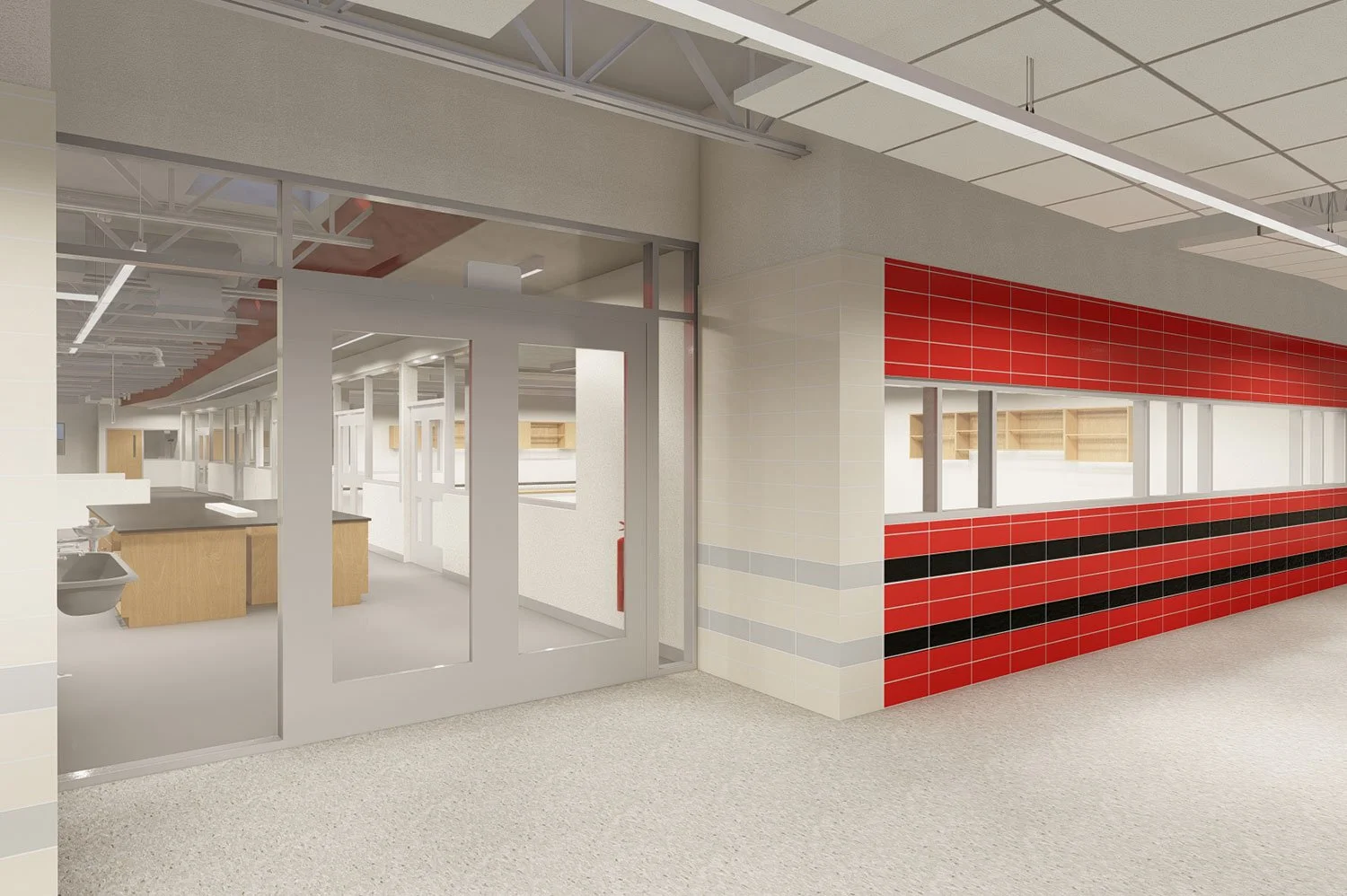
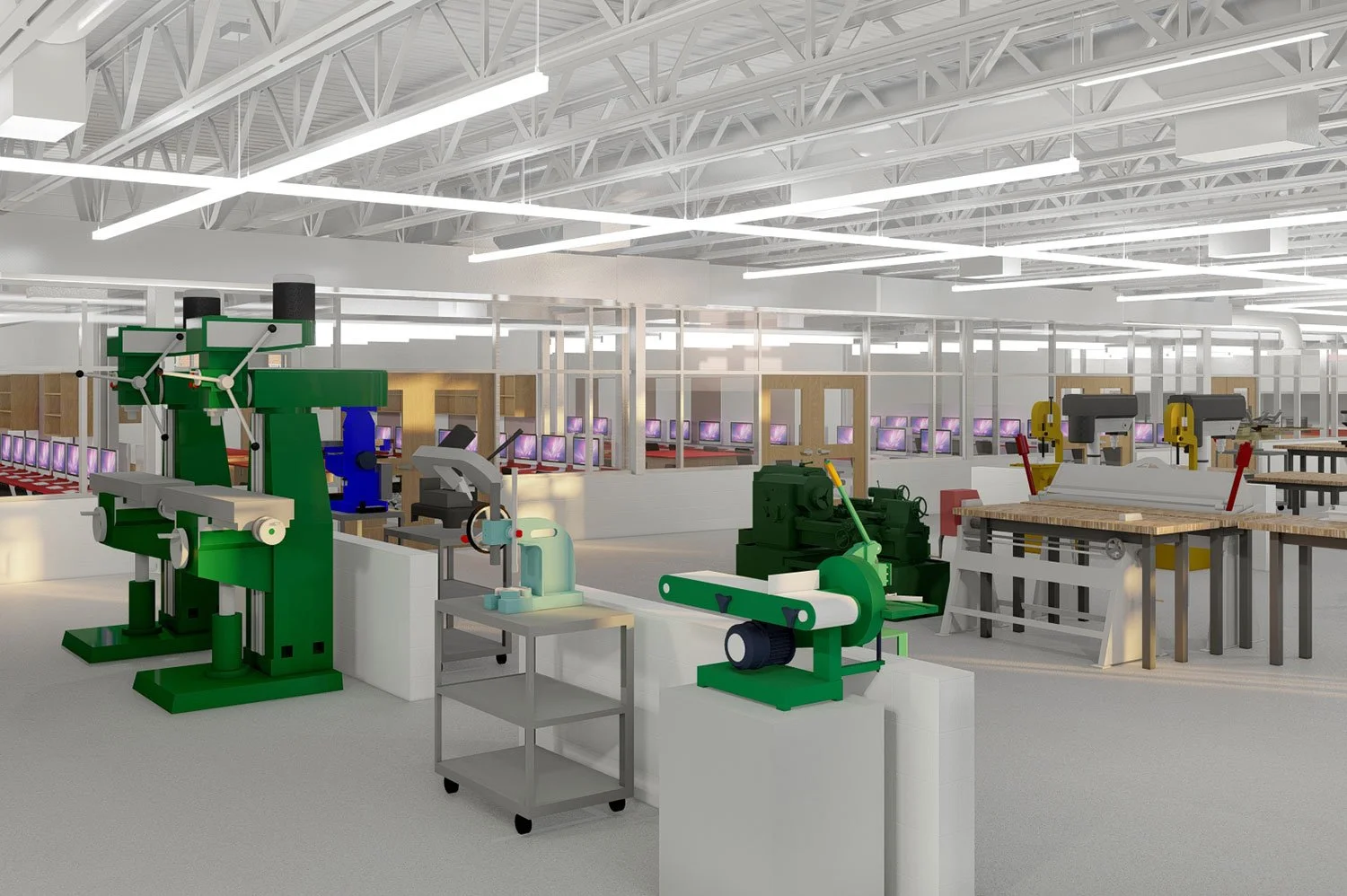
Tetra Tech’s Immersive Design & Digital Technology Department Lead Ota Ulč led several participatory design sessions with user groups, allowing them to experience the suite’s design in virtual reality. These VR sessions, along with 3D models and hands-on user feedback, informed design decisions for the layout and the relationships between rooms.
Students’ contributions were practical and influential, and the instructors and educators’ articulated needs were design drivers. The design team developed executable solutions by pairing each user-driven request with a technical approach. When students flagged dust migration from manufacturing into computer labs, the team proposed airtight transitions, negative-pressure shop zones, upgraded filtration and switchable partitions. When users requested separate quiet and noisy work modes, the design combined acoustic separation, visual surveillance paths and zoned HVAC controls so teachers could monitor shop activity without interrupting focused design sessions. Students’ call for adequate storage and clear circulation led to reconfigured corridors and dedicated tool-storage rooms that kept materials out of sight lines and improved emergency egress. The participatory process allowed the team to vet these solutions early with immersive visualization, reducing late-stage change orders and ensuring the final design met both programmatic aspirations and code requirements.
Beyond the technical approach of the design, this project’s process was cultural: students and faculty who actively shaped the design can express a strong sense of ownership and stewardship for the space. This ownership translates into an energized launch of expanded programs and a high level of care for equipment and facilities. Administrators receive a facility that balances district priorities, code compliance and lifecycle considerations, and the A/E team delivered documentation and as-built verification to support future maintenance and program evolution.
The Tetra Tech team approached this assignment with a commitment to weave technical rigor and community-responsive design into a single, adaptable facility that reflected the district’s educational priorities and the expectations of faculty, students and administrators.
The new STEM Suite stands as a visible, flexible educational asset for the ICSD — a facility shaped by its users, grounded in engineering rigor, and positioned to grow the District’s instructional ambitions.