Wheels in a Row
Wallkill Central School District
Transformation of a congested bus loop area to improve pedestrian safety and deliver long‑term benefits
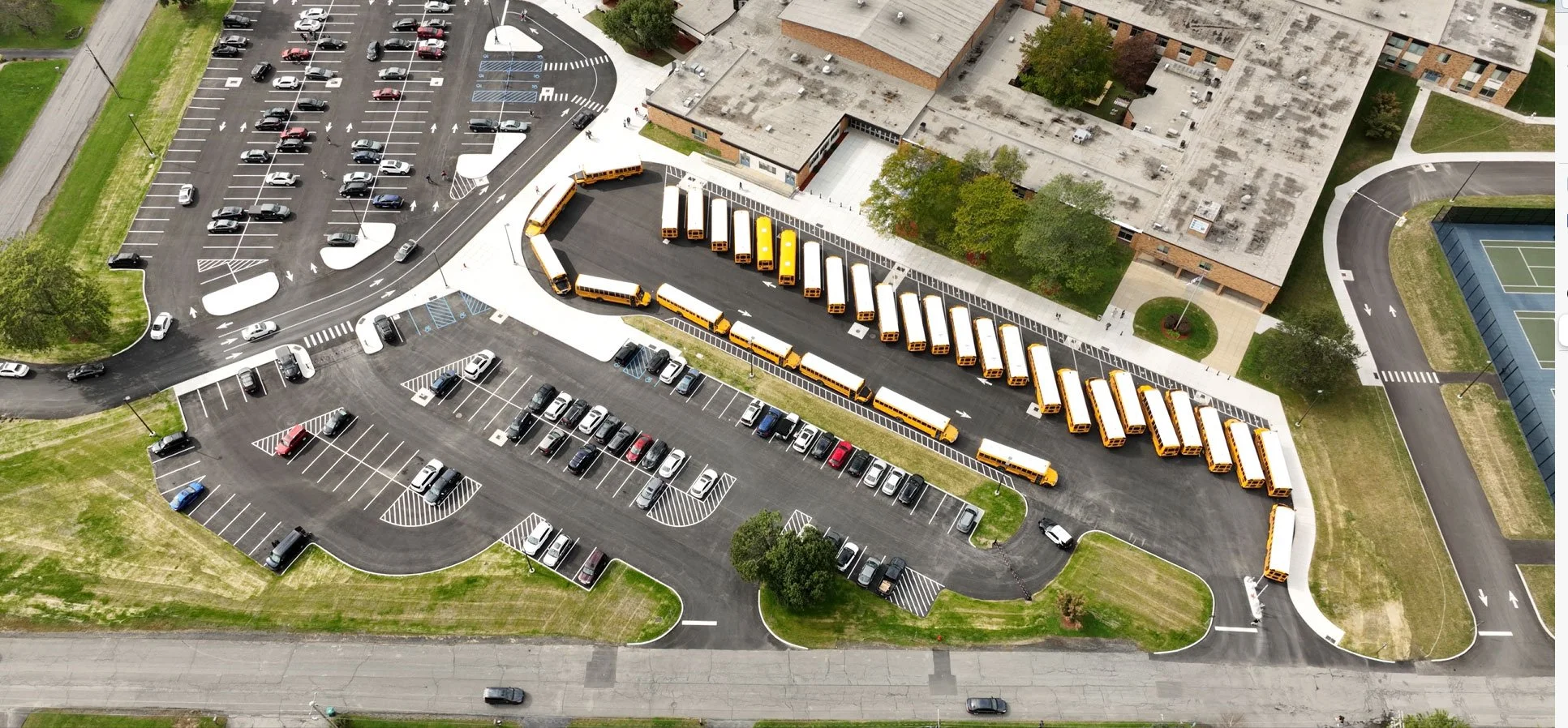
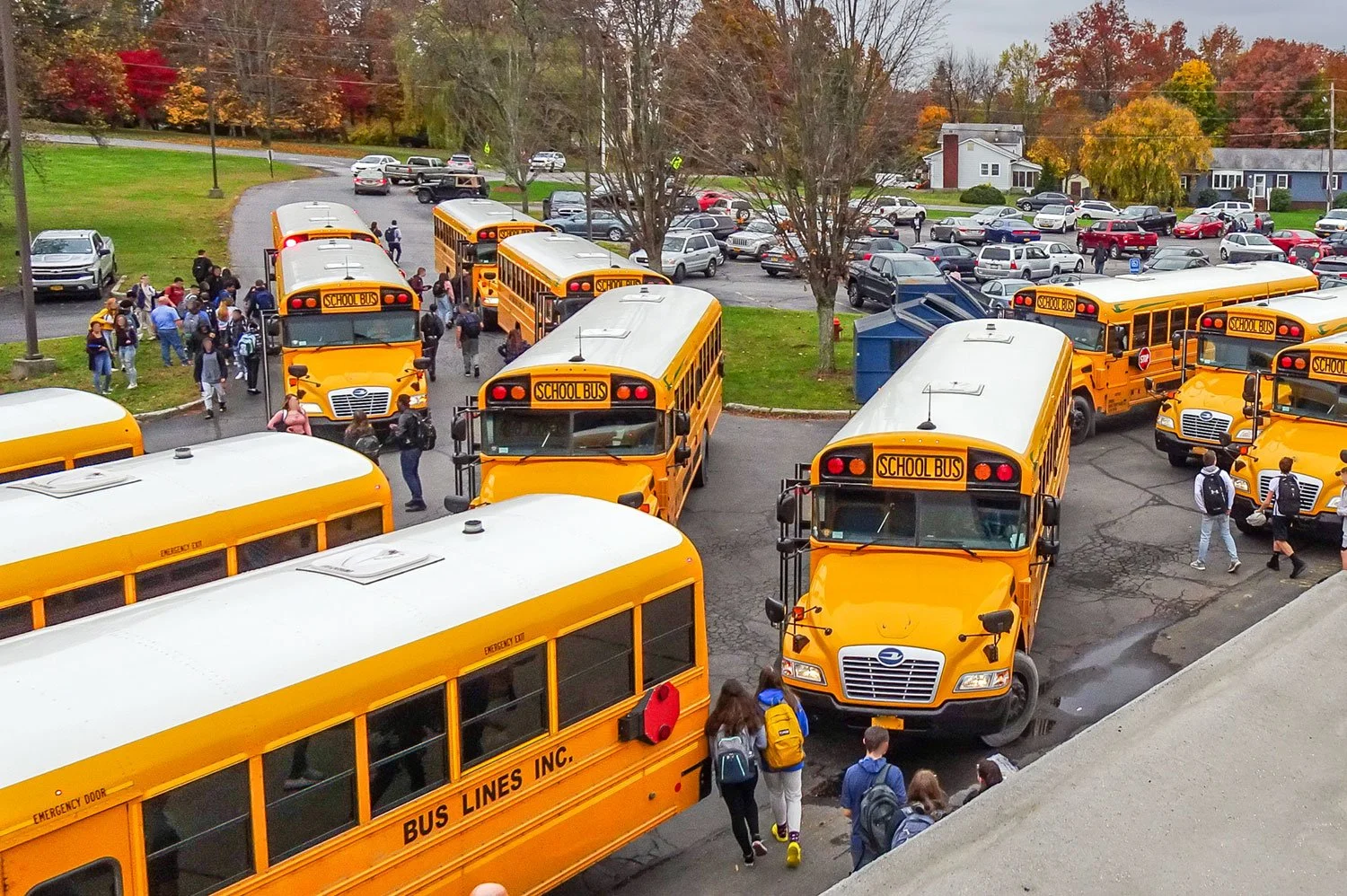
The Wallkill Central School District engaged Tetra Tech to undertake a comprehensive evaluation and redesign of the High School vehicular and pedestrian circulation patterns. Wallkill’s high school had long experienced operational and safety challenges during short but intense arrival and dismissal periods: students walking between buses and vehicles, narrowly dimensioned parking areas that were difficult to navigate, constrained pedestrian routes, and an aging site stormwater and water distribution infrastructure that no longer met current standards. The District had identified this as a capital priority to improve safety for students and staff, reduce traffic conflicts, and bring site utilities and stormwater systems up to modern standards.
The Tetra Tech team began the project by documenting and analyzing existing site conditions through a combination of field observation, drone-based aerial video, and stakeholder engagement. The AM arrival and PM dismissal conditions were captured by the drone to provide objective visual data on vehicle counts, bus circulation, drop-off patterns, pedestrian movements, and conflict points. The aerial analysis confirmed higher-than-typical bus volumes, frequent vehicle/bus conflicts, narrow and inconsistently sized parking spaces and rows, steep grades that impeded safe pedestrian routes, and a lack of adequate stormwater controls and subsurface water capacity. These observations were supplemented by in-person basic circulation studies and conversations with school administrators, transportation staff, and maintenance personnel, producing an early picture of the operational constraints the site presented.
Armed with field data and stakeholder input, the site design team prepared conceptual alternatives that focused on three project objectives: separating bus traffic from passenger vehicles, increasing the amount of formal parking capacity, and modernizing site infrastructure to address both stormwater quality/quantity and an aging water main. Initial conceptual work was shared with the District and refined through multiple facilities committee reviews and owner meetings. The team’s familiarity with Wallkill—nearly two decades of work together—allowed the Tetra Tech site team to translate the owner’s operational priorities directly into design considerations, anticipating maintenance needs and future operational flexibility.
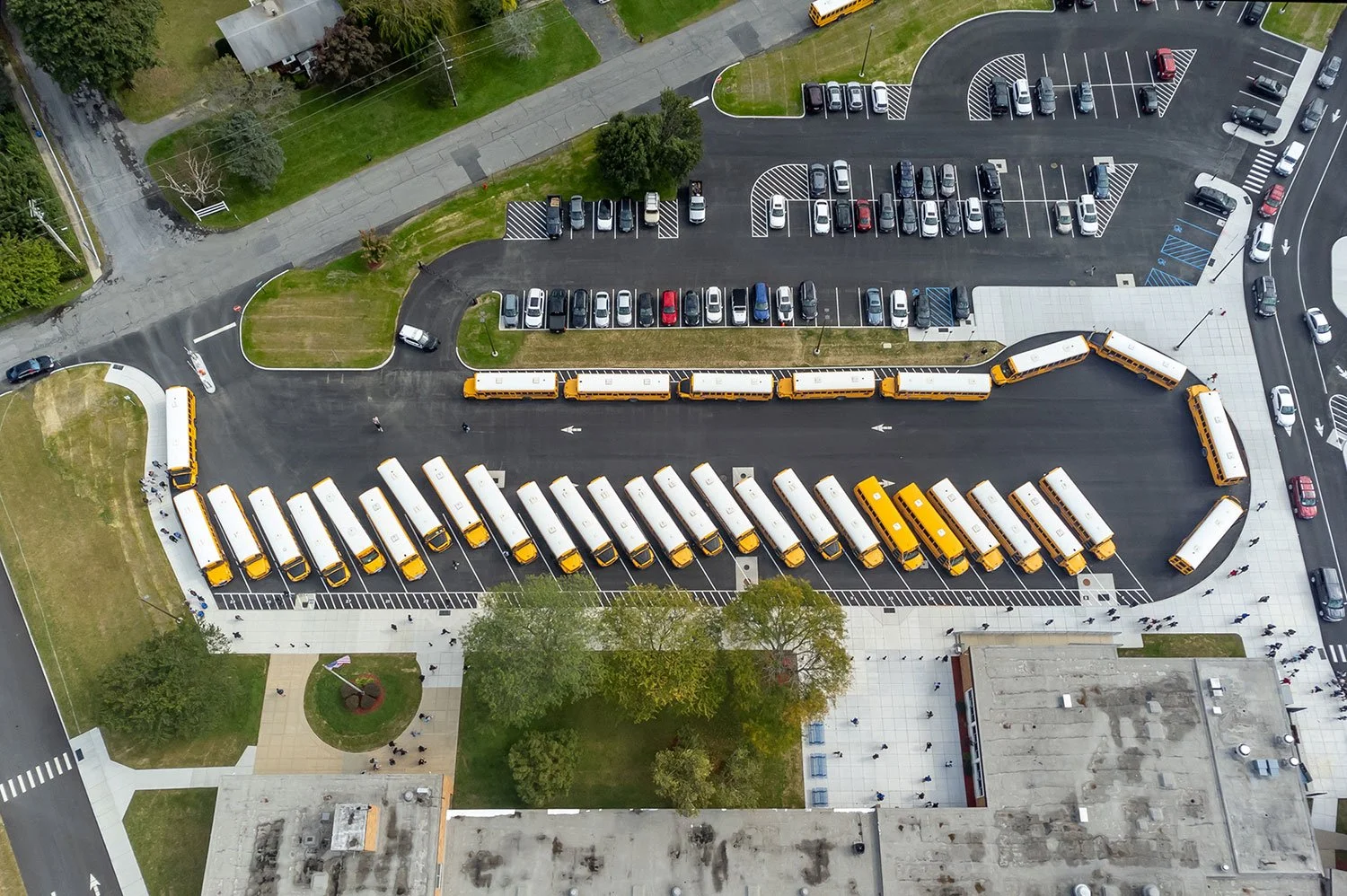
The final design established a dedicated bus loop that physically separated bus circulation from parent drop-off lanes and staff/student parking. The bus loop was configured with angled stalls sized and oriented so that all 34 school buses could park with doors adjacent to a continuous sidewalk, eliminating the need for students to walk between buses. This required careful space allocation and grading adjustments but resolved the critical safety issue associated with dismissal periods. A new 70-stall parking lot was introduced to meet staff and visitor parking needs while standardizing stall dimensions and aisle widths, improving maneuverability and reducing congestion. The design intentionally allowed operational flexibility for large events by permitting controlled daytime use of the bus loop as overflow parking when not in active transportation use.
From a utilities and infrastructure perspective, the project required substantial upgrades. A stormwater management system was designed to current regulatory expectations, introducing capacity and water-quality controls absent from the original construction era. The team also recommended replacing a deteriorating water main that was approaching the end of its service life. The District accepted the recommendation to replace the main concurrently with the site reconstruction—an approach that reduced the likelihood of disruptive re-excavation in the near future and proved more cost-effective over the life cycle of the improvements. Addressing these infrastructure gaps involved extensive grading and utility relocation across much of the site, as well as the introduction of defined snow storage areas and plowable circulation zones to support winter maintenance—items that are often overlooked during school site work but are critical for year-round operations.
The scale of physical work was significant. Nearly the entire asphalt surface of the High School drives and lots were removed and rebuilt, requiring a tightly coordinated construction approach during a limited work window. Construction was scheduled for the summer break and executed on an accelerated nine-week timeline to avoid impacting the school year. This compressed schedule demanded intensive preconstruction planning and a contractor experienced in fast-track, school-site projects. The selected contractor demonstrated an exceptional understanding of schedule-critical sequencing and collaborative problem solving, which was vital to meeting the milestone dates. The Tetra Tech construction administration and field coordination members provided prompt responses to construction questions and quick resolution of issues to keep the project on schedule and minimize owner disruption.
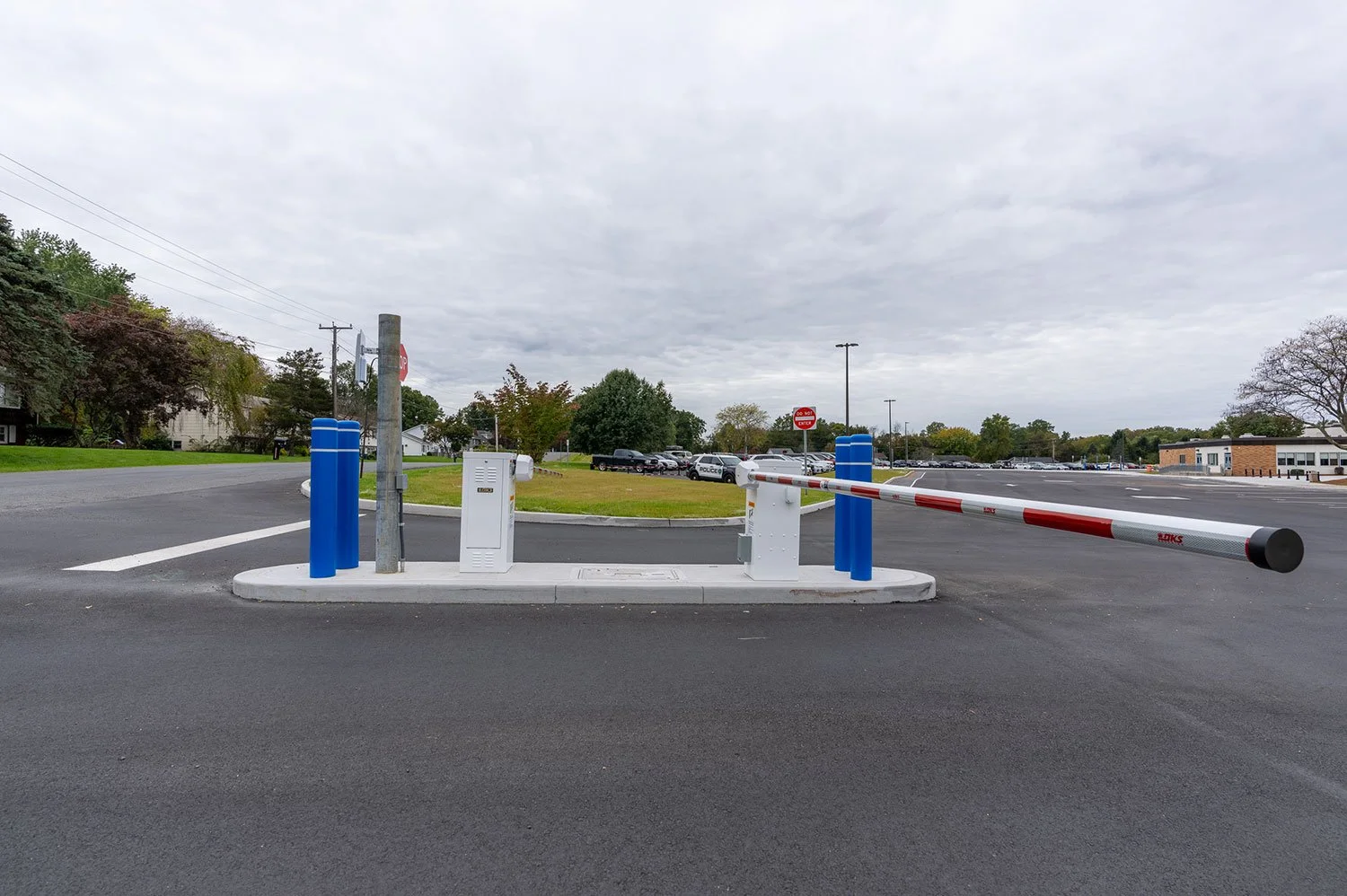
Several unique and unusual conditions complicated design and construction. The site’s steep slopes required extensive regrading to produce uniformly comfortable parking areas and accessible pedestrian routes. Legacy stormwater practices from the original construction era left the site short on detention, conveyance, and treatment infrastructure, meaning the team had to insert new systems into constrained subgrade conditions. The project also encountered non-standard vehicle access gate requirements during construction: after the design was finalized, the District requested motorized security gates for faculty parking and for closing the bus loop. This addition required the team to evaluate long-term maintenance and integration into the District’s building management system so that gates could automatically open for buses and provide emergency access. The team worked with the District to select gate systems that balanced functionality, durability, and maintainability while integrating the controls to meet the District’s operational requirements.
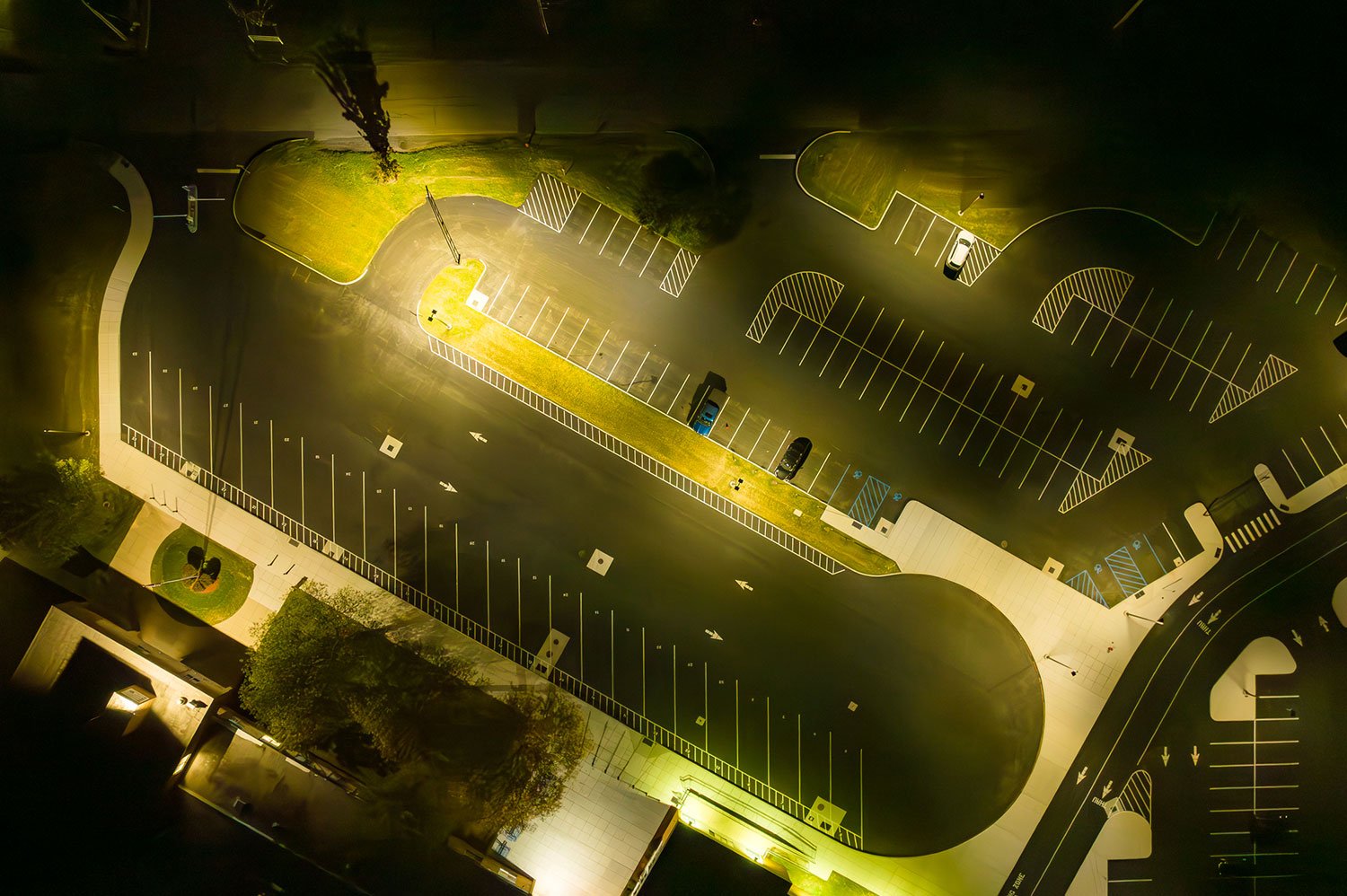
The design included upgraded site lighting; after construction, the team again used drone imagery to assess lighting distribution across the campus and verify that illumination met design expectations, particularly at pedestrian crossings and along the new bus sidewalk. Snow storage and plow routing were validated with maintenance staff to ensure practicality in winter operations. The team also incorporated ADA-compliant pathways and entrance access so the improved site supported inclusive access for all students and visitors.
The collaborative nature of the project contributed directly to its success. The multidisciplinary Tetra Tech team worked to find appropriate solutions for the projects’ complex civil and stormwater engineering demands. Frequent engagement with the District, and the facilities committee allowed refinement of layouts and rapid decision-making that kept the project on schedule when existing conditions were revealed. Tetra Tech’s construction administration responsiveness, combined with the contractor’s schedule discipline and familiarity with school-site constraints allowed the work to be delivered within the tight nine-week summer period without impinging on the academic calendar.
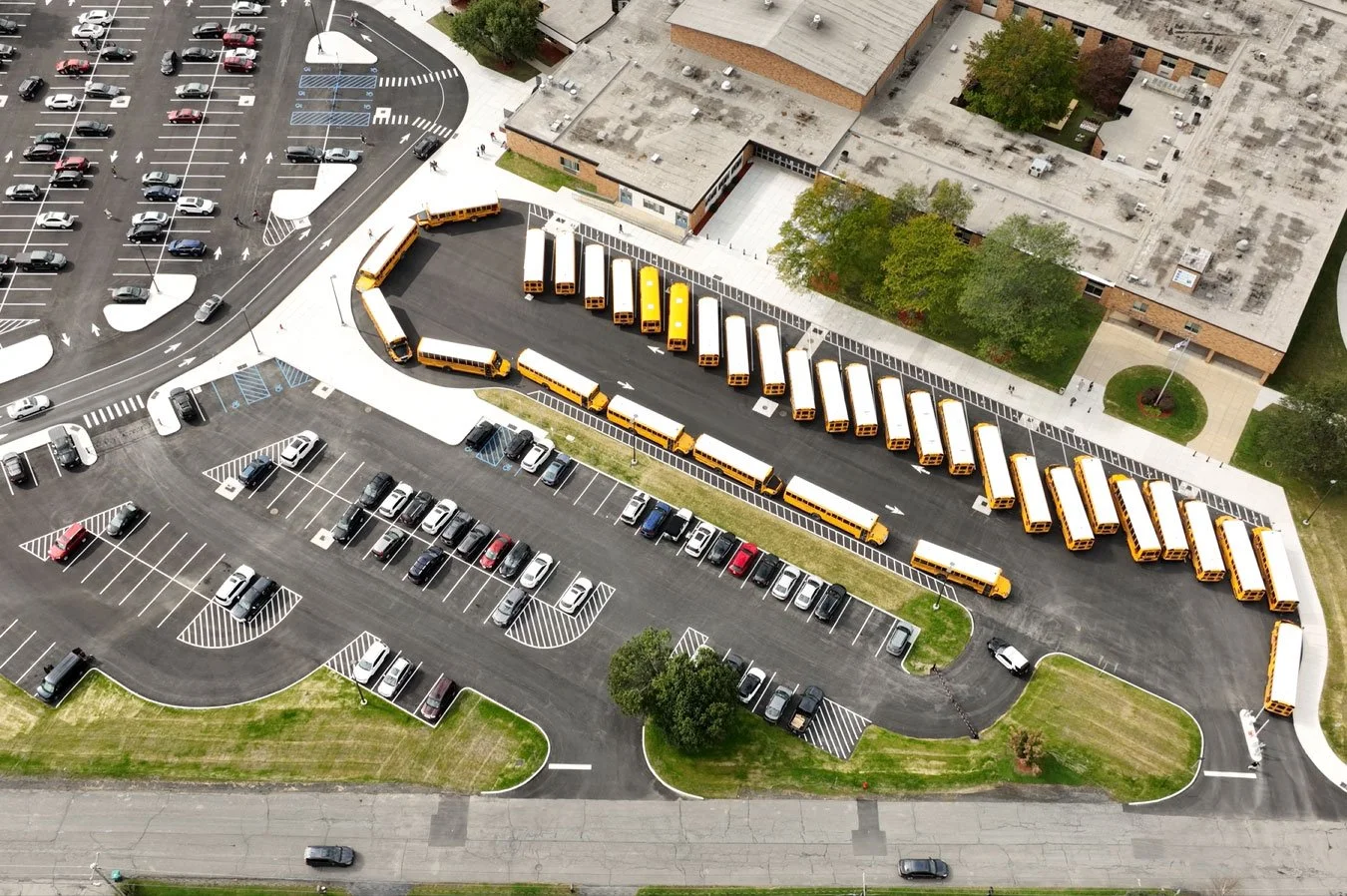
The result was replacement and reconfiguration of roughly 96 percent of the existing asphalt driveways and parking areas occurred to provide a safer, more efficient, and code-compliant campus. The project transformed the high school site that prioritizes safety, clarity of circulation, code compliance, and long-term operational efficiency. The new dedicated bus loop safely accommodates all 34 buses with direct sidewalk access, eliminating student exposure to bus-to-car conflict zones during dismissal. The additional 70-stall parking lot and reorganized parking geometry provide clear, uniform stalls and aisles that are easier for staff and visitors to navigate, reducing vehicle conflicts and congestion. Upgraded stormwater infrastructure and the replaced water main bring the campus infrastructure up to modern standards and remove the need for near-term disruptive repairs. Integrated gate controls, improved lighting, and designed snow management areas round out a campus that supports safer daily operations and is better prepared for events and long-term maintenance.
The Tetra Tech project team delivered intensive technical design, thoughtful operational planning, and a phased implementation plan that allowed the fast-track construction execution. The A/E team delivered a durable solution that reduces risk, improves student and staff safety, and extends the useful life of the campus infrastructure.