
Ventilation Victory
Wallkill Central School District
Modern ventilation solutions preserving character and reducing disruption
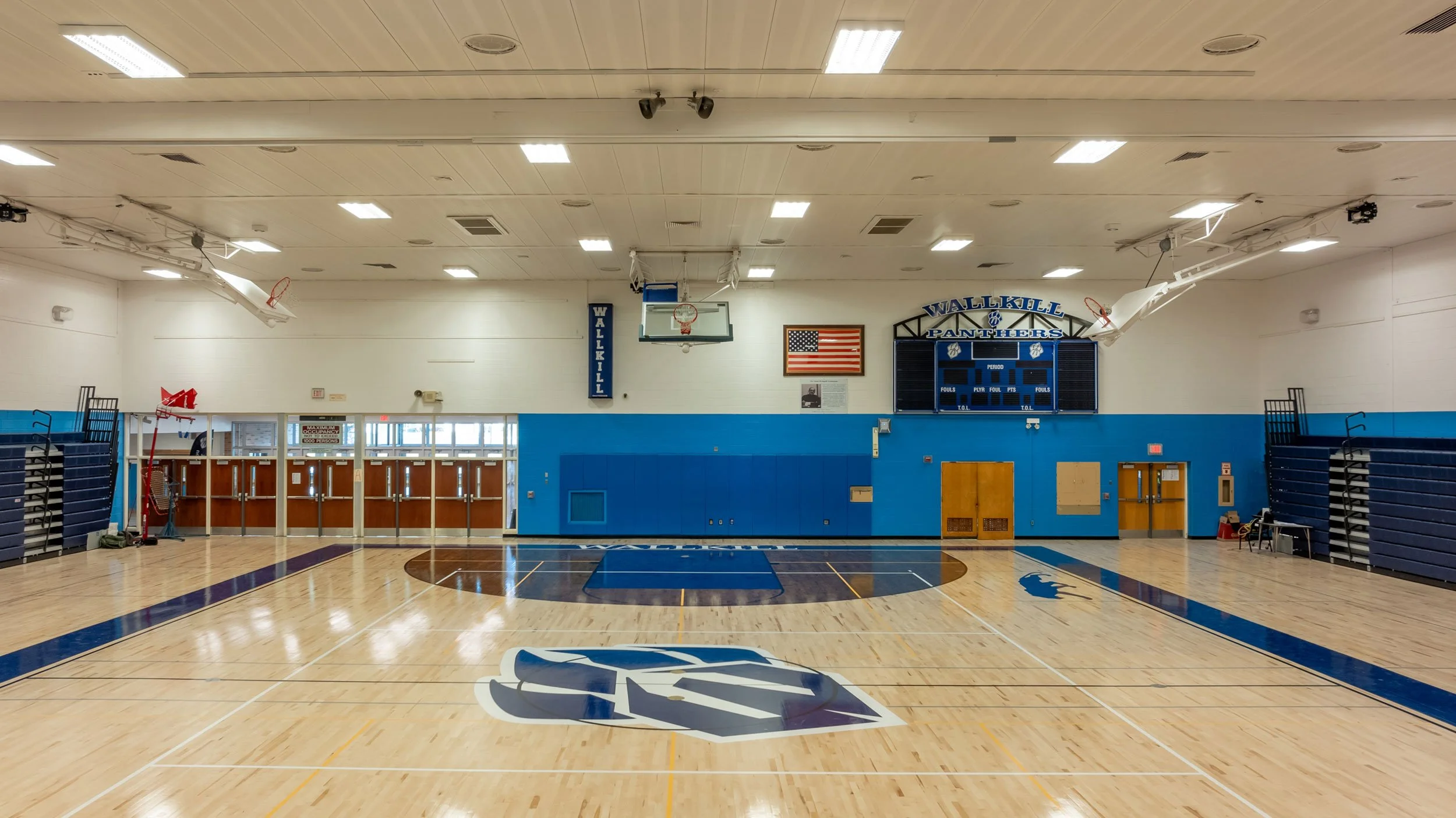
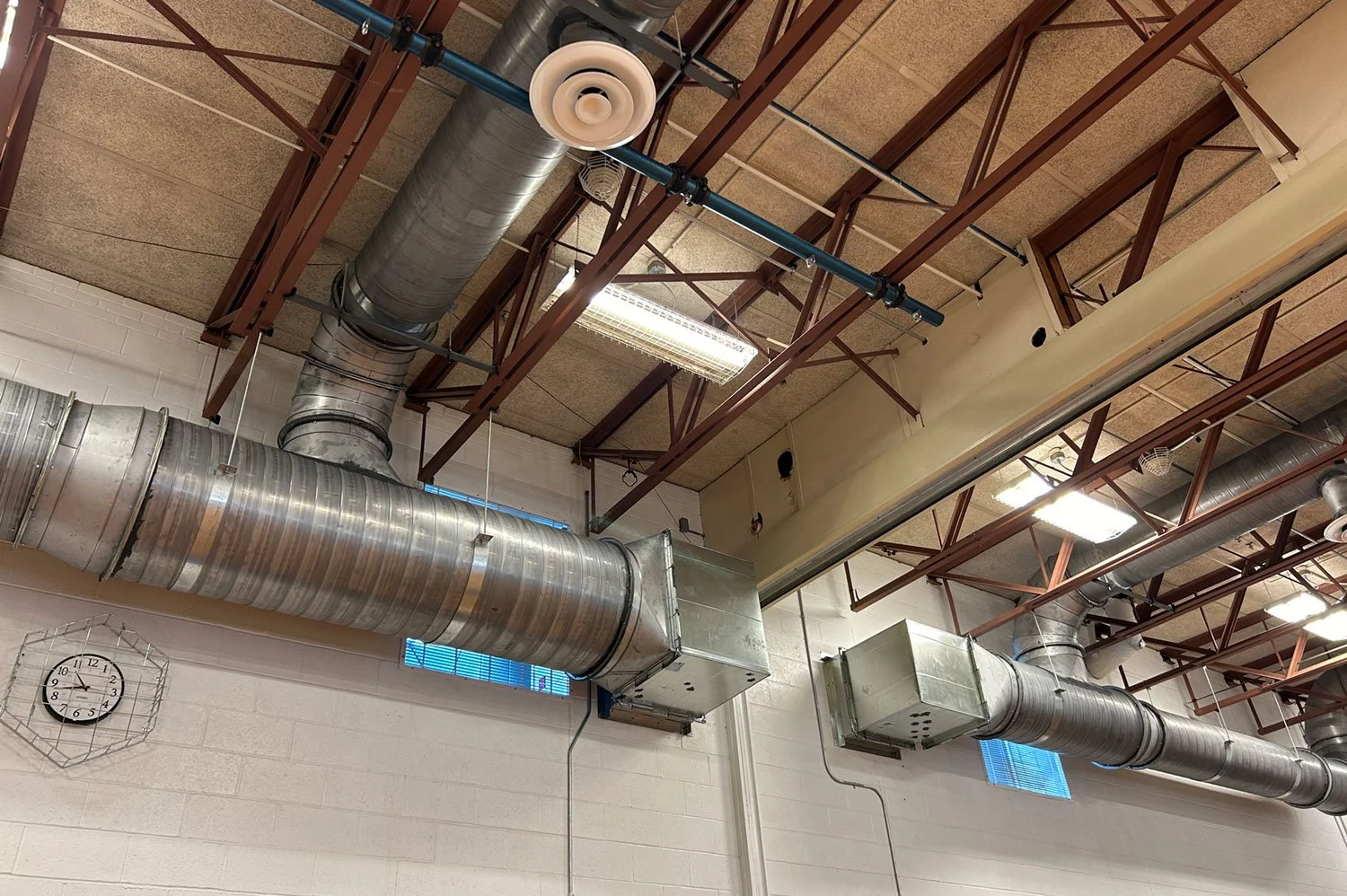
Wallkill Central School District needed reliable air conditioning in several large assembly spaces to improve occupant comfort and support year‑round use. The district sought solutions that would deliver thermal comfort and adequate ventilation while minimizing disruption and preserving each building’s architectural character. Tetra Tech responded with site‑sensitive designs that balanced comfort, acoustics, ventilation, and energy performance, tailoring systems to the varied constraints found across the campus.
At the high school library, the design team encountered undersized ductwork that made tying into the existing distribution impractical. Rather than undertaking a costly and invasive full duct replacement, Tetra Tech installed split‑system heat pump cassettes mounted within the space. Those cassettes provided efficient cooling and substantially improved heating compared with the building’s aging steam system. To meet ventilation requirements without major rework, an energy recovery ventilator (ERV) was placed on the roof and connected into the library’s existing ducts. The ERV supplied fresh tempered air while reclaiming energy from exhaust streams. This hybrid approach met indoor air quality and thermal control targets with minimal interruption to library services.
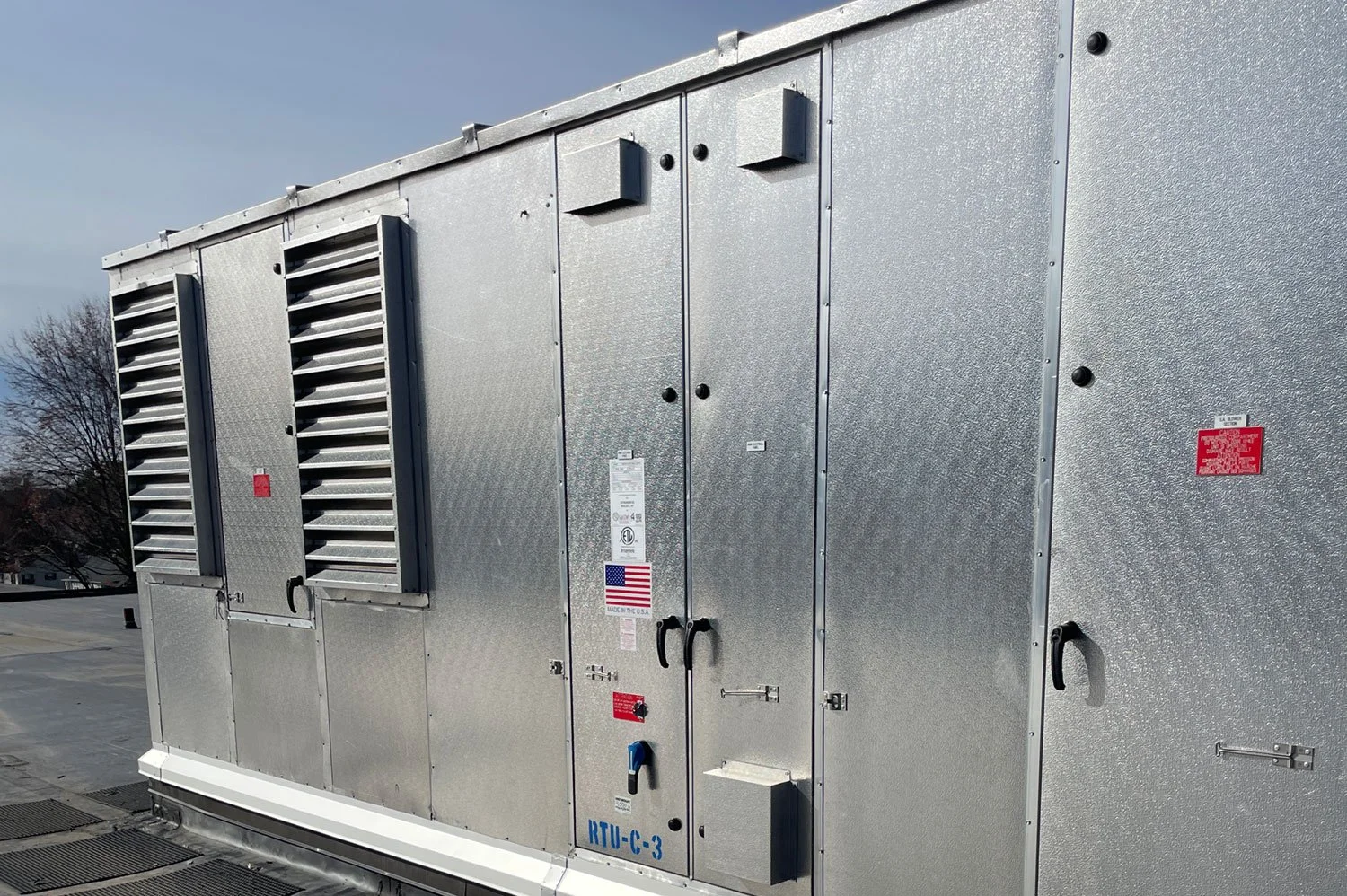
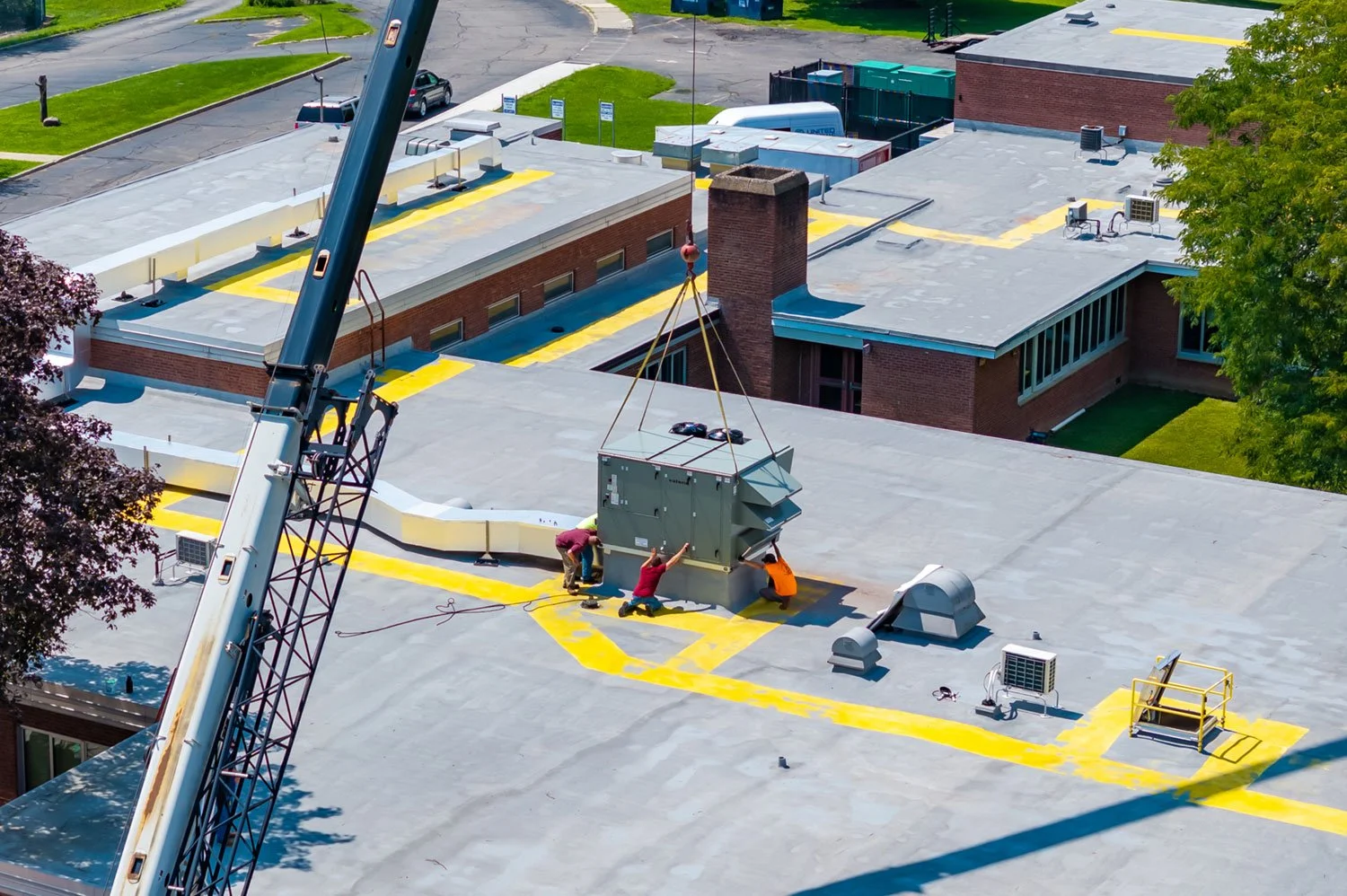
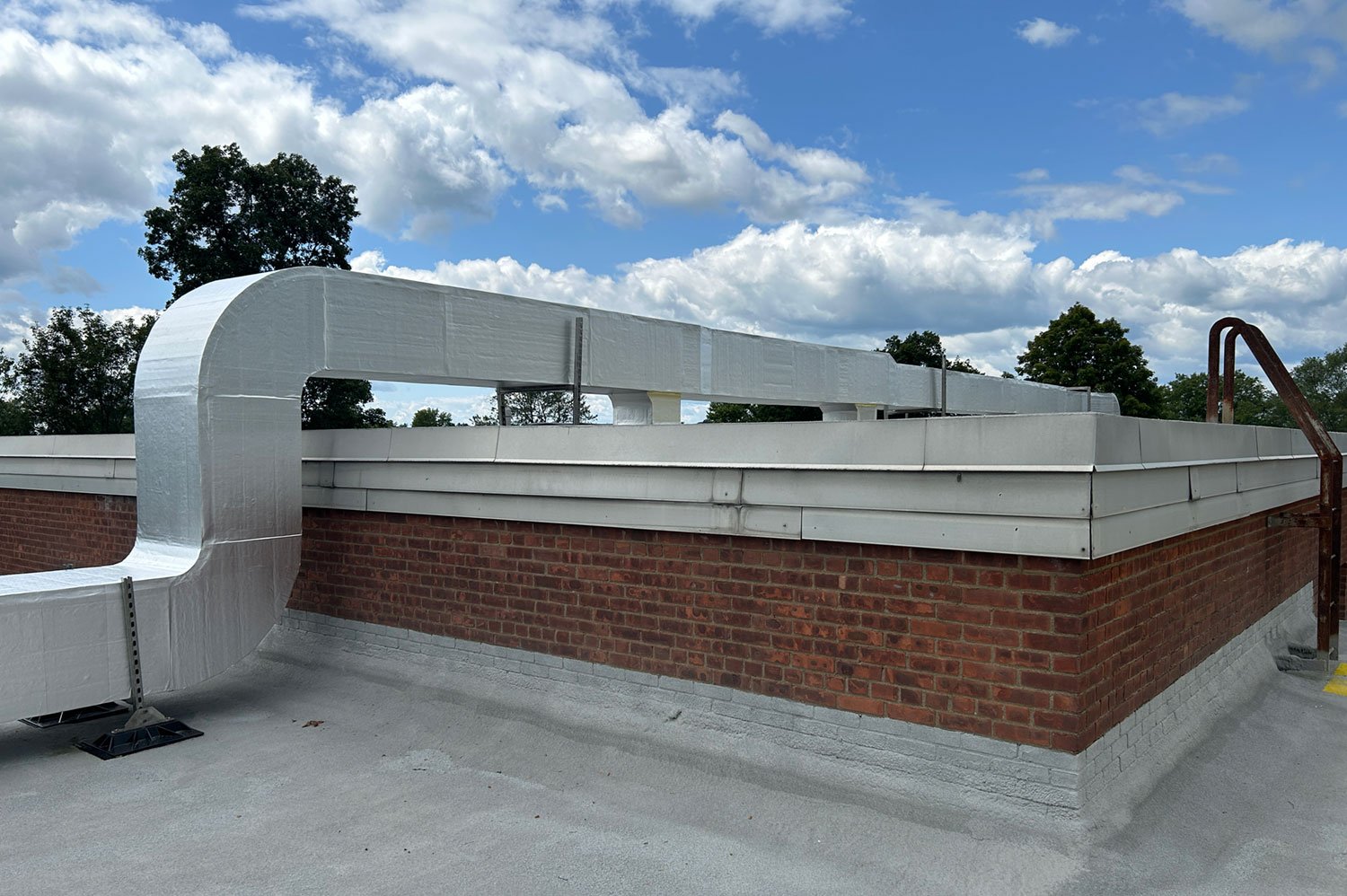
A new AC system, along with replacement of the existing heating system in the Senior High School gym, was included within the scope of work. During rooftop equipment installation the team ran into unanticipated site conditions at the high school that made originally planned equipment locations unsuitable. The initial plan would have required removing environmentally sensitive ceiling assemblies and vacating the security office to install structural supports — an outcome that would have increased costs and delayed work until after the school year began. In the field Tetra Tech delivered a design solution that elevated the units and extended their support structure so that the hardware sat entirely above the roof plane. That on‑the‑spot modification resolved environmental concerns, preserved the construction schedule, and avoided a time‑consuming redesign or relocation.
The middle school auditorium posed a different challenge: a hard ceiling and sensitive environmental conditions above the seating area prevented conventional overhead ductwork. To protect sightlines and the room’s visual character, Tetra Tech specified long‑throw registers flanking the stage. Those registers are engineered to project conditioned air across significant distances so occupied seating receives even cooling without visible duct runs. Concern about HVAC noise interfering with performances led engineers to place mechanical equipment on an adjacent roof rather than directly above the auditorium. This placement reduced acoustic impact while still meeting comfort and ventilation objectives.
Throughout the project the engineering team used building simulation models to predict heating and cooling loads and ventilation needs for each room over a typical day. Those simulations guided equipment selection, control strategies, and ventilation planning so the district would achieve comfort and conserve energy when possible. The modeling also enabled the team to size systems conservatively and appropriately while maximizing efficiency by avoiding oversized equipment that could increase noise and operating costs.
The result is a districtwide modernization that brings reliable air conditioning and improved ventilation to Wallkill Central School District’s large assembly spaces without compromising architecture, acoustics, or daily operations. Tetra Tech’s combination of thoughtful field adaptations, targeted mechanical selections, and data‑driven load analysis minimized invasive work and preserved the qualities important to learning and performance. The capital project modernized learning and gathering environments while creating a flexible platform for future upgrades as the District’s needs and budgets evolve.