
Roots in STEM
Ithaca City School District
Transformation of fragmented tech rooms into a modern, visible STEM suite to support automotive, robotics, advanced manufacturing, and cross-disciplinary learning while improving safety and sustainability.
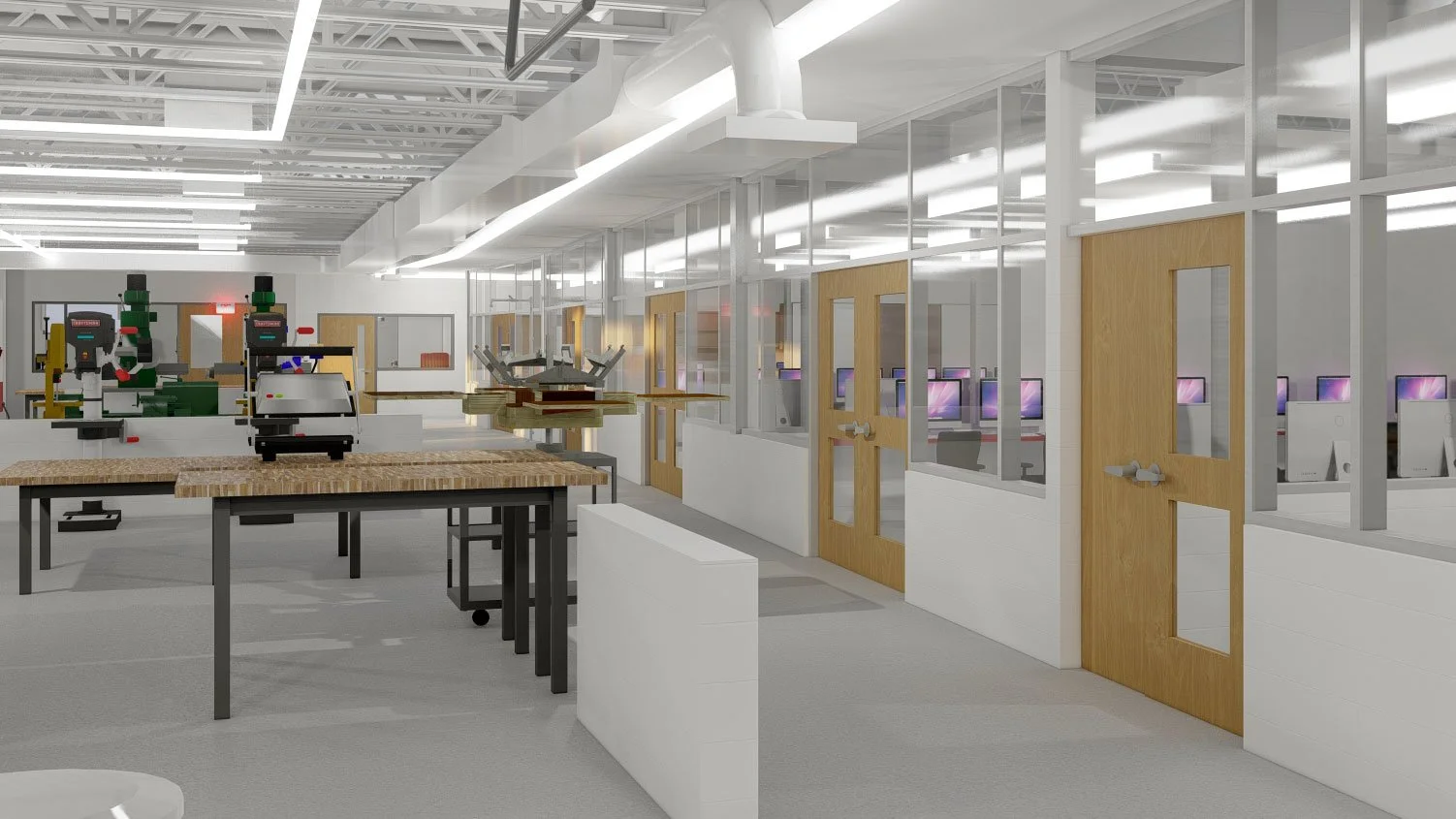
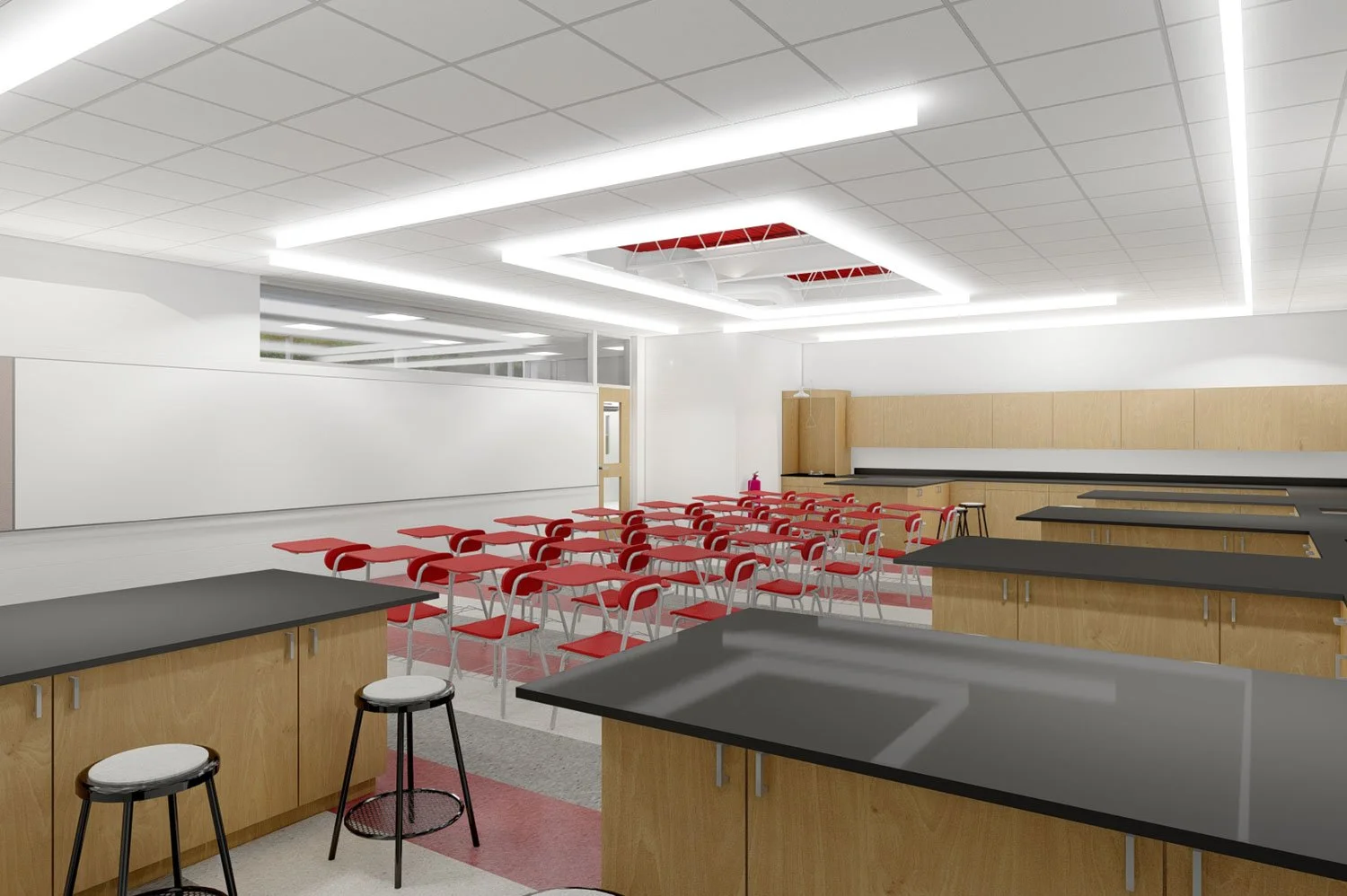
This project was a comprehensive transformation of an outdated, traditional technology and wood / metal shop suite into a modern, multidisciplinary STEM hub that reflects the district’s vision for hands-on, future-focused education. The existing spaces no longer supported the way students engage, collaborate, and build within contemporary STEM programs. Four conventional technology rooms, a science room, and adjacent administration space were distinct and separate programs with limited visibility, and instruction restrictions. Computer-based design work was intermingled with dusty fabrication activities, the automotive program lacked the ceiling height needed for a true working lift, welding facilities were undersized and poorly ventilated, and the robotics program had no dedicated space to practice, demonstrate, and grow. The district needed a reiimagined environment that could support multiple disciplines at once, safely separate incompatible activities, and showcase STEM learning to the broader student body.
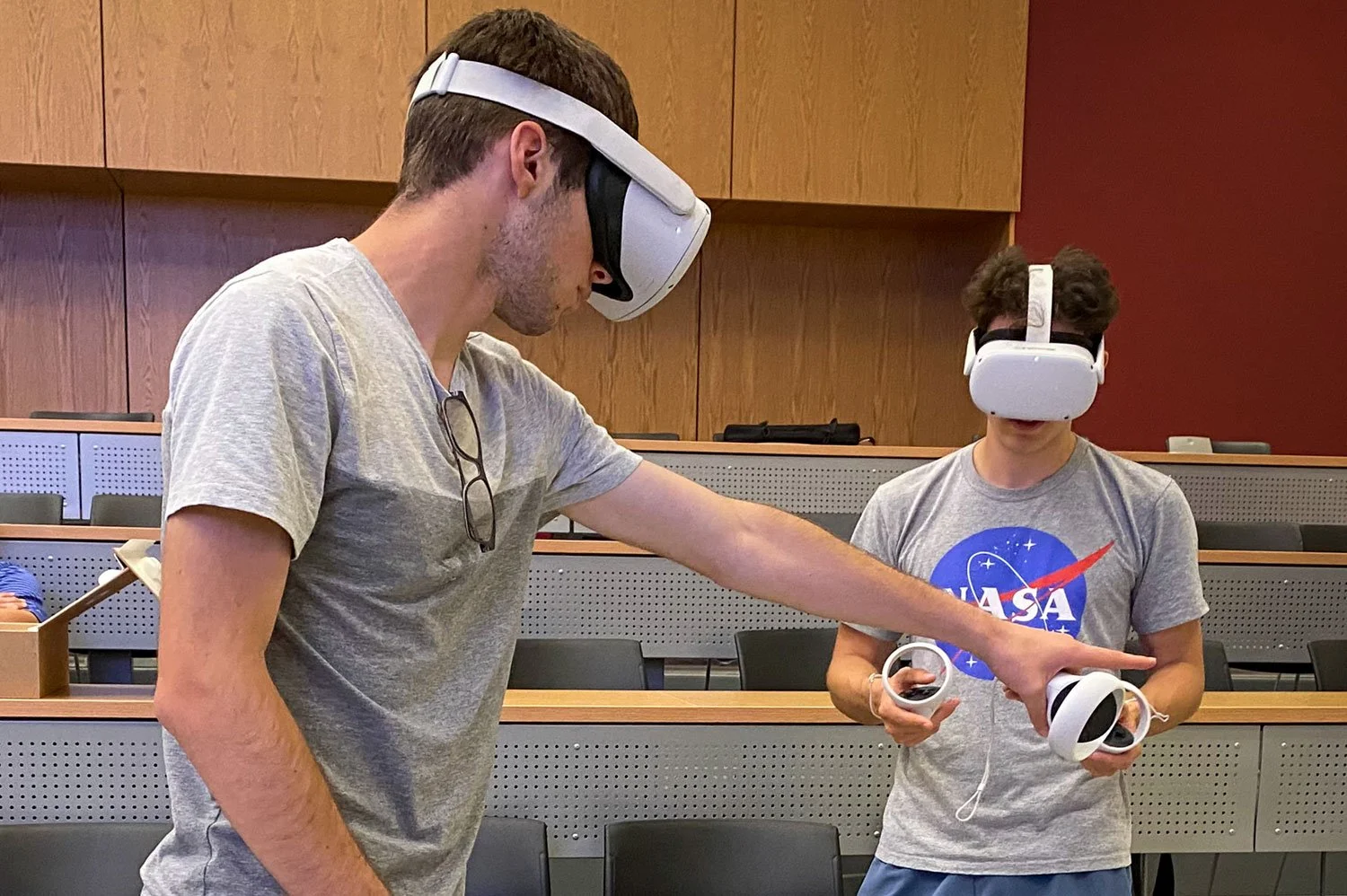
The Tetra Tech architecture and engineering team led the project by grounding every design decision in the client’s educational goals while carefully balancing operational realities, student needs, and the constraints of the existing building. Rather than approaching the work as a simple space replacement exercise, the team framed the project as an opportunity to redefine how STEM education is experienced in the school. The design team worked with district leadership, the technology department, facilities representatives, invested program champions, and students as an essential part of the design development. Through repeated design reviews, 3D imaging, renderings, animation, and virtual reality walk-throughs, the team was able to visualize possibilities that would have been difficult to understand through plans alone. These tools allowed the team to test ideas in real time, validate adjacencies, refine sight lines, and gather meaningful feedback from the students and educators who would use the space every day.
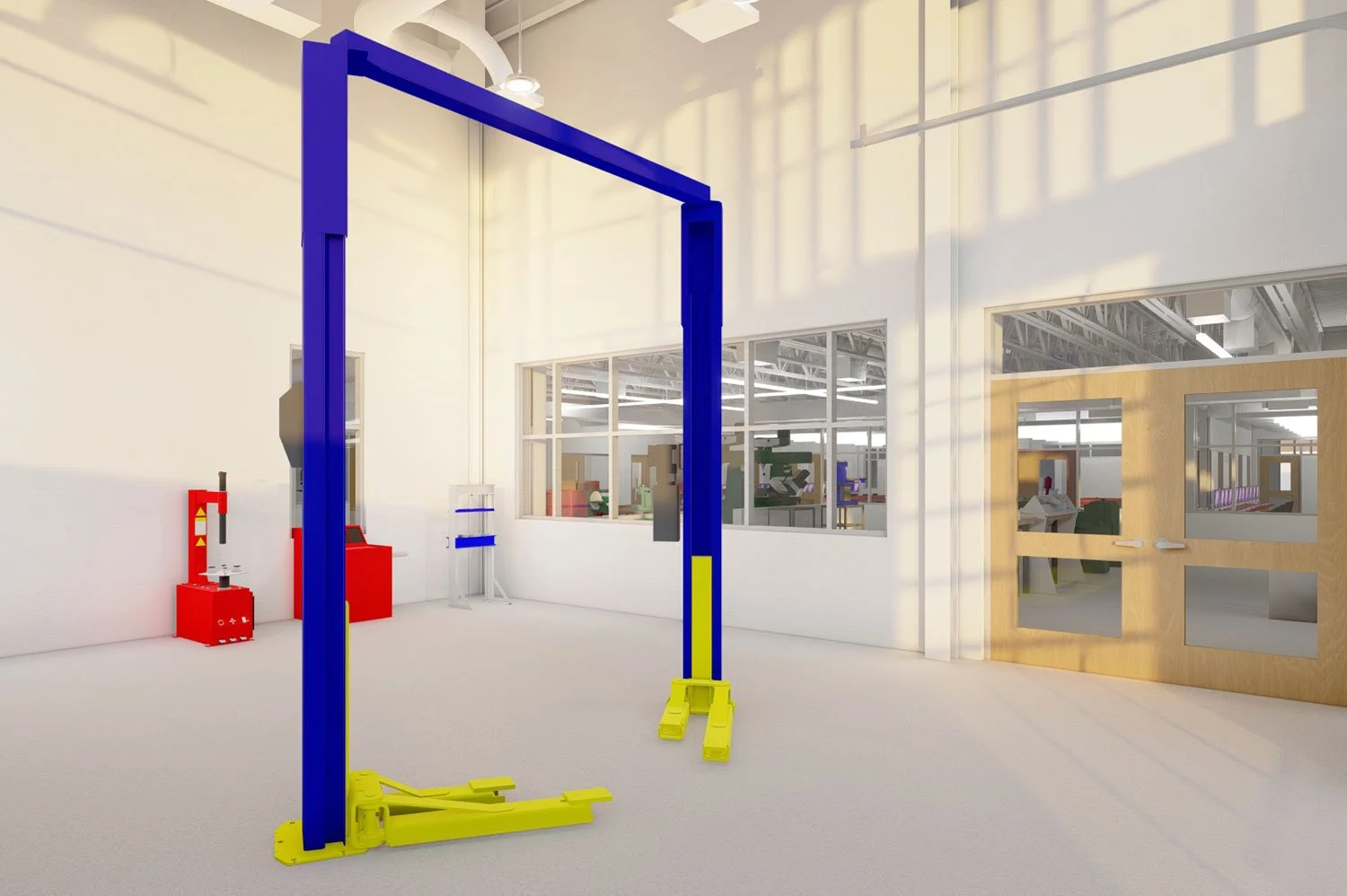
The design approach centered on creating a dedicated design-and-manufacturing ecosystem rather than a collection of isolated classrooms. The Tetra Tech team completely reconfigured the existing STEM area and integrated two targeted additions to expand program capability and improve circulation. One addition created a replacement science room while also linking two previously disconnected areas of the building, improving travel and creating a more intuitive student path between academic and athletic areas. The other addition introduced the high-bay space necessary for automotive instruction and robotics activities, solving one of the district’s most persistent functional limitations. Within the renovated STEM suite, the team deliberately separated clean design space from heavier manufacturing uses, creating distinct zones for computer-based design, carpentry, metalworking, welding, advanced manufacturing, and robotics support. This organizational strategy allowed multiple classes and activities to operate simultaneously while preserving both safety and collaboration.
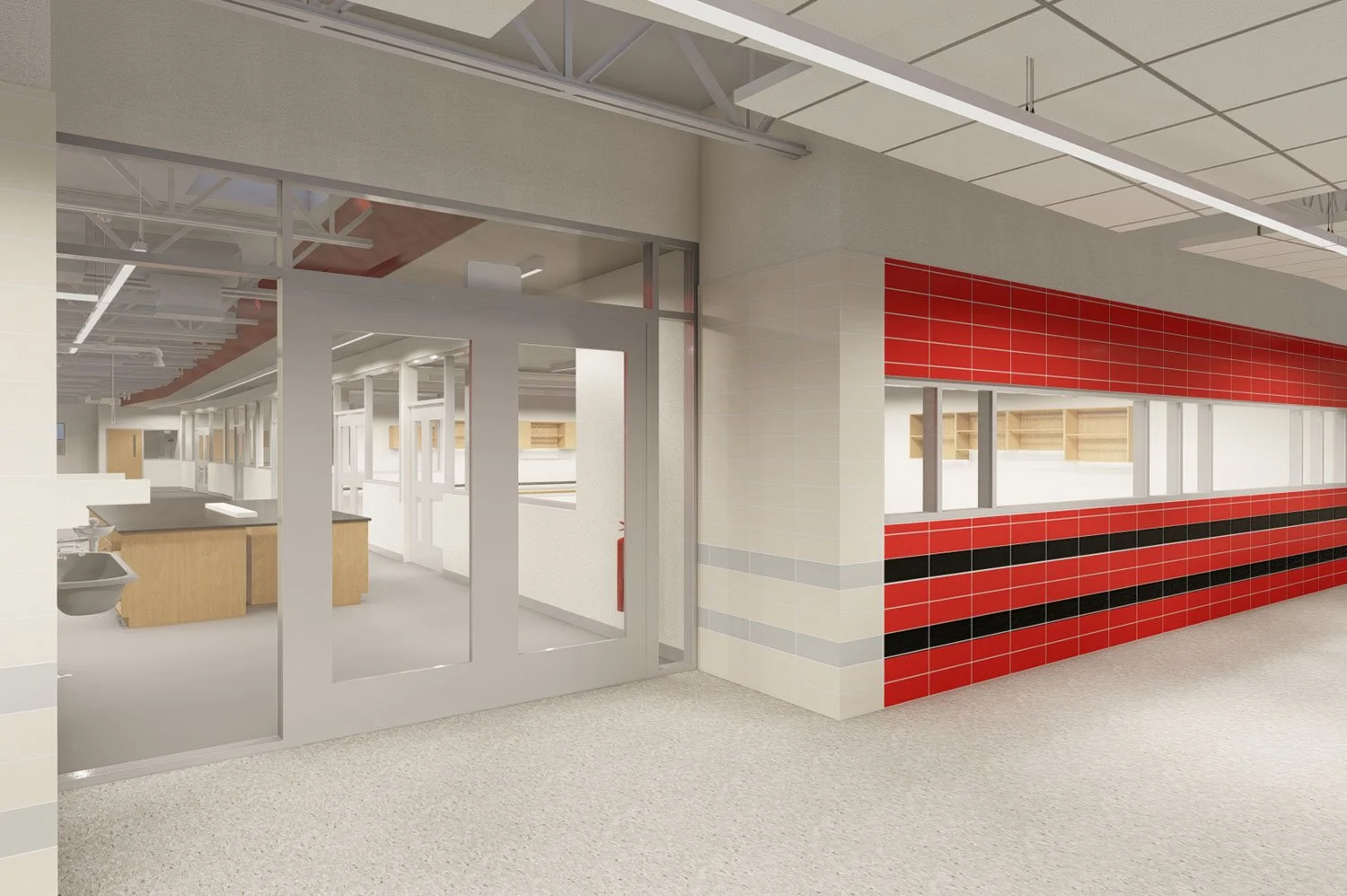
A defining feature of the team’s design leadership was its commitment to visibility and supervision. One of the district’s priorities was to expose more students to STEM activity, including those not yet enrolled in these programs. The previous arrangement hid the work behind storage and deep interior rooms, limiting awareness and engagement. In response, the design team opened the suite to the corridor and created clear visual connections into the design and manufacturing areas. Students walking by from science, athletics, arts, and other parts of the building can now see 3D printers, fabrication activity, and project work in progress, turning the STEM suite into a visible expression of the school’s academic identity. At the same time, interior glazing between classrooms and fabrication spaces gives teachers the visual access needed to supervise students without always requiring a physical presence in every room. Switchable glass was incorporated to provide flexibility, allowing transparency when visibility and connection are beneficial and opacity when students need to concentrate on design instruction without distraction. This balance of openness, control, and safety reflects a thoughtful, highly responsive design approach.
The project also required the team to navigate several unusual and challenging conditions. Site space was limited, and the design had to work within the structure of an existing building originally constructed in the 1960s. The team had to find ways to expand program capability without compromising circulation, constructability, or the character of the school. One consequence of the expansion was the need to relocate an existing seasonal greenhouse that occupied the footprint of the new link addition. Inside the building, the team had to reclaim and repurpose a mix of science, administration, storage, and support spaces while working around existing structural and spatial limitations. These conditions demanded careful coordination between architecture and engineering disciplines so that the final solution felt intentional rather than pieced together. The design and engineering team also studied broader performance and sustainability considerations, including geothermal heat source options and comparative costs for renewable energy systems, ensuring that the district could evaluate long-term operational value alongside immediate educational needs.
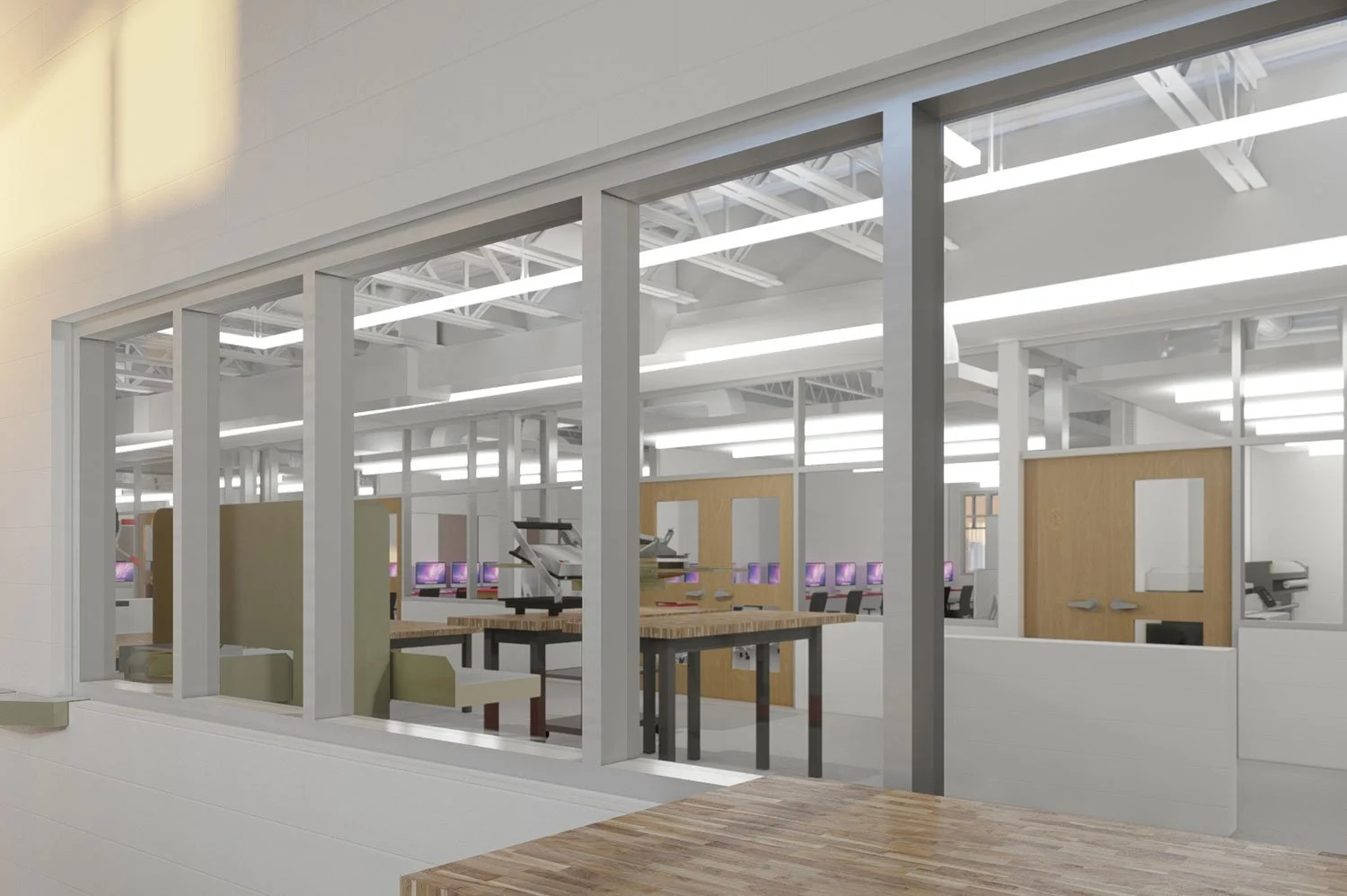
Engineering leadership was particularly important in the specialized instructional spaces. The automotive area required a high-bay volume capable of supporting a true vehicle lift, resolving a major deficiency in the former program where vehicles could only be raised a few feet because of the low roof. The welding area was redesigned to function more like a true shop environment, with improved safety systems, fresh air supply, and point exhaust for welding activities. Durable material selections such as concrete floors and masonry walls were used where appropriate to withstand the demands of heavy-use fabrication environments, while cleaner advanced manufacturing areas were designed to support 3D printing, engraving, and other precision activities. In the replacement science room, the team incorporated exposed and open ceiling elements that support flexible instruction and demonstration, including the ability to suspend teaching tools such as pendulums, while shared-light strategies maintained a connection to daylight in a way that respected both the original school’s design language and current code requirements.
The district’s students, educators and staff were design contributors whose input directly influenced the design decisions. The Tetra Tech team created a design culture in which user voices were heard, and their ideas were translated into practical solutions that shaped this project. The collaboratively developed project result gives the district a true multidisciplinary design and manufacturing hub that supports current curriculum, encourages collaboration, attracts interest from the wider student body, and positions the school for future partnerships and program growth.