
New Stage of Pride
Greater Johnstown City School District
Transformation of former auditorium into a flexible, accessible, and acoustically improved Large Group Instruction and performance space—balancing board meeting needs, ADA upgrades, and school‑color finishes
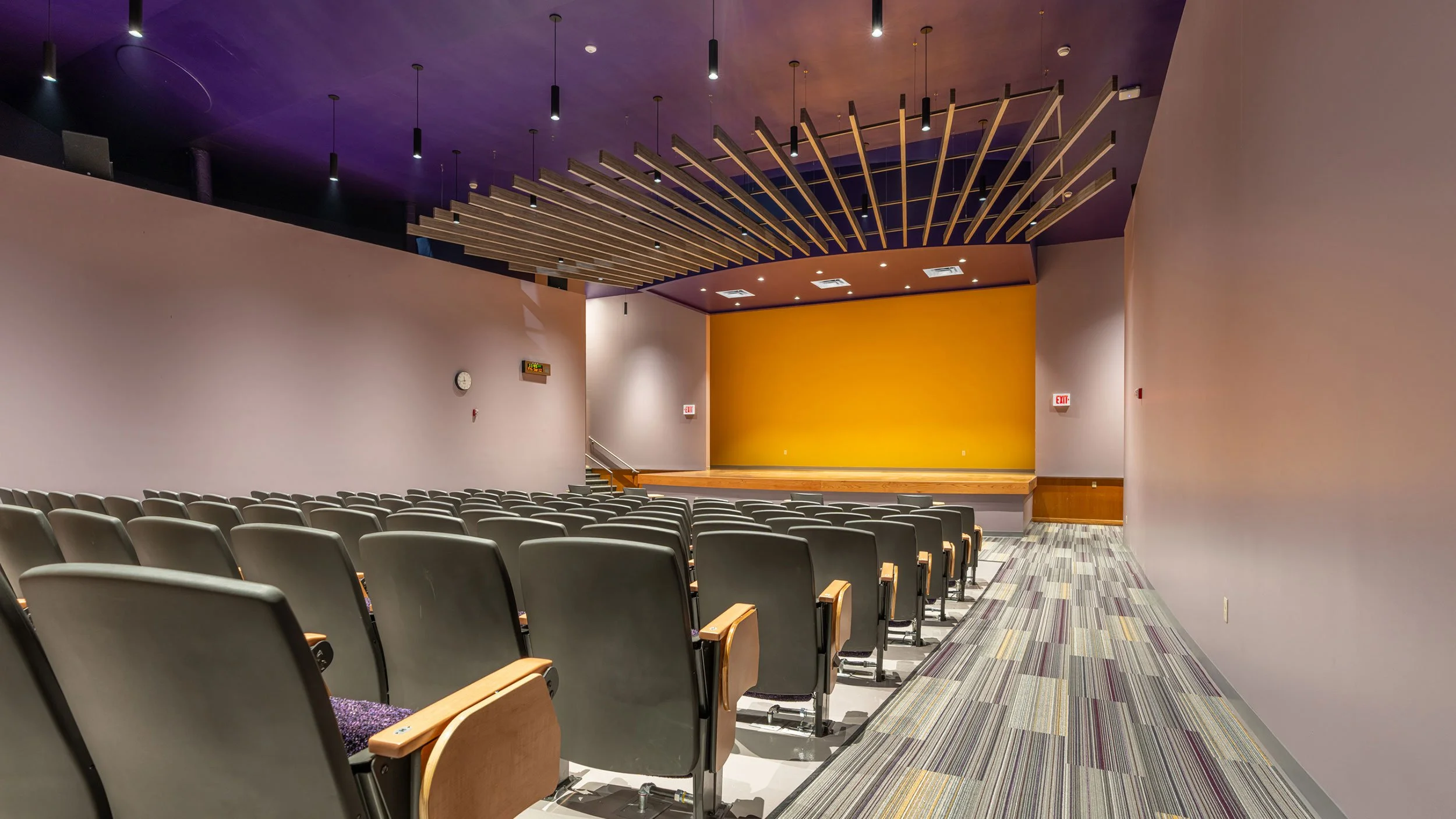
When Greater Johnstown School District relocated its primary performances to the new Performing Arts Center, the original high‑school auditorium became an underused space—temporarily hosting board meetings and district offices but in need of a thoughtful revitalization. Tasked with transforming this former auditorium into a flexible large‑group instruction (LGI) space that would also serve meetings and small performances, the Tetra Tech design team approached the project guided by school pride, practical constraints, and a collaborative process with district staff.
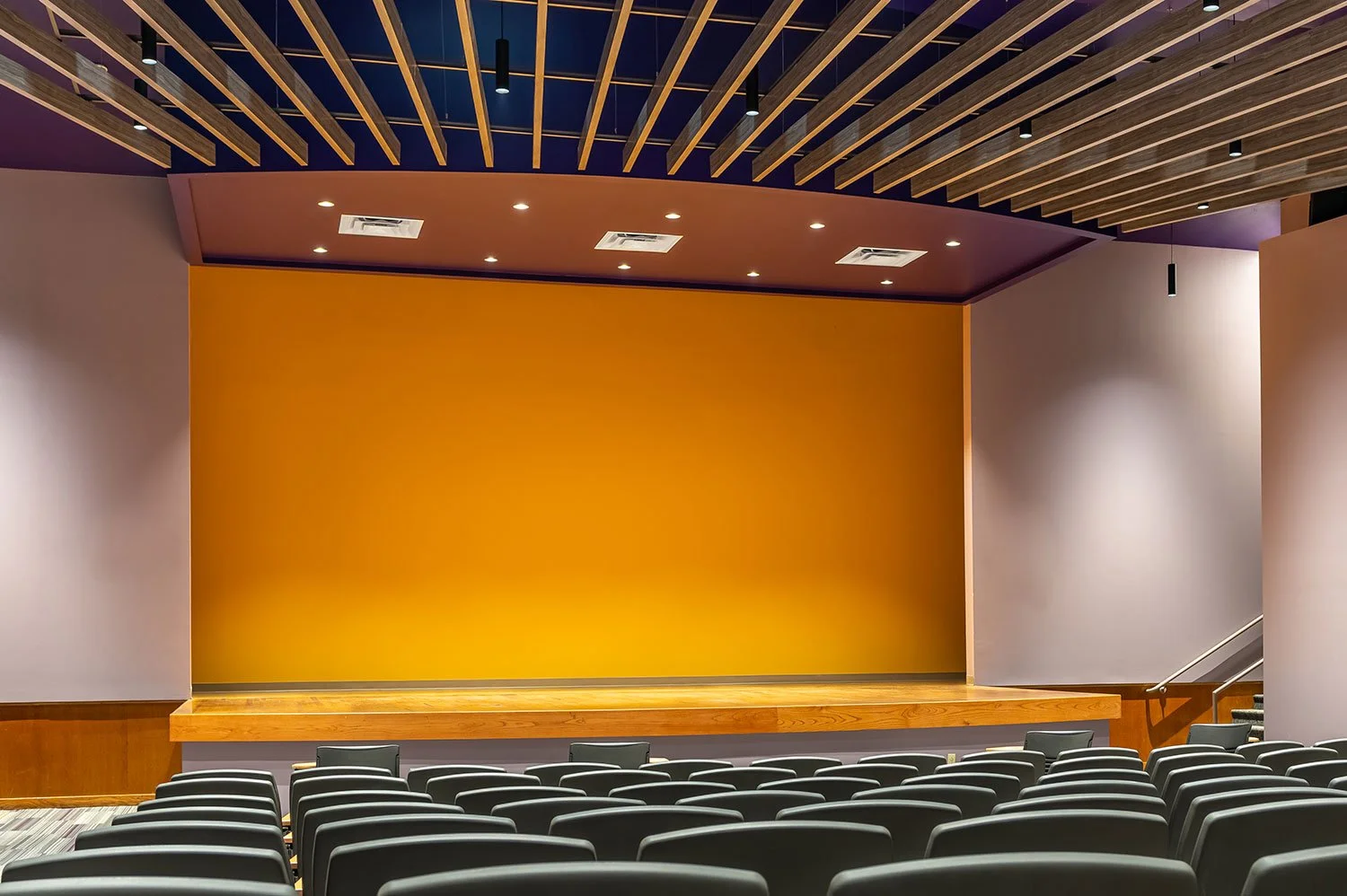
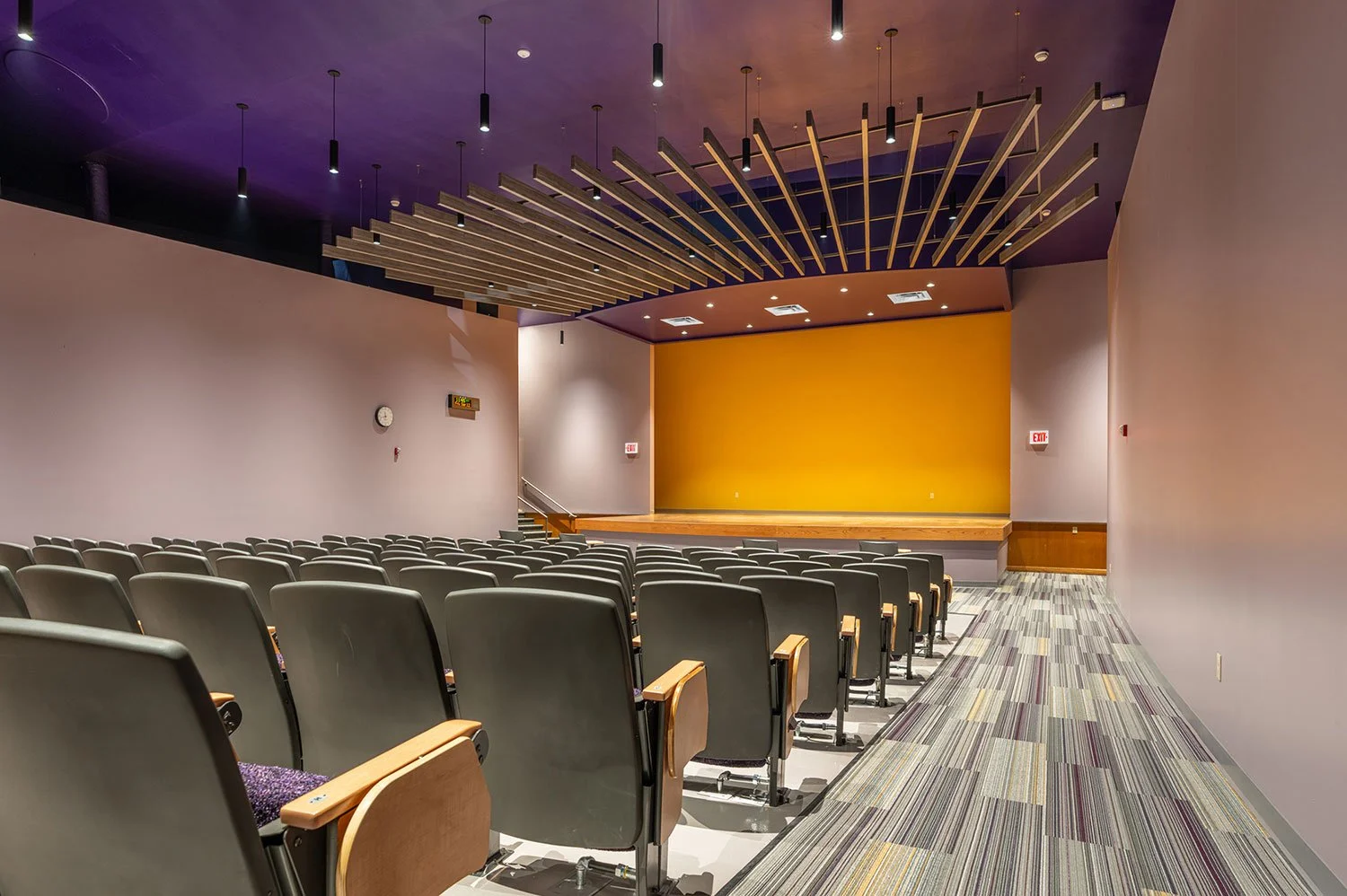
Originally conceived as a space primarily for board meetings, the program evolved during design and construction as administrators and facilities staff saw the room take shape. What began as modest upgrades grew into a more ambitious effort when District representatives expressed interest in also using the room for small performances and multimedia presentations. To support that adaptability, the design team introduced a distinctive soffit above the stage. The soffit “cloud” floats below the ceiling in front of the stage. Individual “rays” fan out over the audience seating, drawing attention to the performance area, creating a visual plane to make the stage feel larger, and establishing a more intimate scale for smaller audiences. The unique installation allows unimpeded use of the projector and retractable screen behind the soffit.
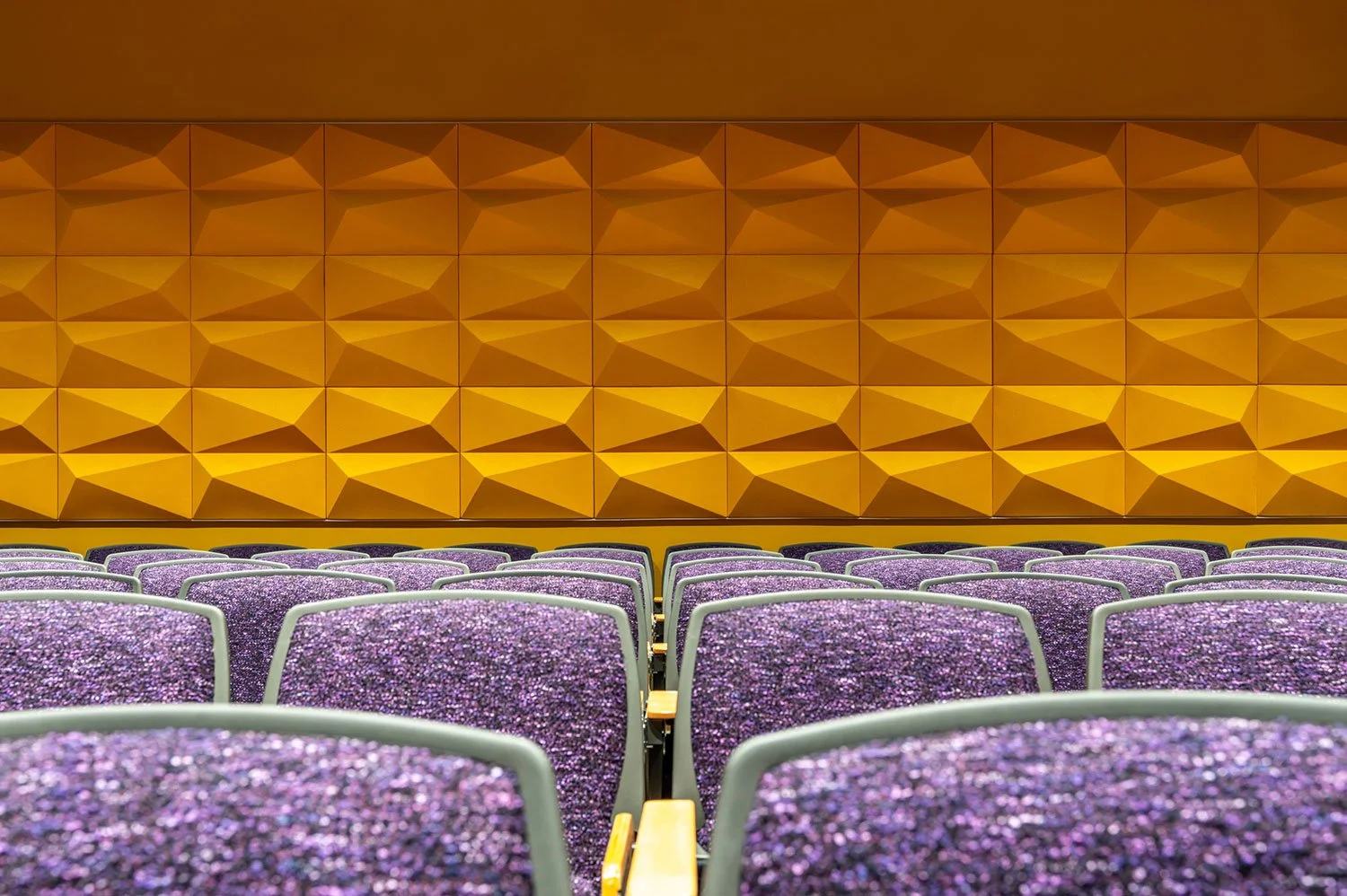
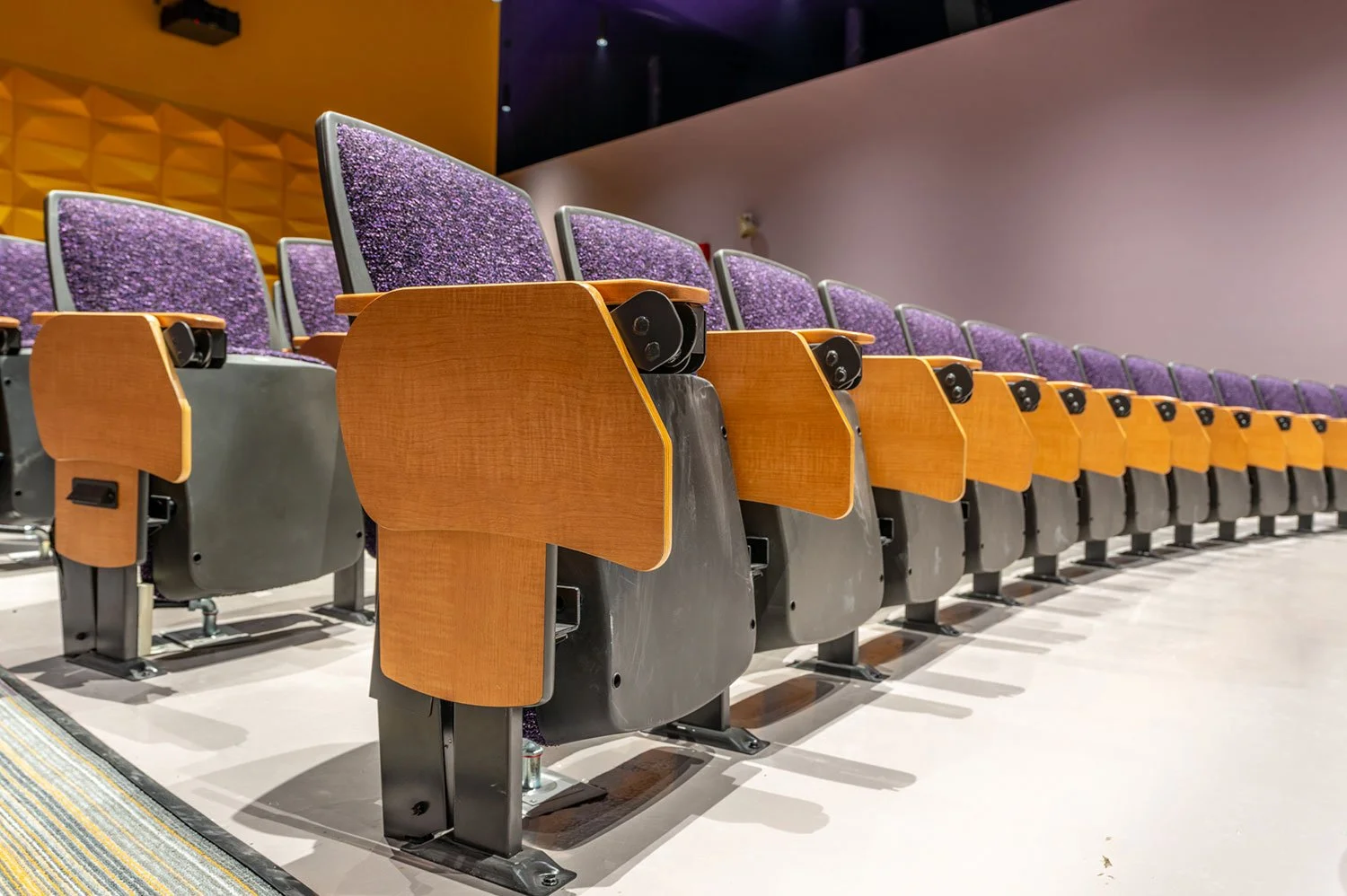
Acoustics and comfort were key design drivers. The existing room was dominated by hard surfaces and lacked integrated AV infrastructure. The redesign added—carpeting in aisles and at the stage edge, upholstered auditorium seating, and wall‑mounted acoustic panels—to dampen reverberation and make speech and music intelligible for a variety of uses. Carpet selection and acoustic panel placement were carefully coordinated so the space would remain visually uncluttered while functioning better for lectures, performances, and meetings. The District representative chose to retain exposed concrete in some areas, so the design team balanced that raw aesthetic against practical needs—power access in seating, aisle lighting, and sight line continuity—so the finished environment would be both durable and refined.
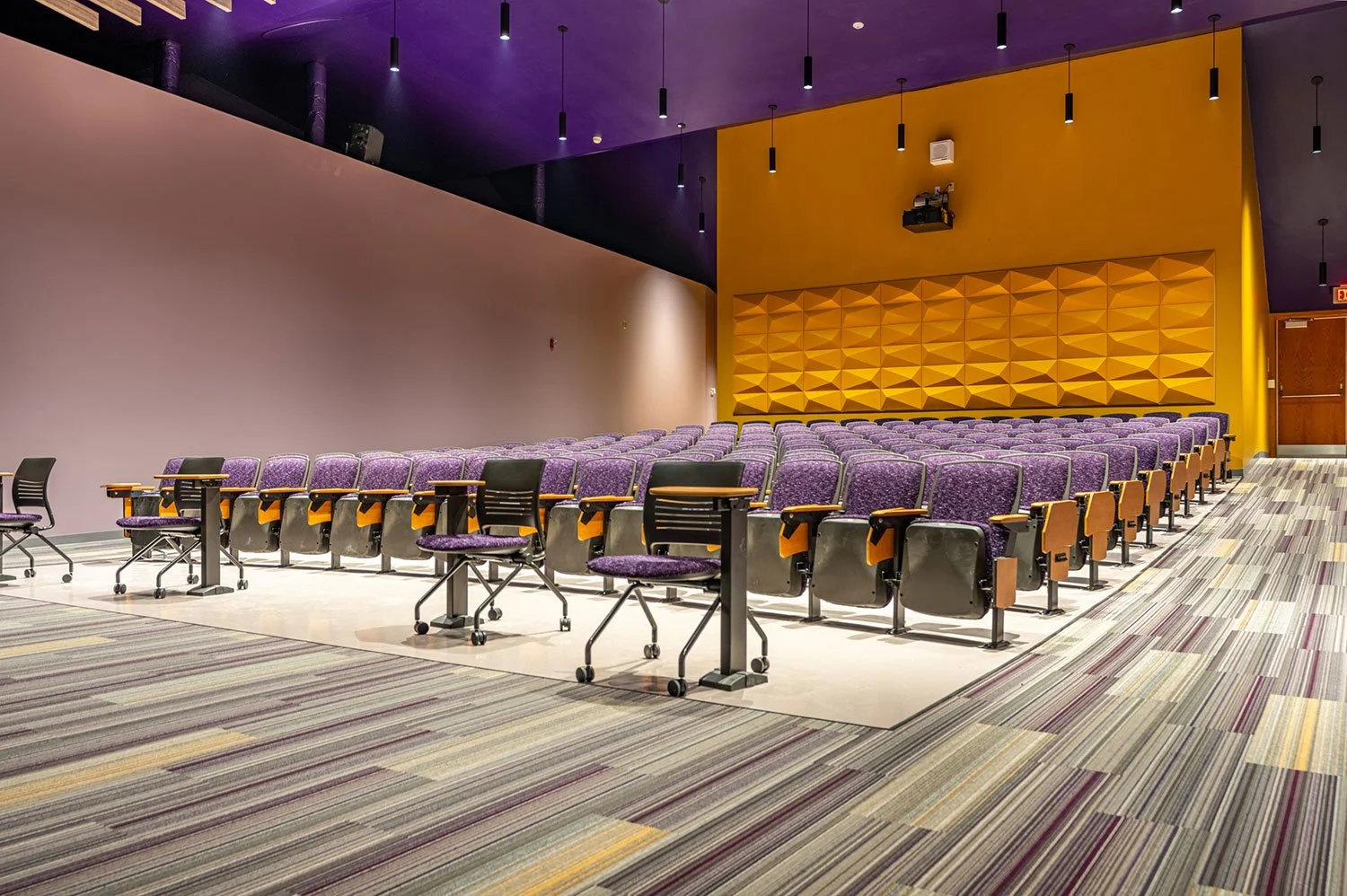
Providing accessibility for those with mobility limitations presented a technical challenge. Over decades the original stage had been extended into the audience area and the floor slope was altered. A shallow level area was not adequate to accommodate ADA‑compatible furniture and provide accessible seating layouts. Rather than removing the stage extension, the structural team created a plan to recondition the existing floor slope and increase the level area. This design approach provides accessibility while preserving the extended stage.
Coordination of the technology was handled collaboratively. The District engaged an AV vendor directly, and the design team coordinated lighting, sightlines, and integration of all systems so that they reliably work together. The team responded proactively to evolving client needs, seamlessly integrating additional AV and lighting enhancements during construction to include their requests into meaningful upgrades—all while maintaining the project schedule and delivering high-quality results.
A critical tool for stakeholder buy‑in and design refinement was 3D renderings and animated walkthroughs. Administrators and board members often find orthographic plans and color swatches hard to visualize; rendered images and sequences allowed them to see the space with materials, lighting, and finishes applied. Multiple iterations of material palettes—especially the application of the school’s bright gold and deep purple—were tested in renderings so the District could understand subtle tone adjustments and where accent colors would read best (front of house, back wall planes, seating). The visualizations enabled productive dialogue and fine‑tuning, when changes could be implemented with little or no costs implications.
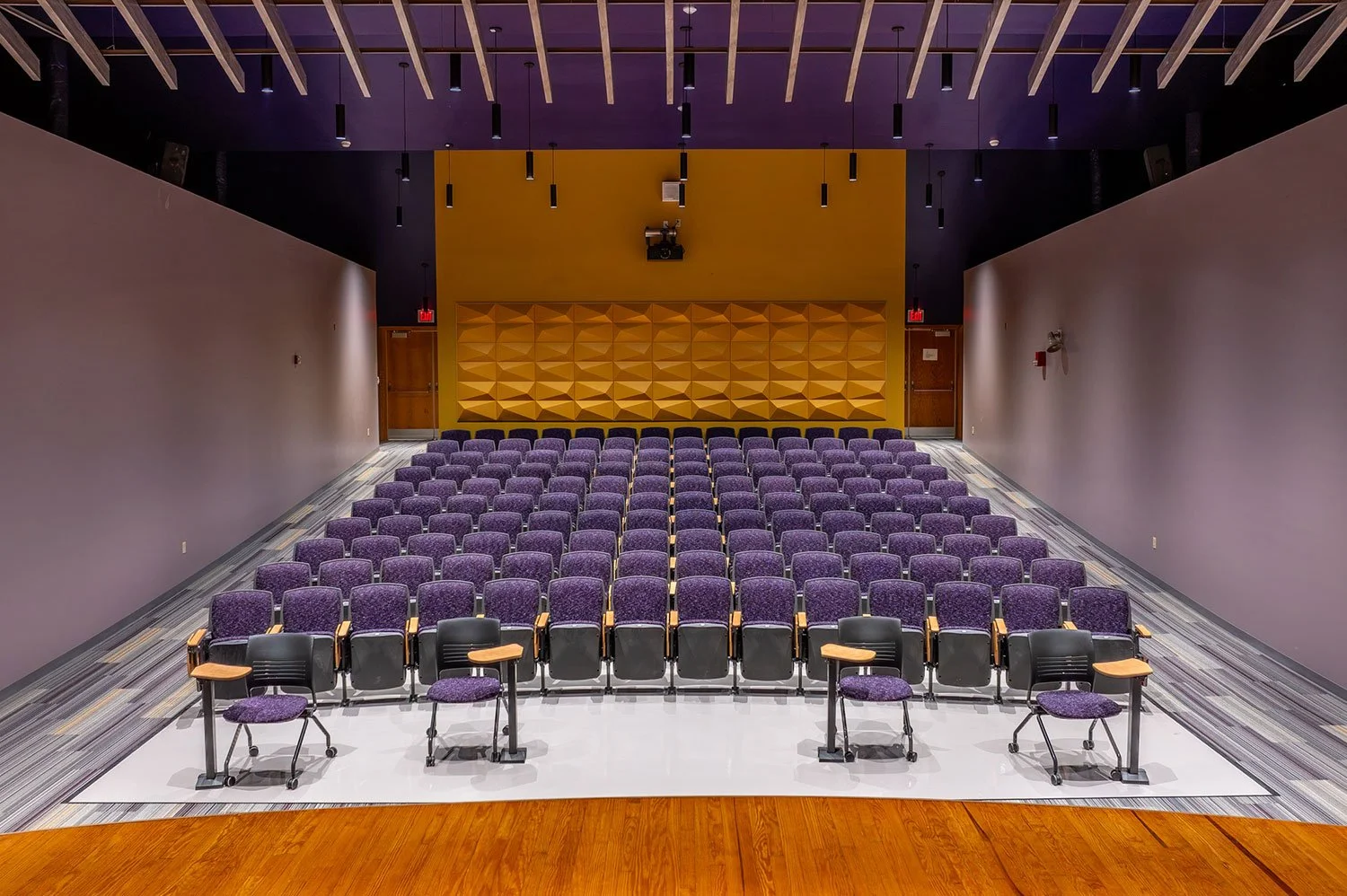
The project was delivered with a keen eye to budget and schedule. While the District had additional contingency funds that allowed several enhancements to be carried out, the team made cost‑effective choices—such as the suspended soffit treatment instead of fully replacing the existing ceiling—to achieve the desired intimacy and acoustic improvements without wholesale demolition. The result is an LGI room that preserves the building’s history, corrects functional deficiencies, and celebrates school spirit.
Today the revitalized space accommodates board meetings, district gatherings, large‑group instruction, small performances, and multimedia presentations—meeting the District’s original needs and extending the useful life of the facility. The careful combination of accessibility upgrades, acoustic treatment, lighting and AV coordination, and material selections tied to school colors produced a room that is both practical and prideful. Staff and students now have a warm, flexible, and engaging environment that exceeded expectations and reinvigorated a once‑forgotten auditorium.