
Libraries as Learning Launchpads
Lakeland Central School District
Library/Media Center Renovations - District-Wide
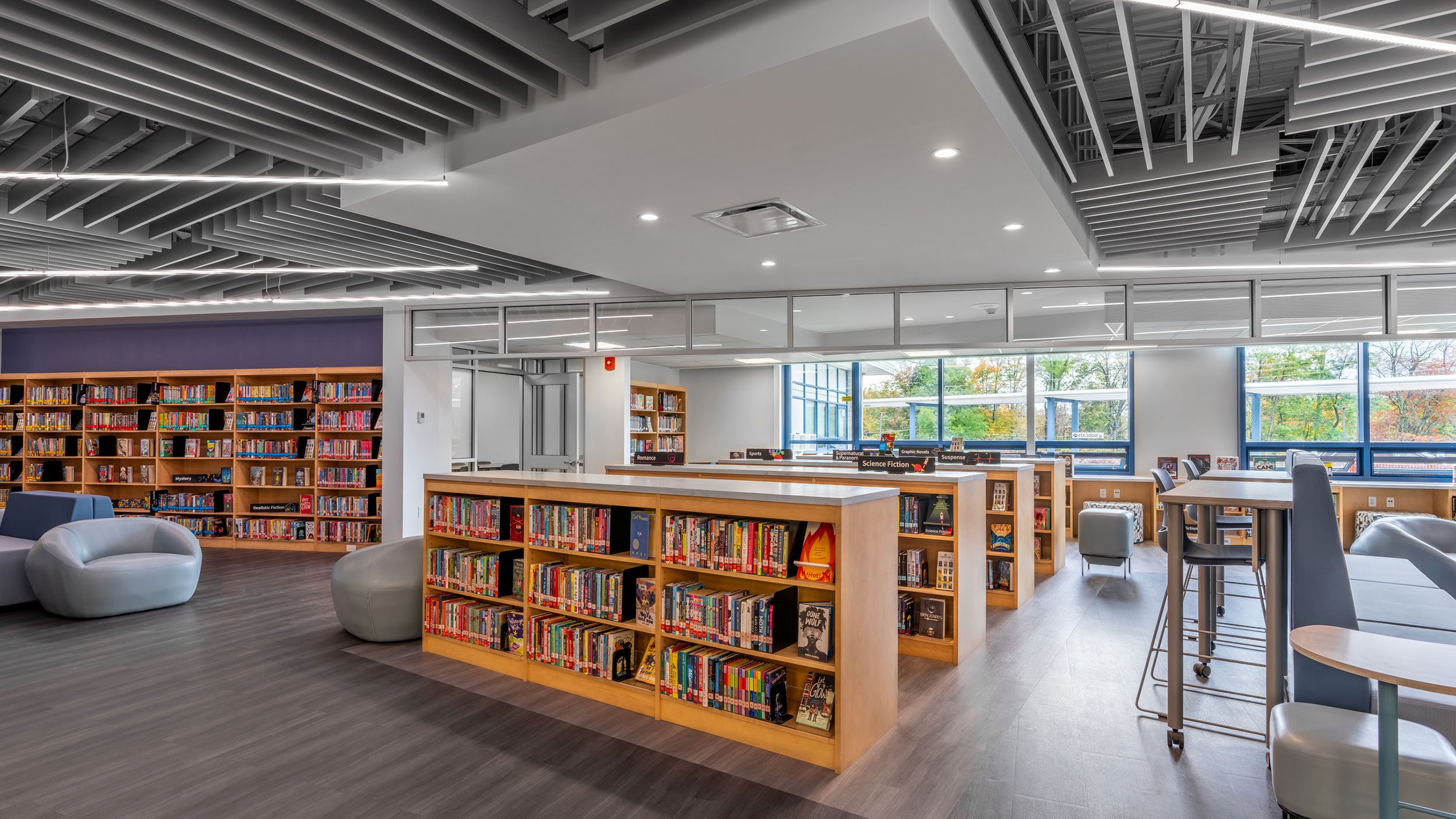
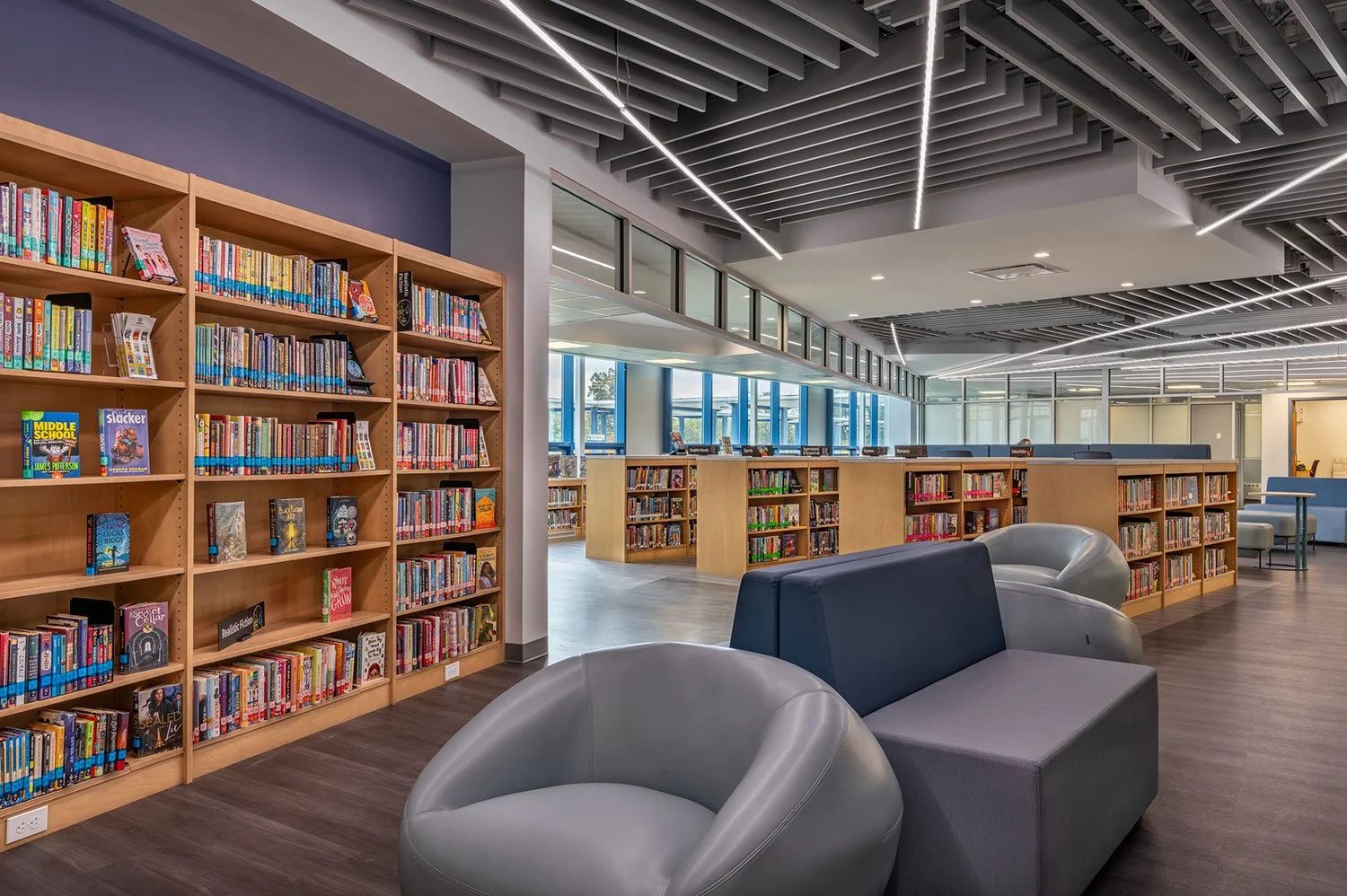
Following an Enhanced Facilities Evaluation (EFE) for the Lakeland Central School District, Tetra Tech translated findings into a long-range plan centered on preparing students for life beyond K–12 and creating future-ready learning environments across the district. The project modernized libraries and media centers in five elementary schools, one middle school, and two high schools, introducing a consistent layout language and color palette to ensure equity while preserving each school’s distinct personality.
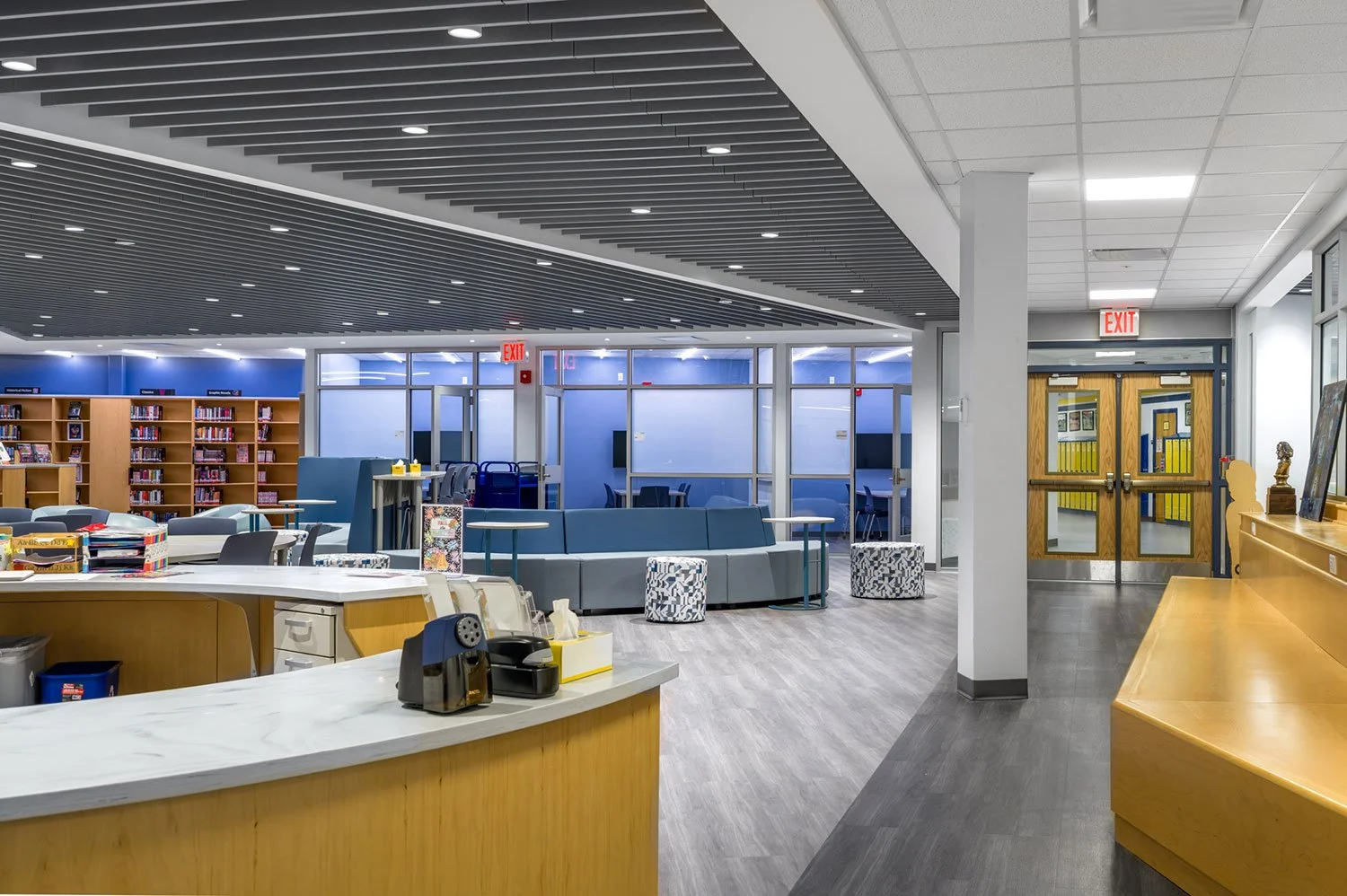
The design team developed standardized floor plans and color selections, carefully integrating these elements within each building’s existing footprint so the size, number, and types of spaces align districtwide. This design approach is intended to foster a sense of continuity as students progress through grade levels: familiar, supportive environments greet them on every campus. At the same time, the approach allows for site-specific design choices so each library authentically reflects its school community’s culture and needs.
The elementary school libraries and media centers were designed with intention toward the incorporation of STEAM (Science, Technology, Engineering, Arts, and Mathematics) elements that are engaging and age-appropriate for younger learners. Features such as model creation stations and LEGO building areas encourage creativity and hands-on learning, and tactile maker components give young learners room to experiment, collaborate, and solve problems through play.
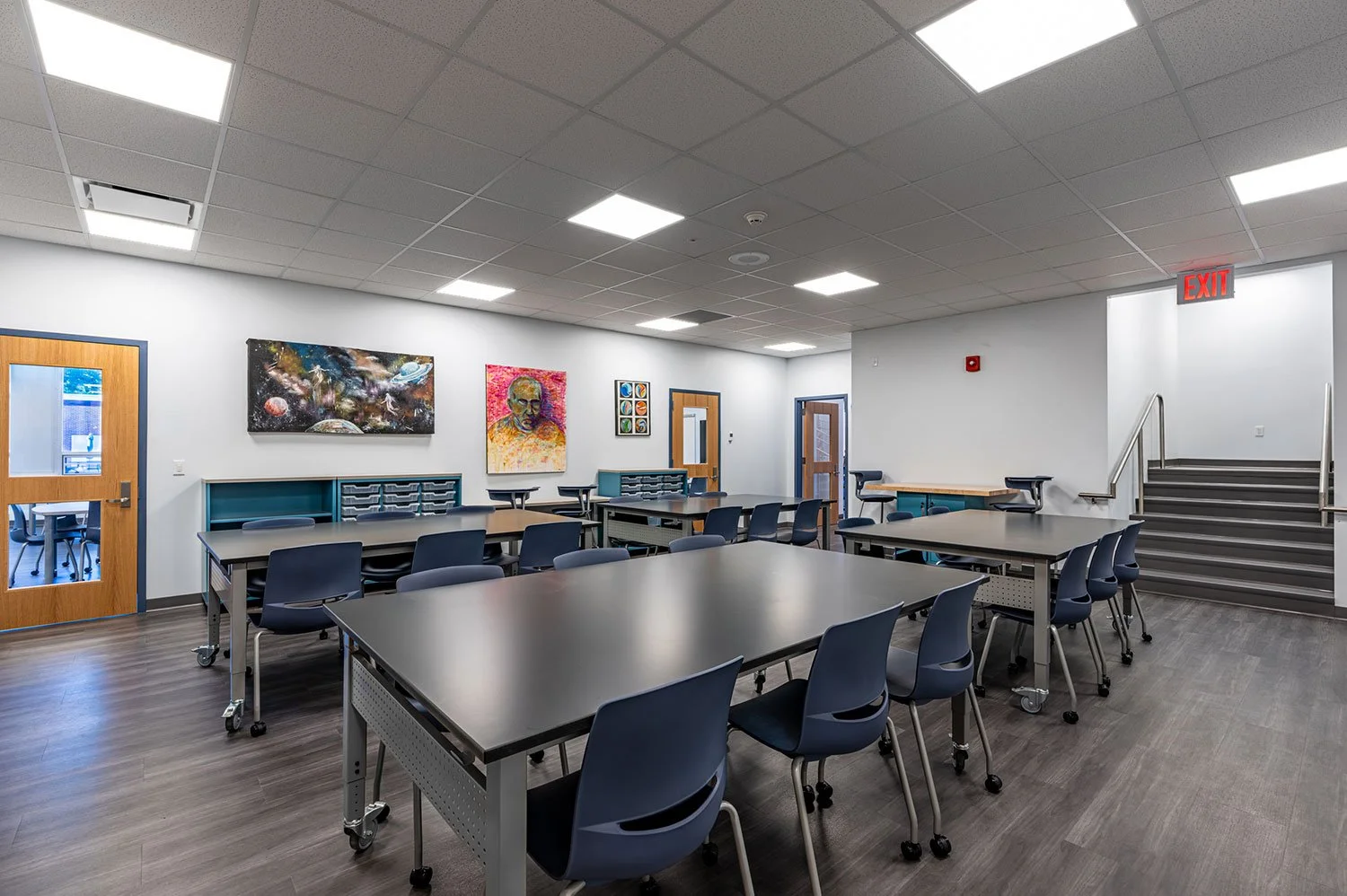
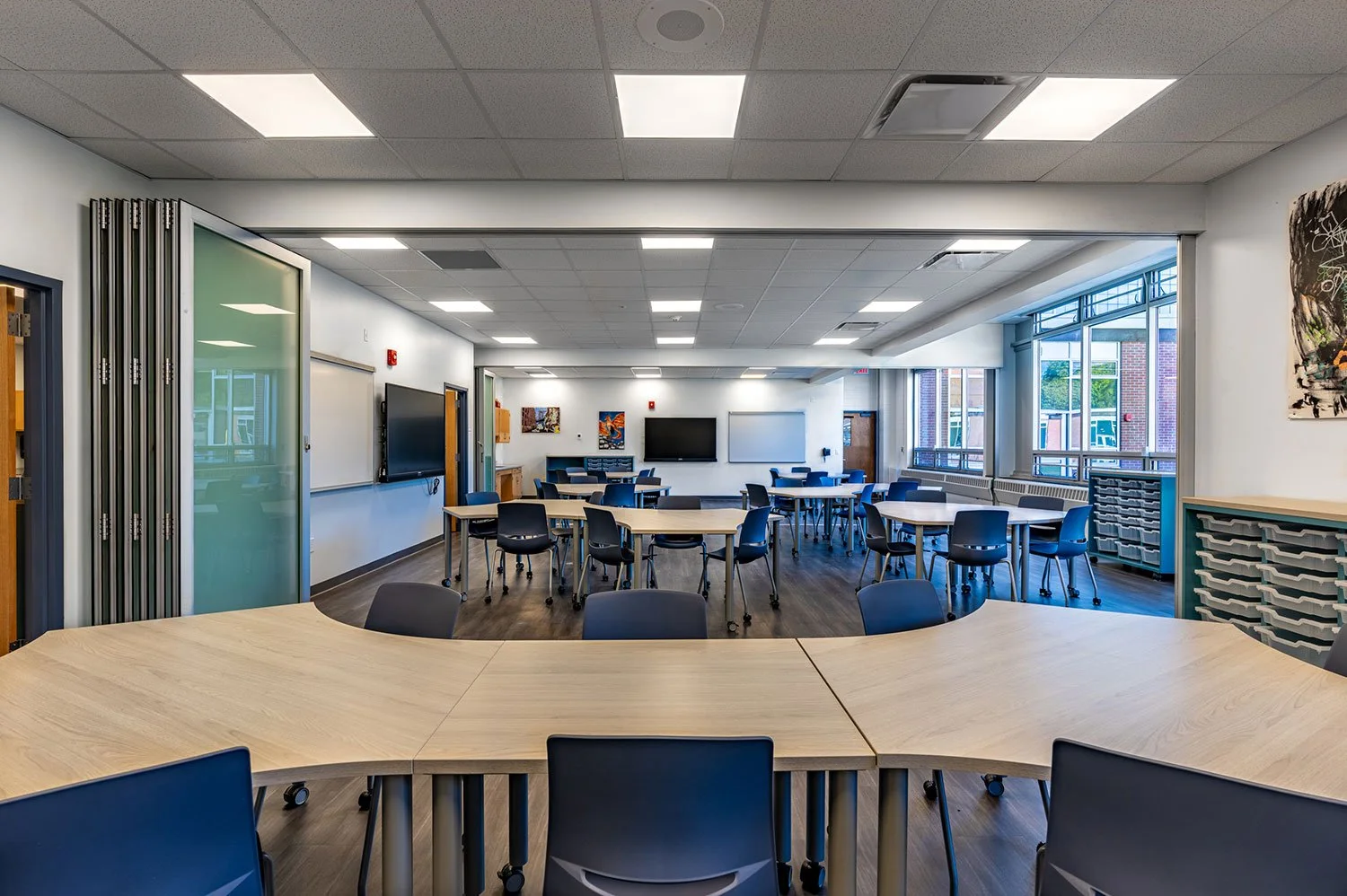
Middle and high school media centers were reimagined to feature similar features and space organization of higher education environments and contemporary workplaces, easing students’ transition to the next stage of their academic and professional lives. These spaces incorporate dedicated robotics bays and virtual reality labs, along with flexible defined “zones” outfitted with modular furniture, and movable partitions. The flexibility supports solitary study as well as collaborative design work.
Throughout design and planning, the Tetra Tech design team engaged students and educators to shape decisions — from the placement of collaborative zones and sightlines to technology access and storage solutions. Their feedback informed the priorities for the development of maximized multifunction space: movable walls, modular furniture, and adaptable systems that will evolve as instructional methods and technology change.
The Tetra Tech team implemented priorities identified within the planning document to realize Districtwide improvements for development of equitable spaces across their campuses. Through the addition of STEAM-rich elements in elementary schools, expanding technical resources in middle and high schools, and creating flexible, tech-forward media centers, the plan broadens access to modern learning and positions Lakeland students for success in college, careers, and service.