Functional Design Honoring Natural Surroundings
More than an architectural statement, this project enriches daily school life while celebrating the natural beauty that surrounds New Paltz.
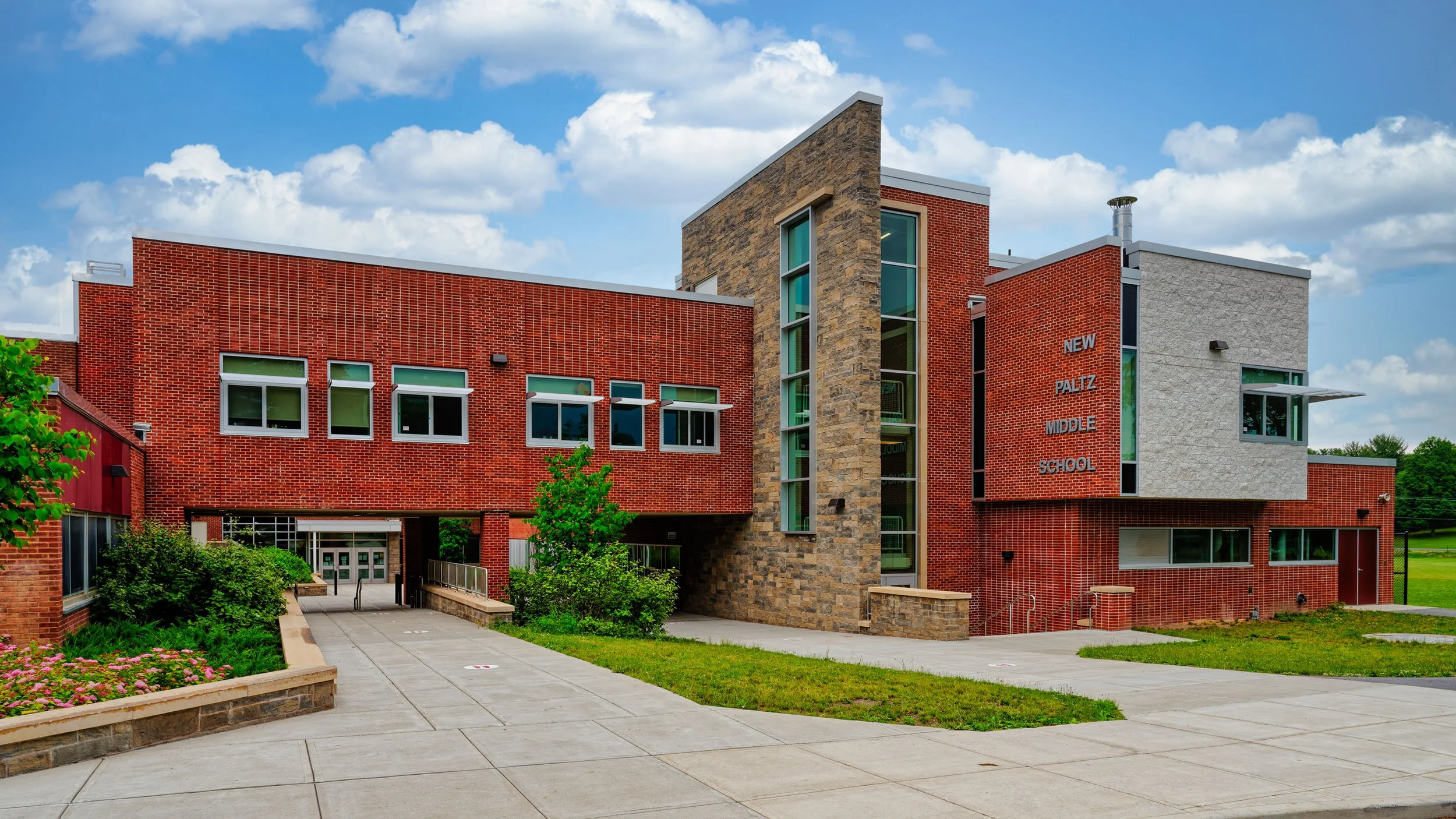
The New Paltz Middle School addition was conceived to create flexible, technology‑rich environments that support project‑based, 21st‑century learning while respecting the school’s historic core and spectacular Hudson Valley setting. Tetra Tech’s approach combined programmatic clarity with a strong sense of place—an addition that expands usable classroom and specialty space, anchors a new Media Center, and reorganizes circulation so the building works better for students, teachers, and the wider community.
Visually the addition takes its cues from the nearby Shawangunk Ridge, the dramatic “Gunks” that define the region. Massing, stepping and materiality abstract the ridge’s textured rock faces. The faceted elevations, large blocky volumes, and a sloped roofline create an interplay of light and shadow that changes across the day, while the palette reinforces that connection. White split‑face block echoes the pale stone of the ridge, and traditional brick ties the new work back to the original 1930s building.
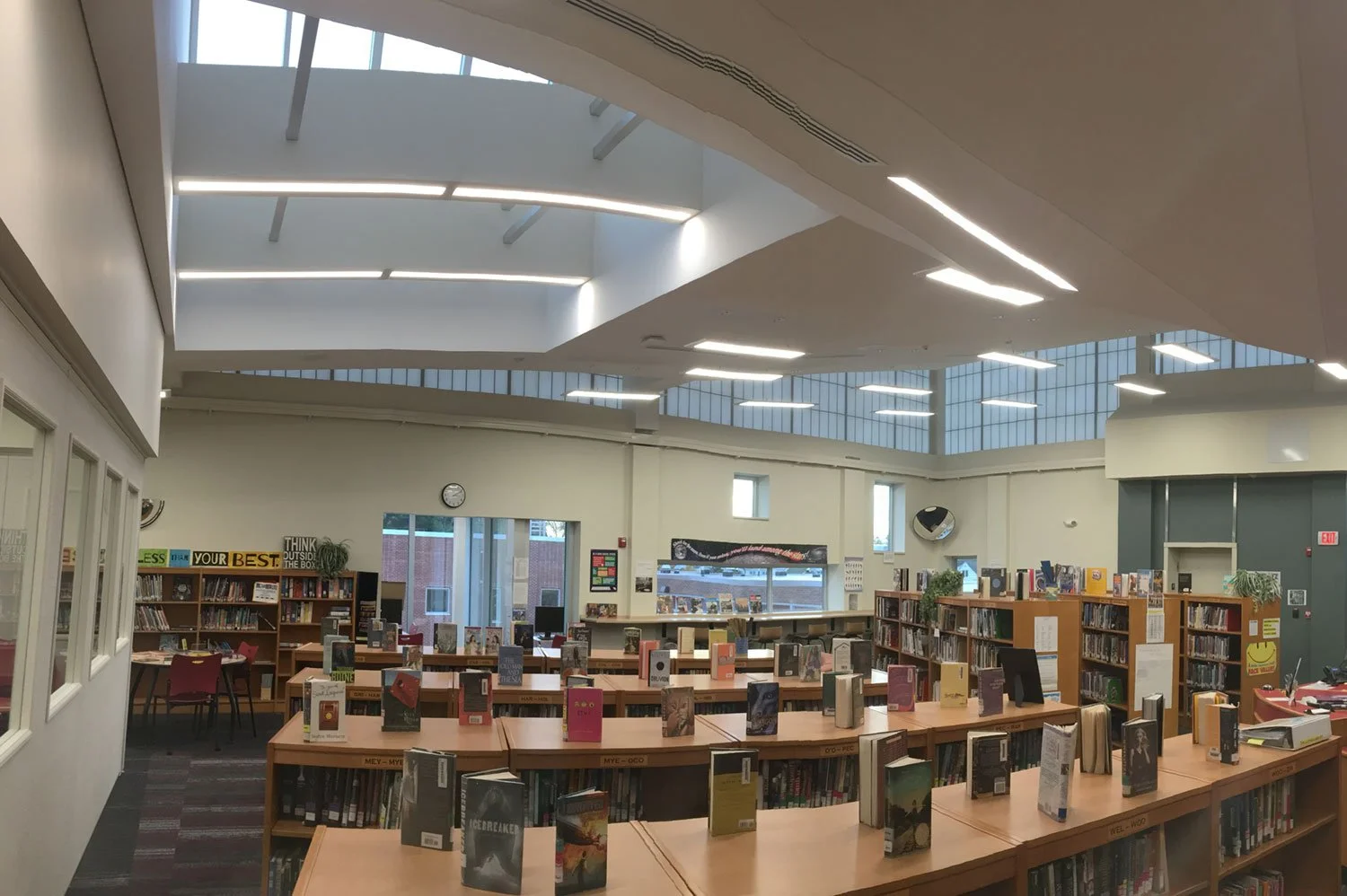
Central to the addition is the Media Center, designed as a true 21st‑century learning hub. The Media Center features operable partitions and movable wall sections so it can flex between library, STEM lab, presentation space, and community event venue. A sloped roof monitor funnels daylight deep into the plan, and a combination of horizontal and vertical solar shading manages glare while preserving views and visual connection to the landscape. These daylighting and shading strategies were coordinated early in the design to balance comfort, energy performance, and varied instructional uses.
“The project aimed to reorganize building spaces to enhance teaching and learning, resolve challenging floor elevations for easier navigation, and showcase a learner-centered 21st-century environment that harmoniously integrates with its natural surroundings.”
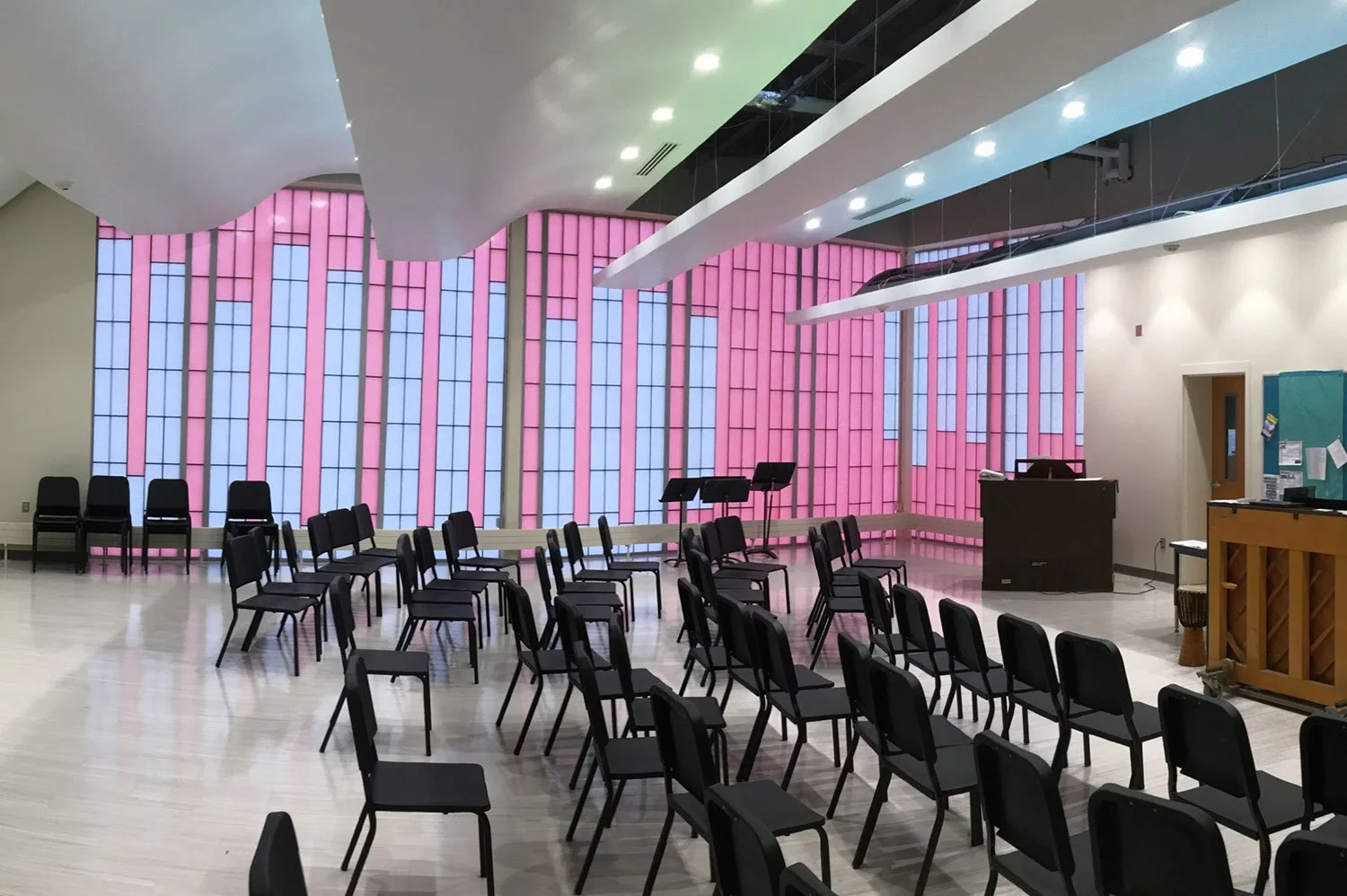
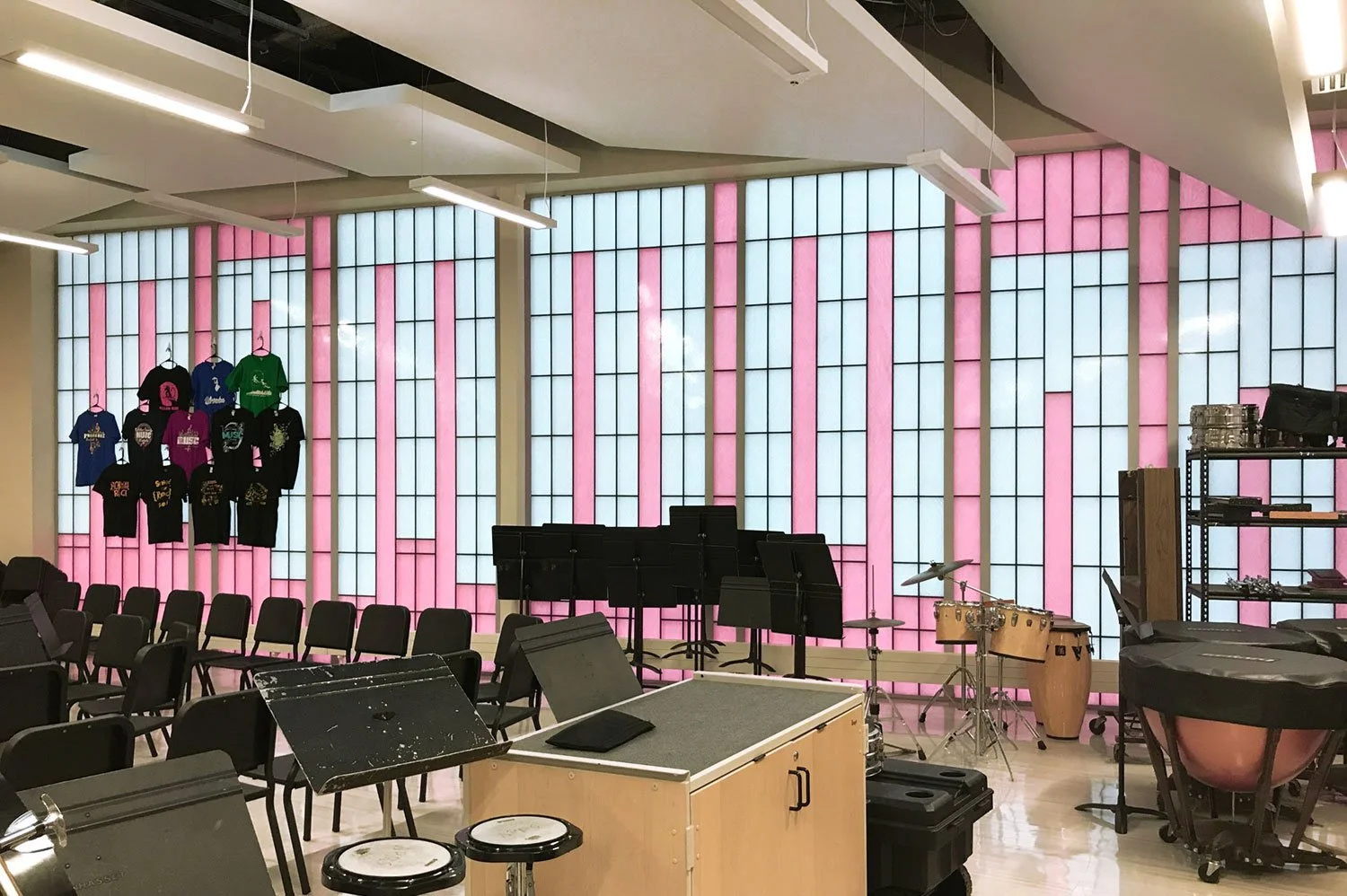
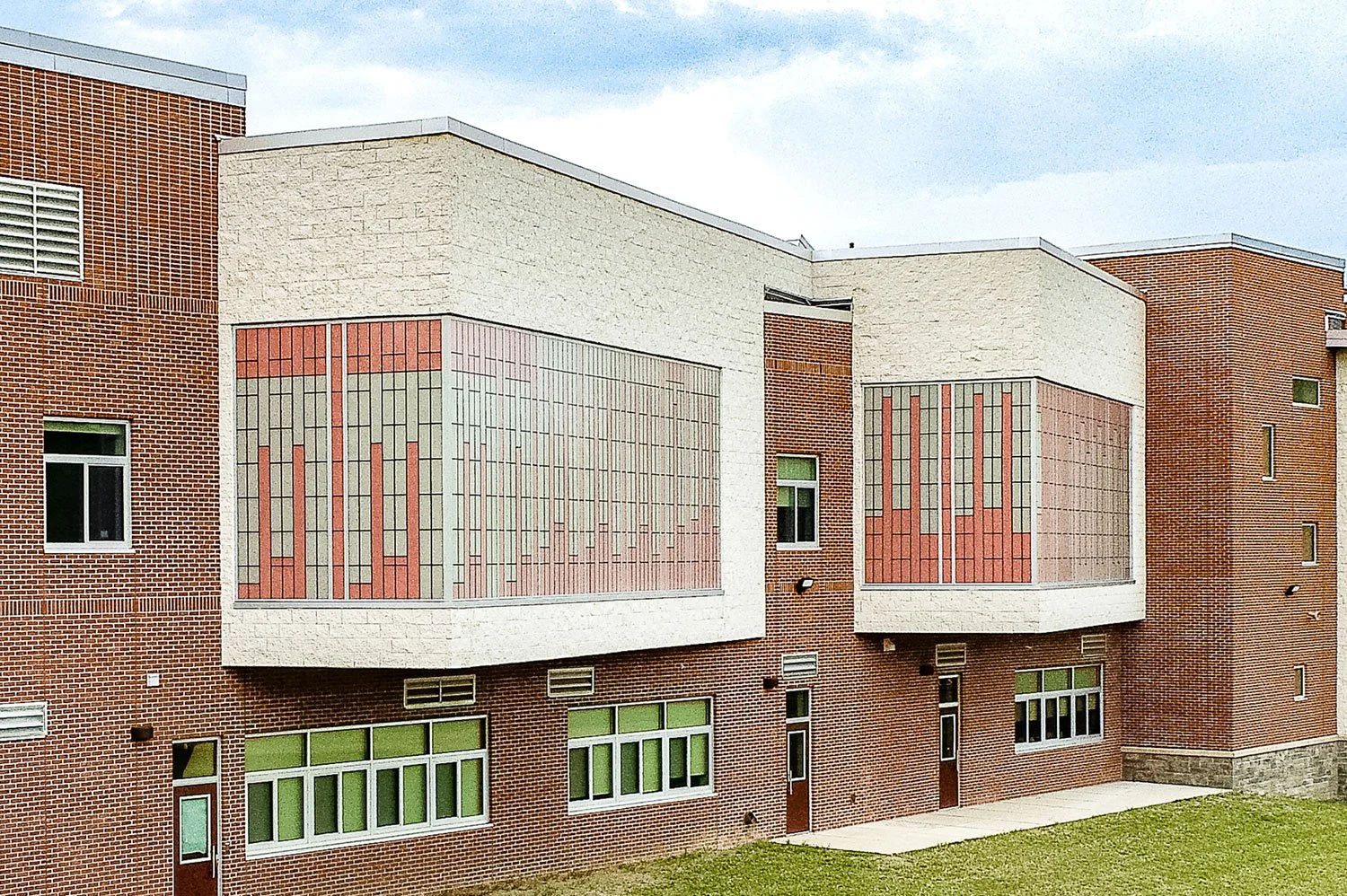
The music wing offers perhaps the most literal example of design communicating program. Its exterior includes “eighth‑note” patterned windows, an intentional reference to a famous Bach toccata, that announce the wing’s musical function. Inside, choral and band rooms use colored acoustic “clouds” and textured absorber panels on the back wall that nod to the local rocky topography. These elements do double duty: they craft a distinct visual identity for the spaces and address the acoustic needs of performance and rehearsal.
"With the exterior walls of the music spaces, we incorporated 'eighth note' patterned windows—a nod to a famous J. S. Bach Toccata that will cue visitors to the function of the rooms within. Using these windows to bring diffuse daylight into the spaces is playful and purposeful, but also reinforces the building’s educational mission. It’s a very literal interpretation of musical notation translated into architecture."
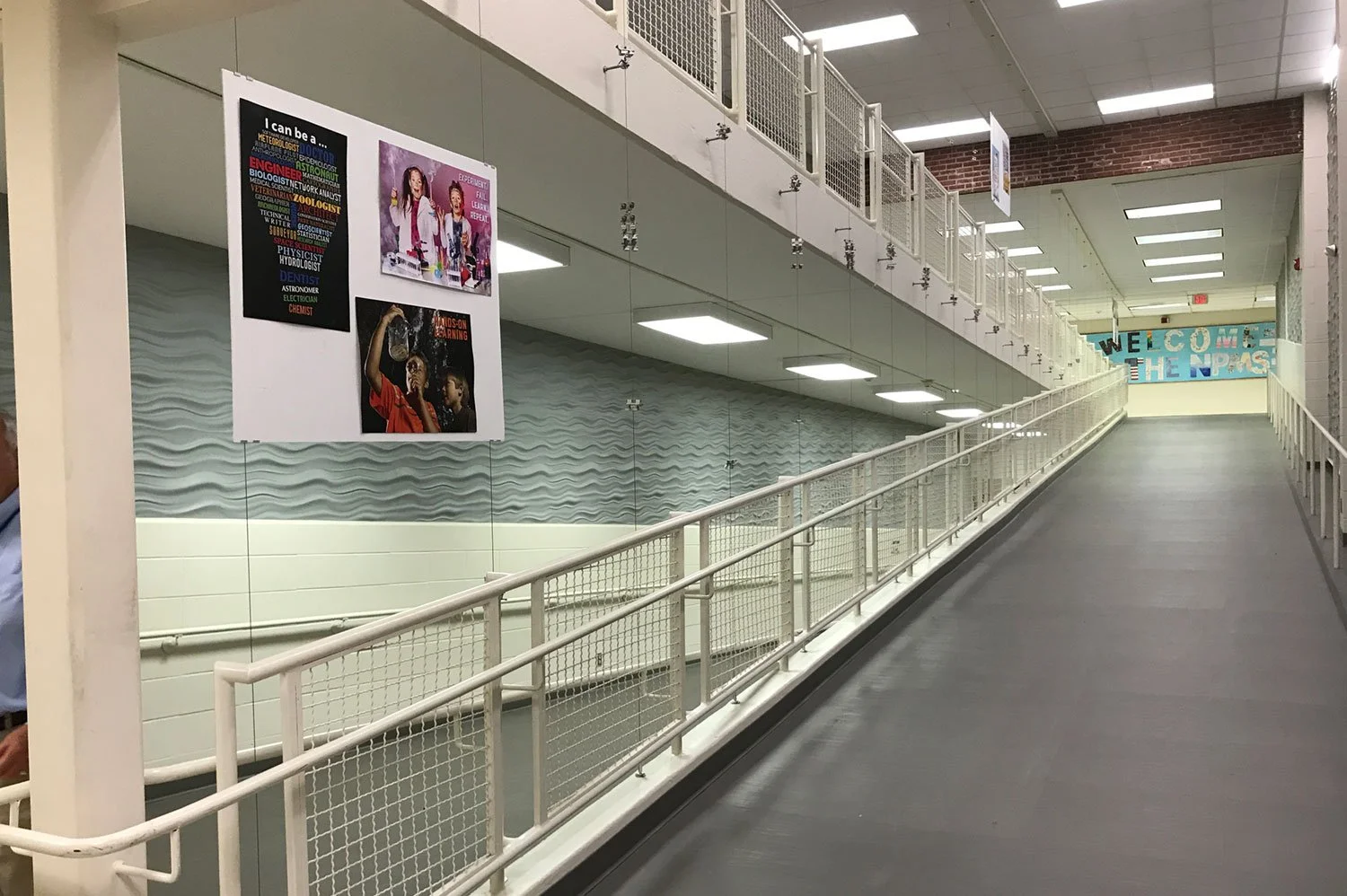
The existing school had a complex series of split levels that made navigation difficult. Tetra Tech responded by creating a generous gallery at the main entry—a place for student artwork, display, and wayfinding—and by installing a five‑stop elevator that strategically accommodates the split level building design. Ramps and adjusted grades soften previously steep transitions and make movement through the building more comfortable and intuitive.
Safety and client expectations also shaped the work. A dramatic three‑story stairwell prompted the district to request railing heights above code to prevent unsafe behavior; meeting that demand required quick coordination with the contractor and some on‑site detailing.
The New Paltz addition follows a practical design approach: decorative elements serve function, site context, and operations. Its façade signals program, materials reference local geology, acoustics and daylighting support specialized instruction, and improved circulation makes the campus easier to navigate. More than a visual update, the addition directly supports teaching and community use while fitting the local landscape.