
Shingle and Stone Revival
Central Islip Union Free School District
Phased district-wide roof and masonry repairs, addressing code and structural challenges
THIS IS THE BANNER IMAGE - MAKE SURE #banner APPEARS IN THE LINK
Central Islip Union Free School District’s building condition survey (BCS) identified numerous priority projects, with roofing and exterior masonry restoration as the most emergent. The work was sequenced so that documents could be submitted to the State Education Department (SED) on a rolling basis — this approach allowed for timely approvals and construction to begin and continue through consecutive summers.
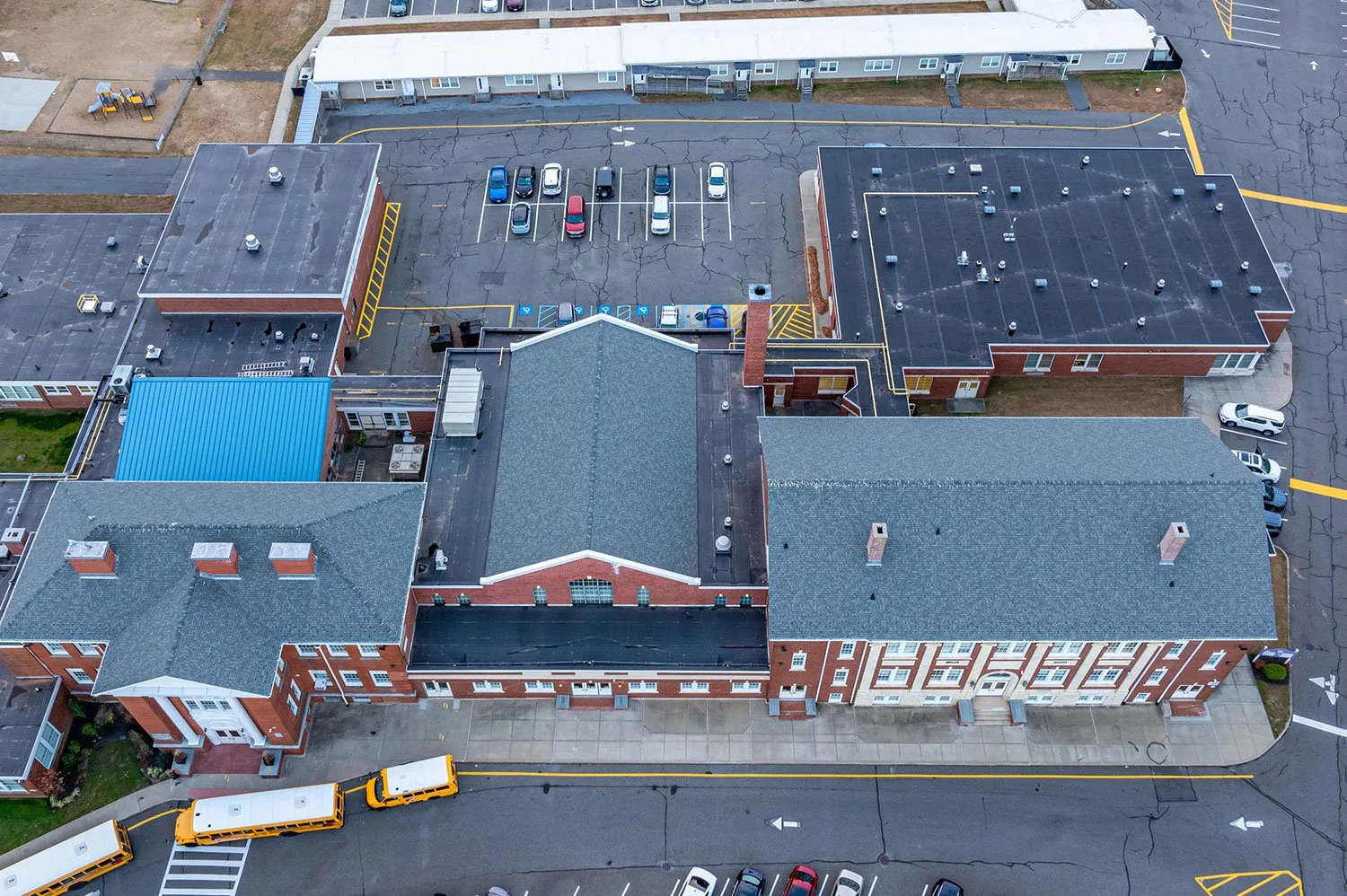
The phased approach was deliberately designed to expedite the schedule. Smaller packaged design drawings allowed Tetra Tech to prepare and submit documents for the first project while still finishing production on subsequent packages. That rolling submission strategy made it possible to secure SED approvals, allow the district to proceed with immediate summer construction work, and avoid delays that would have accompanied a single large, district‑wide submittal to SED. The prioritization of work was a collaboration between district staff and Tetra Tech jointly evaluating roofs and masonry repairs to determine the most appropriate sequence for construction.
Tetra Tech’s structural engineers conducted building‑by‑building reviews, performed targeted field investigations and cored roof decks to verify conditions that existing record documents did not clearly reflect. In some areas, especially where high and low roofs adjoined over hallways, structural reinforcement and design modifications were required. In other instances the investigation revealed better‑than‑expected conditions, allowing the team to avoid intrusive structural work that would have required removing recently replaced ceilings — a result that saved time and budget and kept interior finishes intact.
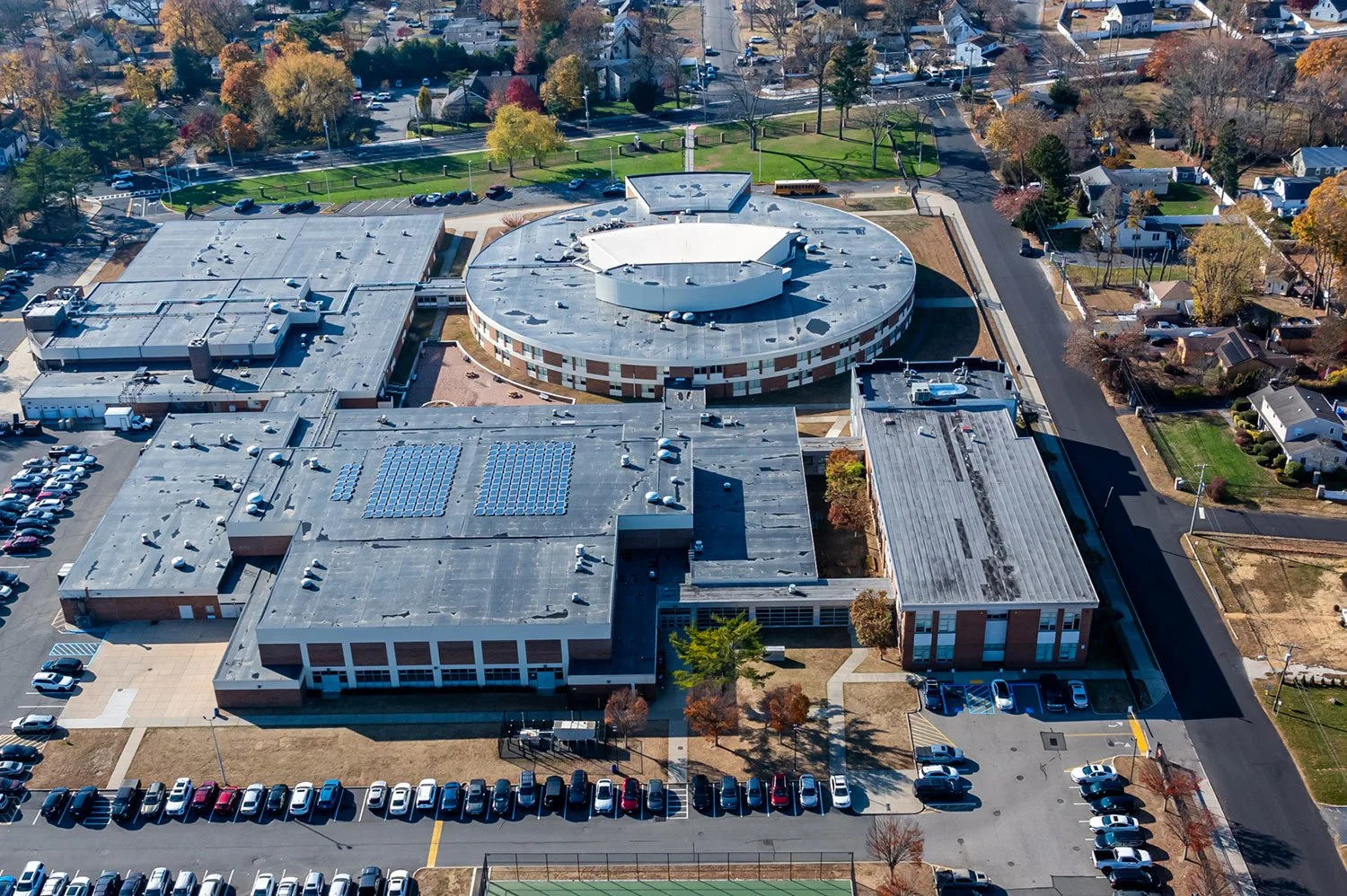
One of the key technical challenges was replacing roof systems that were installed about 25 years ago with materials that are no longer typically specified today. Updated structural codes — especially revised snow load requirements — meant each roof needed to be evaluated individually. Because adding modern insulation increases dead load, several assemblies had to be carefully analyzed to ensure they could safely support the combined effects of the new materials and current design snow loads.
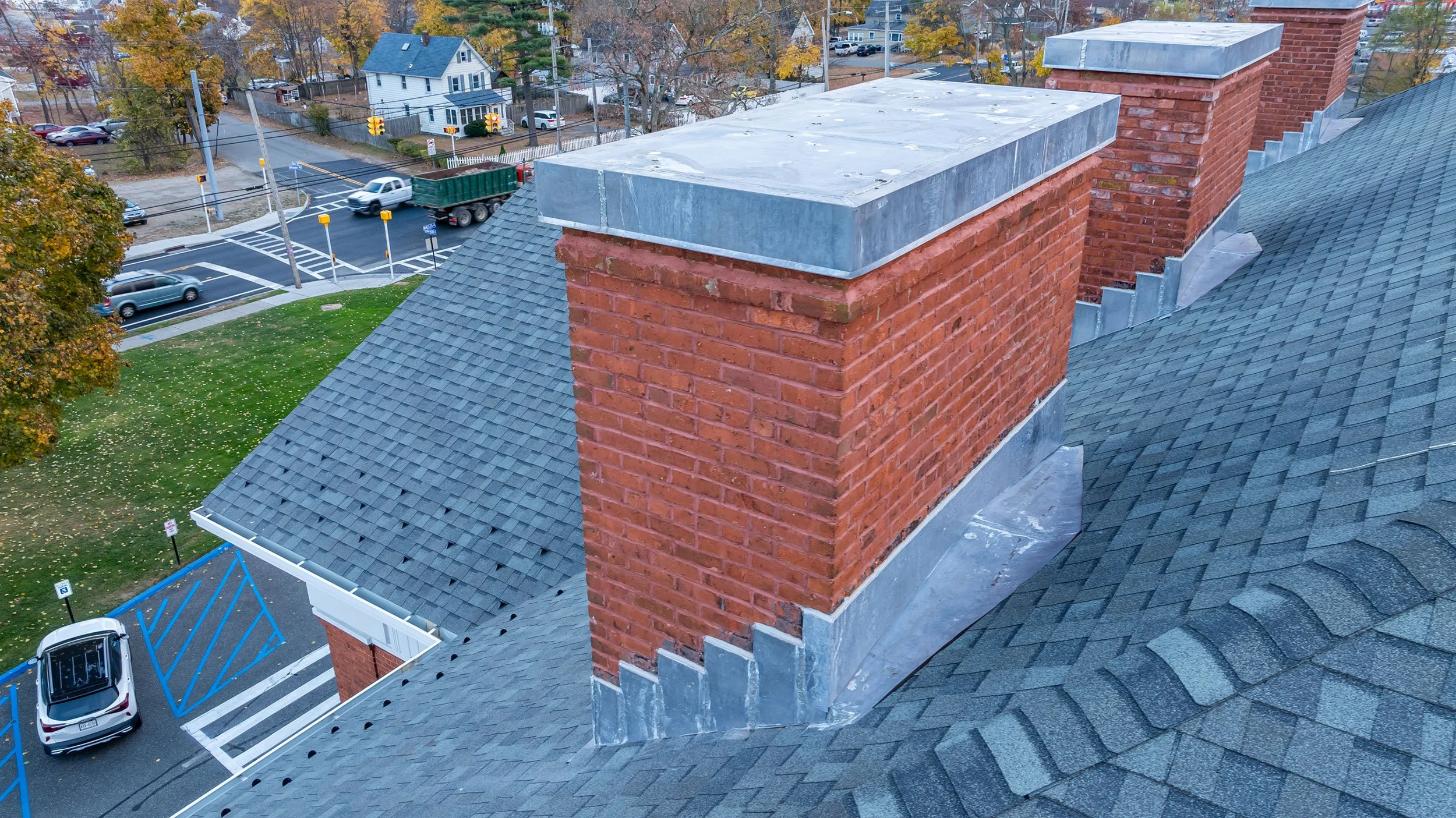
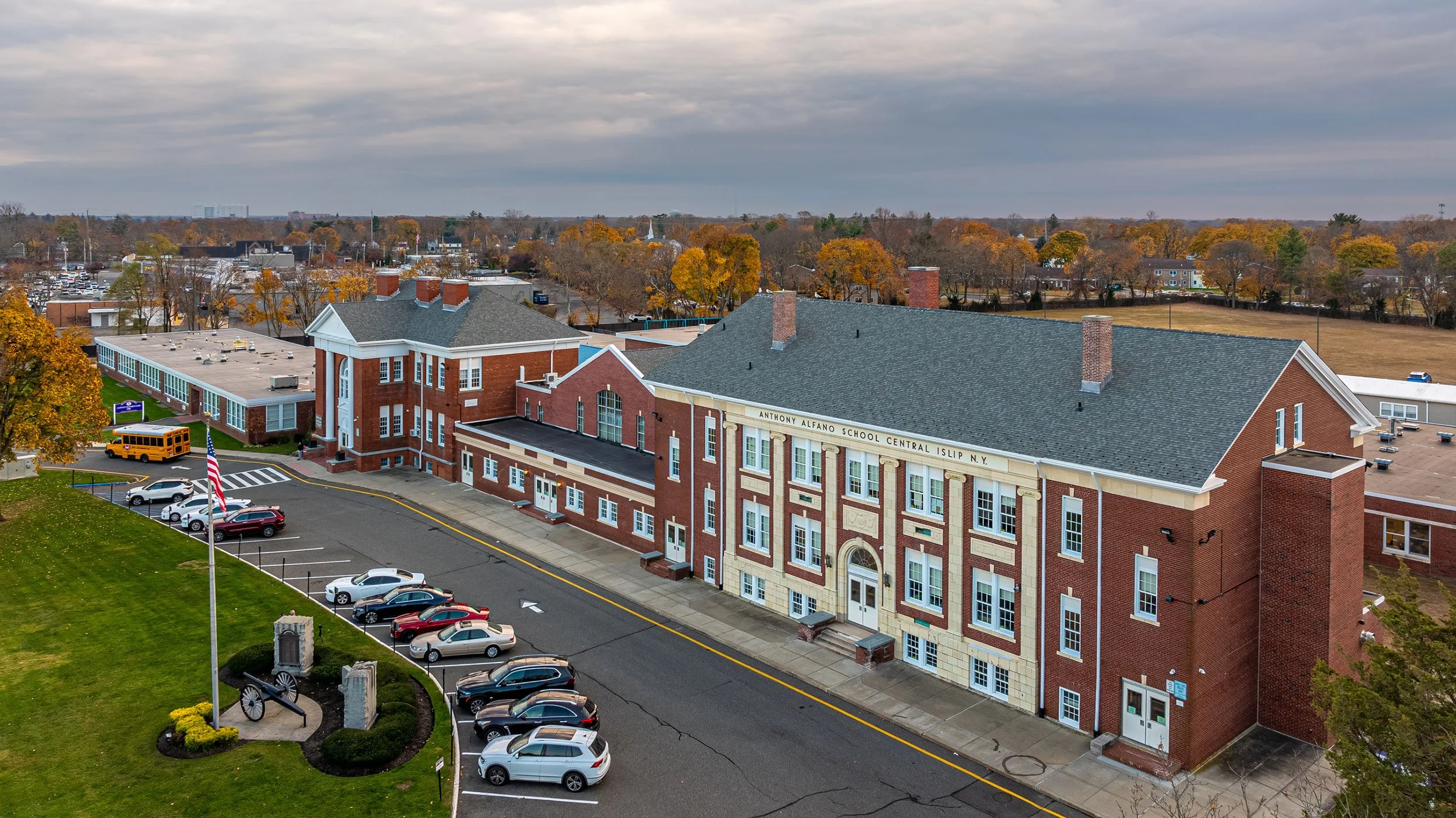
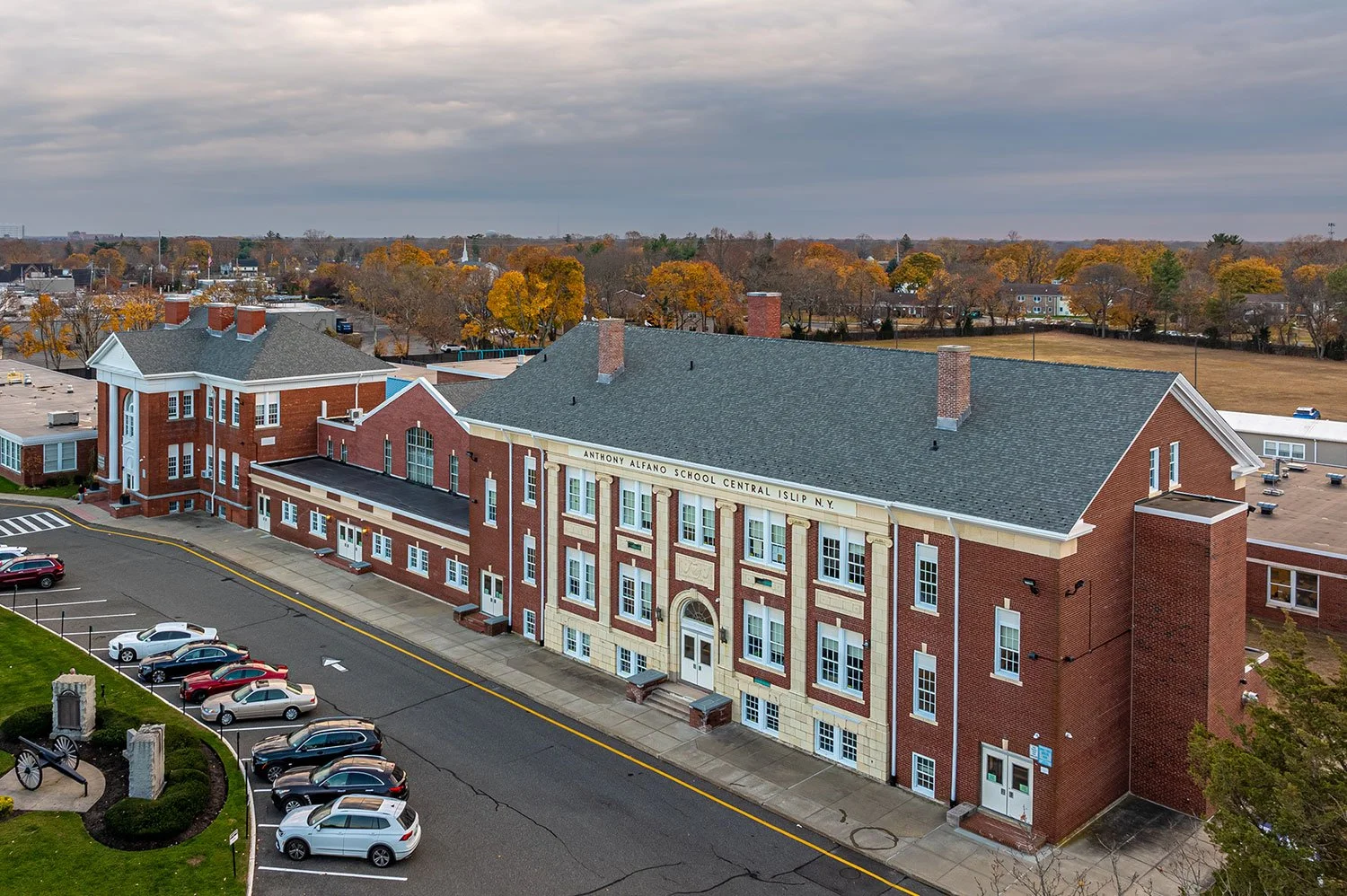
Masonry repairs were concentrated in buildings constructed in the 1960s and 1970s, where spalling and general façade material breakdown was identified. Tetra Tech evaluated each building’s exterior conditions and developed restoration plans tailored to the construction type. Older buildings such as the Anthony Alfano Elementary School — with portions dating to 1939 and distinctive pitched‑roof and solid‑wall masonry construction — required particular attention. Solid masonry walls, unlike modern cavity walls, present different detailing challenges; in those instances, the team developed sensitive restoration strategies that respected the building façade while improving overall building envelope performance and durability.
The combined emphasis on careful investigation, phased delivery, code‑compliant structural design, and collaboration with District leadership allowed the work to progress efficiently while adhering to project budgets and minimizing disruption to campus activities.