
Shifting Gears to Electric Fleet
Queensbury Union Free School District
Construction and installation for electronic bus fleet
THIS IS THE BANNER IMAGE - MAKE SURE #banner APPEARS IN THE LINK
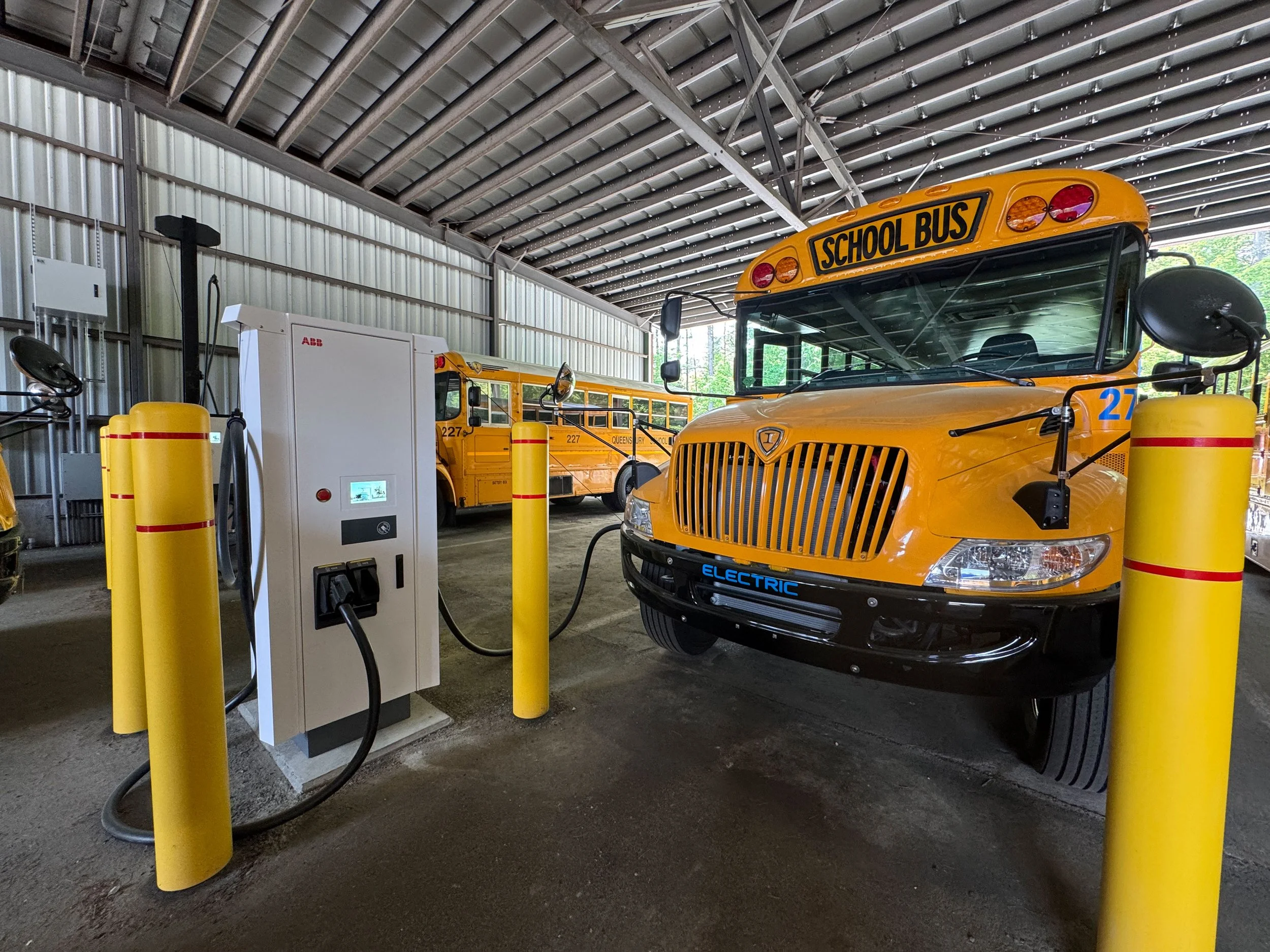
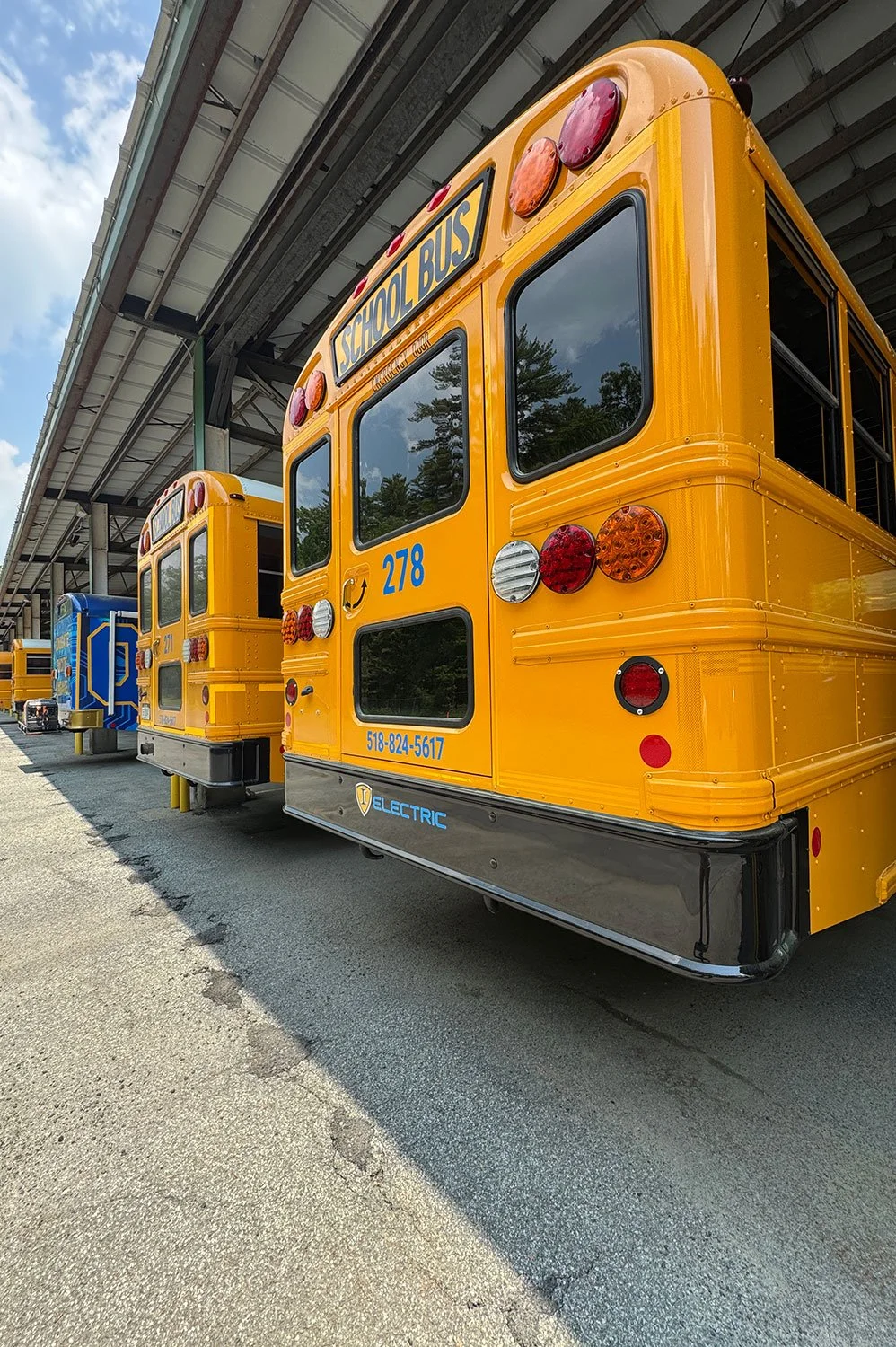
Queensbury Union Free School District sought to meet the state mandate to transition school buses to electric power, and Tetra Tech was engaged to design the infrastructure needed to meet the first phase of the District’s fleet electrification effort. The first phase was implementation of a dependable, near‑term solution to support four electric buses they were acquiring while creating a clear, low‑disruption path to expand charging capacity as future funding allowed.
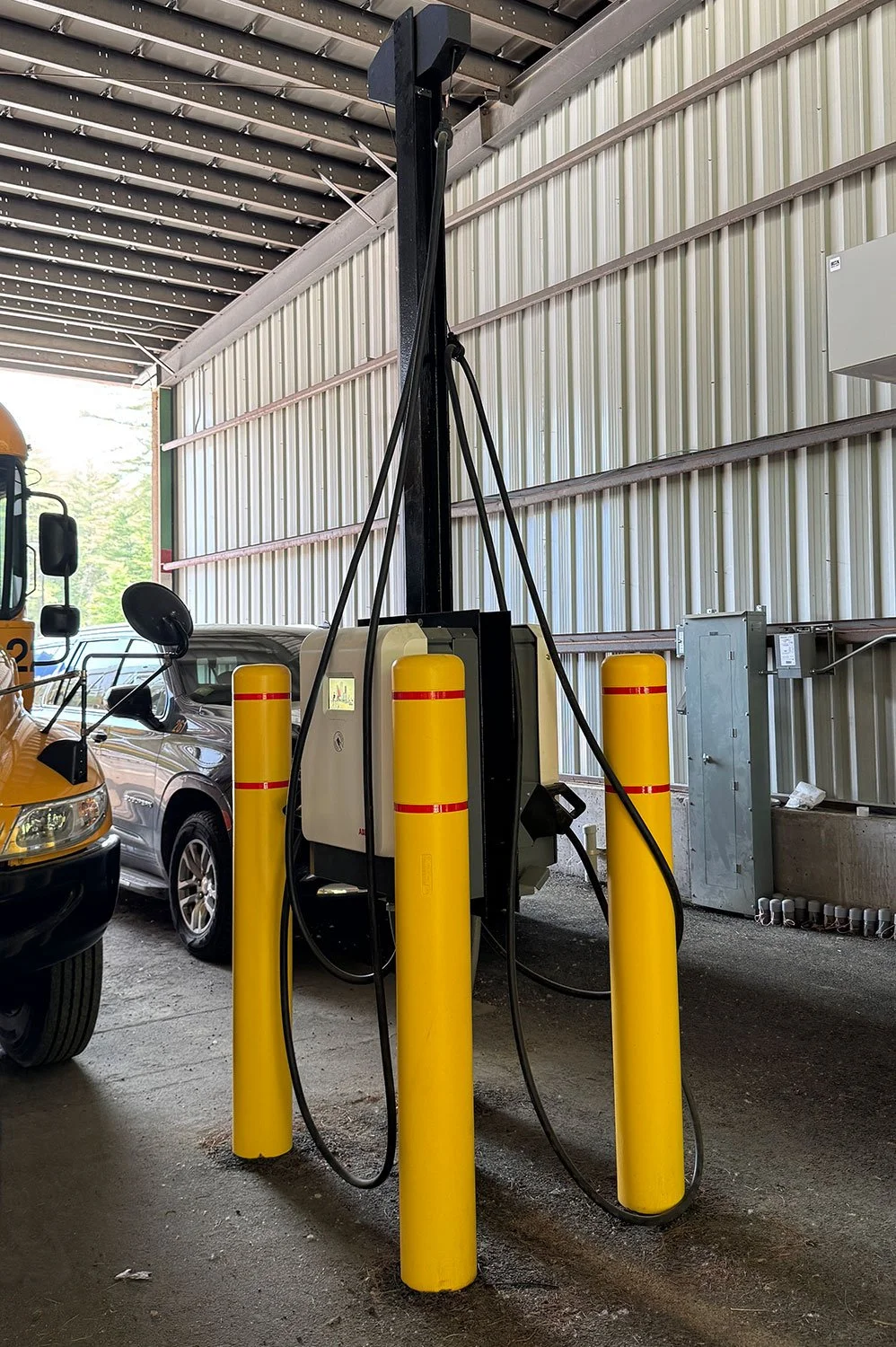
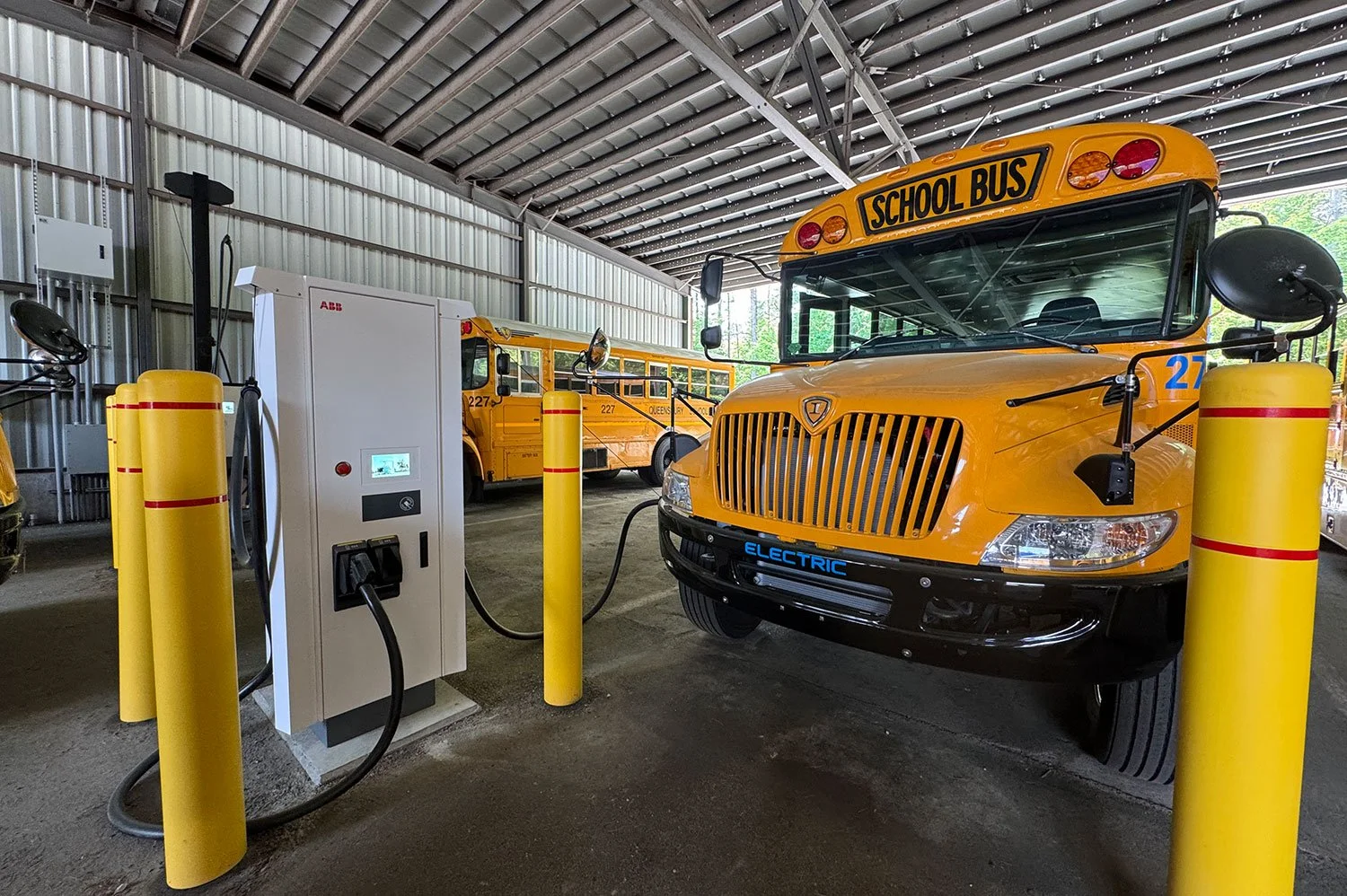
Tetra Tech delivered an operational charging installation that supports four buses through three pedestal‑mounted chargers: two 22 kW units and one 120 kW unit, the larger charger able to charge two buses simultaneously. The chosen mix prioritized higher‑performance charging to maximize vehicle uptime and simplify fleet operations. Although Level 3 chargers carry higher costs and voltage requirements, the District asked for expert guidance on ensuring predictable recharging windows, and Tetra Tech recommended and implemented faster chargers to meet that objective.
A substantial portion of the work focused on electrical infrastructure and future accommodations. The team designed the underground conduit runs, distribution equipment to accommodate projected growth, and conductors so additional chargers can be connected with minimal future excavation. Phase One was prewired for three additional chargers that would support roughly five more buses, including two larger chargers that can each charge two buses. Where possible, the design leveraged excess existing solar production to offset near‑term charging loads, with options preserved to expand solar capacity in later phases.
Tetra Tech also documented and designed the Phase Two scope required to support larger fleet electrification: a dedicated exterior electrical service, new transformer and switchgear, and significant site work to connect directly to the utility. Because the District’s current building service cannot support fleet‑scale charging, Phase Two is necessary for full deployment. That design has SED approval and is bid‑ready; groundwork installed during Phase One enables a relatively rapid scale‑up when the District is ready to resume construction.
Site safety and asset protection were included in the project scope. A lightning protection system was designed and installed at the bus shelter and parking area to protect high‑value equipment—buses, power electronics, and chargers—from storm‑related risk. Construction coordination emphasized “dig once” principles, placing conduits and distribution where they will serve future chargers and minimizing the potential for redundant site disturbance.
Beyond engineering and construction, Tetra Tech supported the District’s funding and planning efforts. The firm prepared a NYSERDA FlexTech fleet electrification report (qualifying the District for a 75% cost share on that study) and assisted with grant applications and funding strategies that helped secure money for buses, chargers, and portions of construction. A third‑party traffic consultant provided route and energy‑use analyses that informed charger sizing and placement and helped shape Phase One decisions.
Phase One resulted in a functional, expandable charging system that allows Queensbury UFSD to comply with current mandates and operate electric buses in daily service. The District now has a thoughtfully engineered foundation—installed chargers, buried conduit, prewired conductors, and a bid‑ready Phase Two design—that positions it well for future growth when resources become available.